
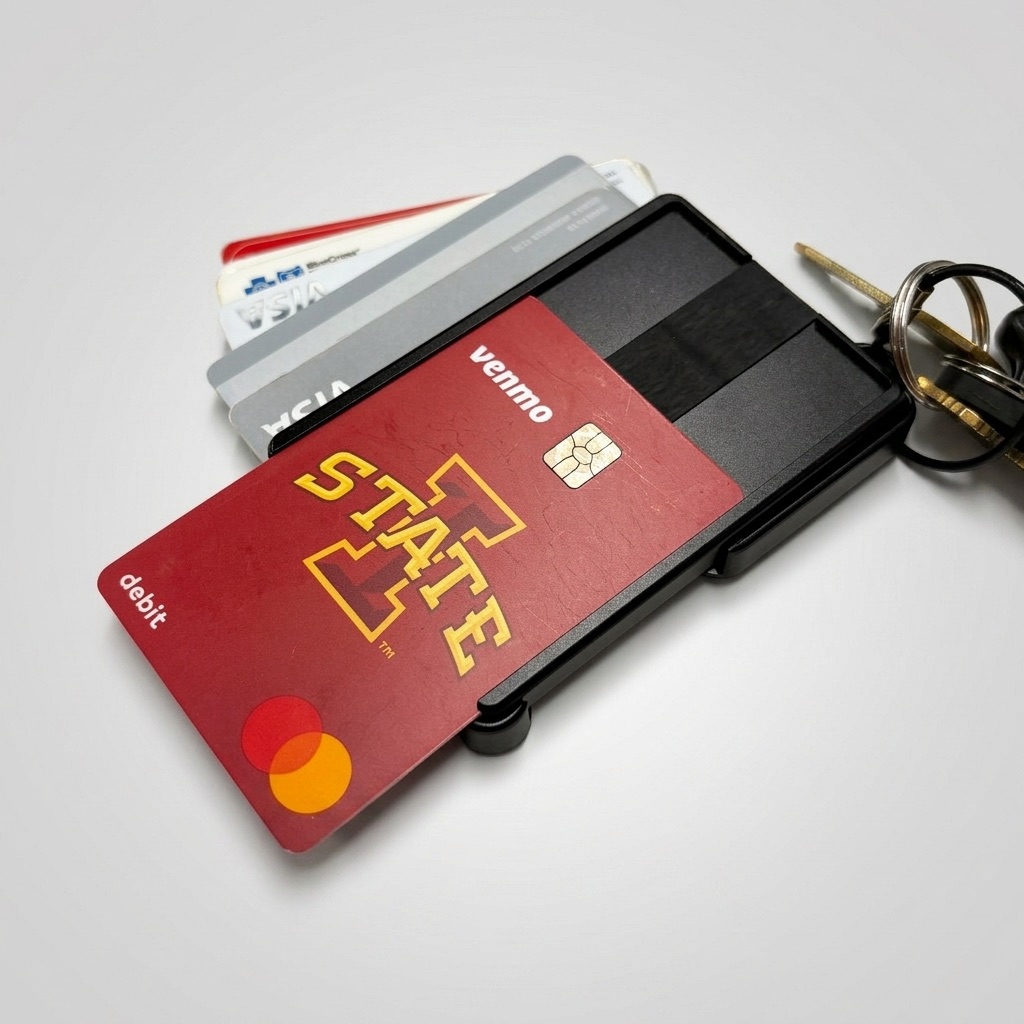
Leather degrades from moisture, friction, and sunlight over time. Metal does not. A machined aluminum wallet does not crack, peel, warp, or absorb sweat. That is the core reason metal wallets outlast leather: the failure modes that kill leather simply do not apply.
How Leather Wallets Fail
Most leather wallets start to show wear within a year of daily use. The stitching frays first, usually at the corners and card pockets. Then the leather itself starts to crack along fold lines, especially if the wallet gets wet and dries quickly. The interior card slots stretch and lose their grip on cards.
Full-grain leather holds up better than bonded leather, but even premium leather wallets rarely make it past four or five years of hard daily use without looking tired. And when the stitching fails, the wallet usually falls apart rather than wearing gracefully.
The hidden cost is that people replace leather wallets every two to three years on average. Over a decade, that adds up to three or four wallets, each costing anywhere from $30 to $100.
Why Metal Is Different
Machined aluminum does not have stitching to fray or leather to crack. The structure of the wallet is the material itself. Anodization adds a hard surface layer that resists scratches better than bare metal and does not peel the way coatings on lesser materials do.
Water resistance is the other major factor. A leather wallet left in wet jeans may warp. Metal shrugs it off. For people who work outdoors, travel frequently, or live in wet climates, this is not a minor detail.
The metal wallet from The Brik is machined from black anodized aluminum with a water-resistant body. It is built to outlast the wallets most people replace every few years without thinking about it.
The Practical Trade-Offs
Metal wallets are not perfect. They do not have the tactile softness of leather. They can feel cold in winter. And if you drop one on a hard floor, you will hear it.
But for durability specifically, the comparison is not close. Metal wins on every failure mode that ends a leather wallet's life: moisture damage, structural failure, surface wear, and shape deformation from overstuffing.
If you are curious about what to carry in a metal wallet day to day, the guide on what goes in a minimalist wallet covers the typical carry that works well with a slim metal design. And if you are making the switch from your current thick wallet, switching from a thick wallet walks through what to expect. The metal wallet from The Brik is a good place to start that switch.
- No stitching to fray. Metal wallets have no thread, seams, or glued panels to fail.
- Water resistant. Metal does not warp, stain, or crack from moisture.
- Surface holds up. Anodized aluminum resists scratches better than most leather finishes.
- No reshaping from overstuffing. Leather stretches. Metal holds its shape.
Quick answers
Will a metal wallet scratch other items in my pocket?
Anodized aluminum has a hard surface but is not sharp. The wallet sits flat and smooth. Most people report no issues with pocket scratching.
Do metal wallets dent?
A hard enough impact can leave a mark, but machined aluminum is significantly more dent-resistant than it looks. Normal daily use does not produce visible dents.
Is a metal wallet heavier than leather?
A slim machined aluminum wallet and a slim leather wallet are close in weight when carrying the same number of cards. The difference is rarely noticeable in a pocket.