
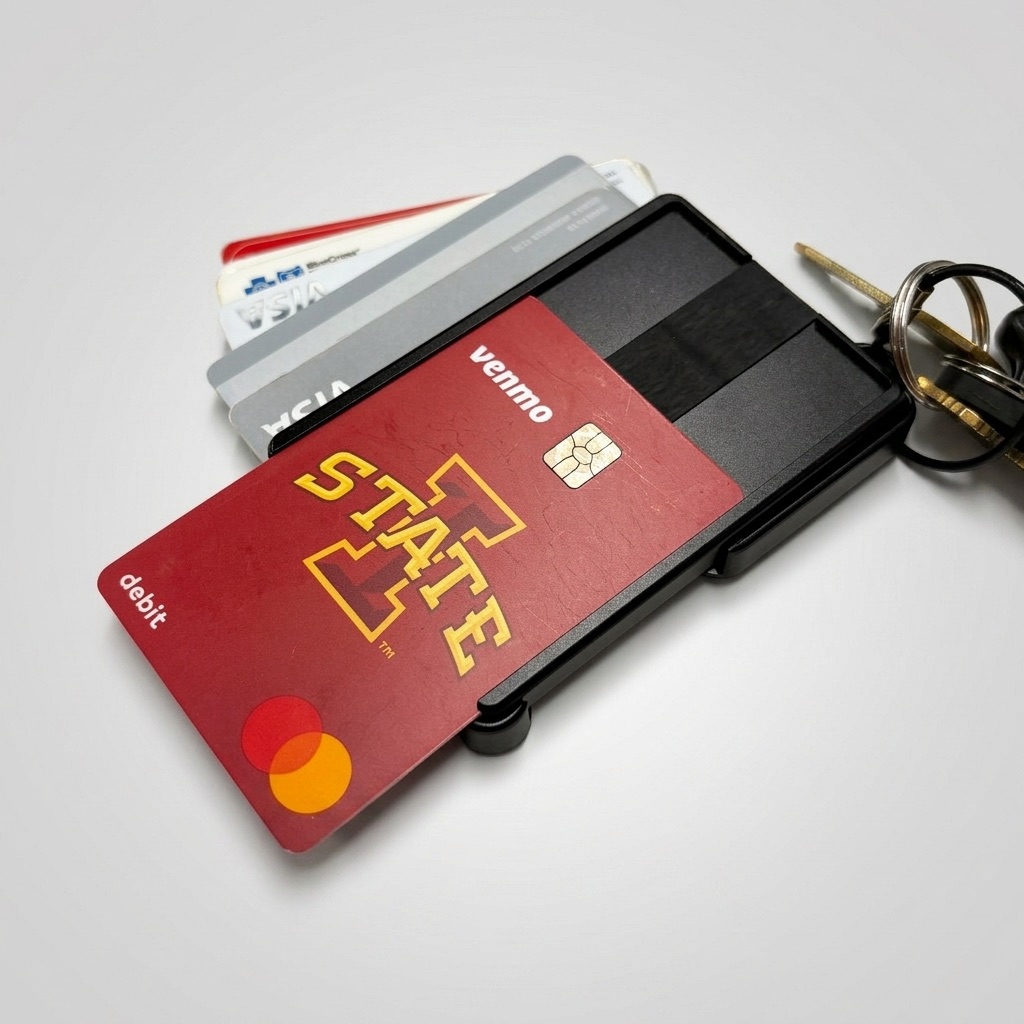
Most people need five to seven items in their wallet daily: a debit or credit card, an ID, a backup payment method, health insurance card, and a small amount of cash. Everything else is dead weight. A minimalist wallet works by forcing you to be honest about that instead of carrying insurance cards for insurance you never use.
The Daily Use Test
Pull everything out of your current wallet. Sort it into two piles: used in the last 30 days, and not used in the last 30 days. The second pile does not belong in a daily carry wallet.
For most people, the 30-day pile has a debit card, one or two credit cards, a driver's license or state ID, and sometimes a transit card. The not-30-day pile has loyalty cards from three different coffee chains, a library card, a business card from someone they met at an event in 2023, and possibly a coupon that expired.
The goal is not to own fewer things. It is to stop carrying things daily that you do not use daily.
The Typical Minimalist Carry
Primary payment card: this is the card that earns rewards or the one linked to your main checking account. One card.
Backup payment card: in case the primary is declined or you need a second card for a specific vendor. One card.
ID: driver's license or state ID. Required for airports, bars, car rentals, and a hundred other situations. One card.
Health insurance card: useful in urgent situations. One card.
Transit card or access badge if your commute requires it: one card.
Cash: a small folded amount for tips, parking, or places that do not accept cards. Most minimalist wallets hold folded bills under an elastic band.
That is five to six items. The metal wallet from The Brik holds up to 7-8 cards in the main RFID-protected compartment and one ID in the front quick-access slot. That covers the standard minimalist carry with room for one or two additional cards.
What to Do With the Rest
Store rarely used cards at home in a small card holder or an envelope. When you know you need the library card or the specific rewards card, put it in your wallet that morning and swap it back when you return.
Digital cards handle a lot of the gap. Most loyalty programs now have apps or digital wallet support. If your phone can handle it, the physical card does not need a slot in your wallet.
For people switching from a thick bifold for the first time, read switching from a thick wallet for what the first few weeks actually feel like. And to see how a minimalist carry fits into a slim metal wallet, that page walks through the full physical setup.
- Always carry. Primary card, backup card, ID, health insurance card.
- Carry if needed. Transit card, access badge, occasional loyalty card.
- Leave at home. Rarely-used cards, membership cards for places visited monthly or less.
- Go digital. Loyalty programs, library cards, digital versions of anything that has an app.
Quick answers
Should I carry cash in a minimalist wallet?
A small amount, yes. Some places still require it, and tips for delivery and services often work better in cash. Most minimalist wallets hold folded bills without adding significant bulk.
How do I handle loyalty cards with a minimalist wallet?
Download the brand's app or add the card to your digital wallet on your phone. Most major chains have app-based loyalty programs that work the same way as the physical card.
What if I need my insurance card unexpectedly?
Many insurance providers let you download a digital card or add it to your phone's wallet app. A photo of the card in your phone's camera roll is accepted in most non-emergency situations.