
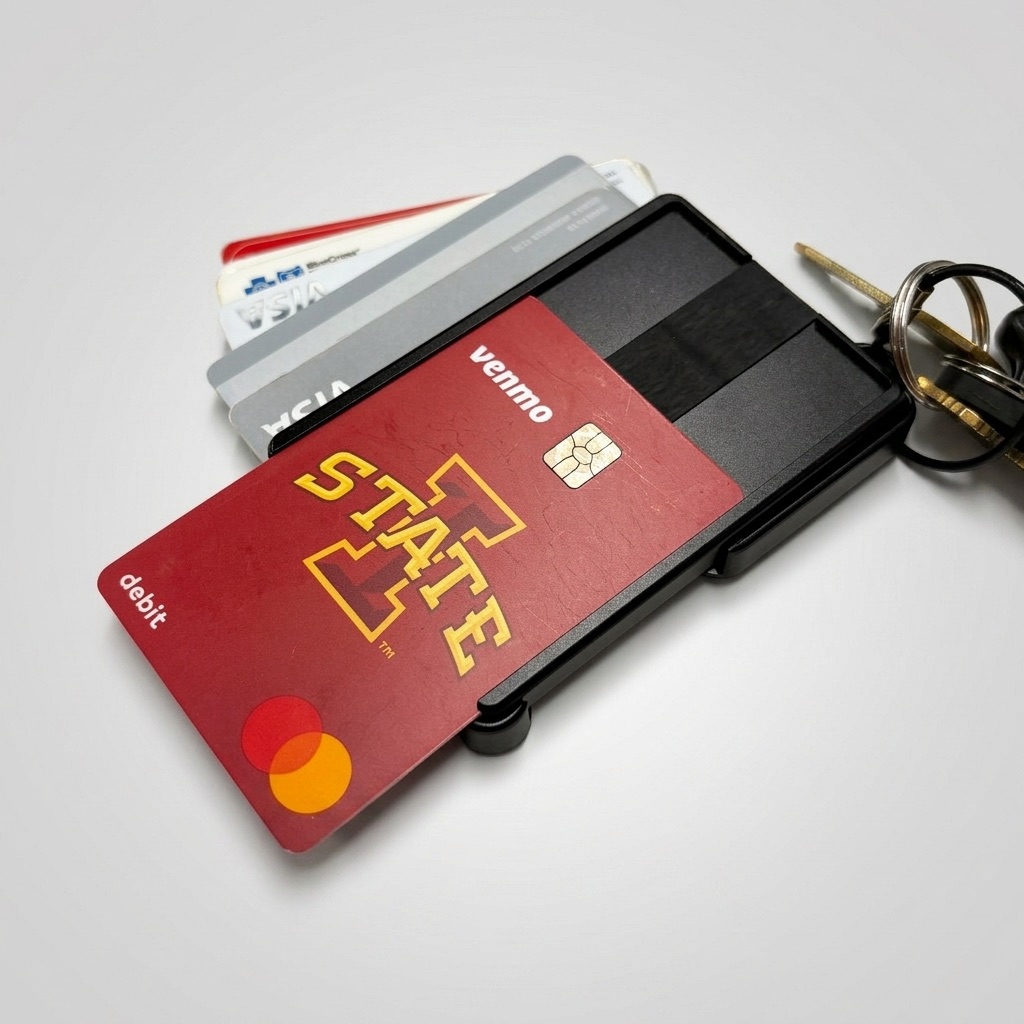
Switching from a thick wallet to a slim one is more of a habit change than a hardware change. The first week feels weird. By week three, going back to the old wallet feels absurd. The main adjustment is getting honest about which cards you actually use and which ones were just riding along.
The First Few Days
Your back pocket will feel strange. If you have been sitting on a bifold for years, your body has adapted to the lump. Without it, some people feel like they forgot their wallet entirely, even when it is right there.
You may also reach for cards that are no longer present. That gym card you only used twice, the loyalty card from a coffee shop you visited once in 2021, the insurance card you never needed but kept for reassurance. All of those are gone now. It is fine. Your phone camera handles most of them.
What Actually Changes
Pants fit slightly better. Back pocket bulk is one of those things people stop noticing until it's gone, and then notice immediately when it returns. Front-pocket carry becomes comfortable for the first time for many people.
You will also become a faster payer. A slim wallet with a few organized cards means you pull out exactly what you need instead of fanning through a deck of cards looking for the right one.
The metal wallet from The Brik holds 7-8 cards in an RFID-protected main compartment, one ID in a quick-access front slot, and cash under a back elastic band. That covers what most people actually use in a day.
What You Might Miss (and What to Do About It)
Receipt storage is gone. Slim wallets do not hold folded receipts. If you track expenses, photograph them immediately or use an expense app. This habit is better anyway.
The coin pocket is gone too. Slim wallets do not carry coins. If you still use cash regularly, keep a small coin holder in your bag or car rather than trying to cram coins into a slim wallet.
Some people miss having a designated slot for every single card they own. The answer to that is to stop owning cards you do not use. An audit of your wallet contents before switching often reveals four to six cards you have not touched in six months.
For more on what belongs in a minimalist wallet, read what goes in a minimalist wallet. And if you want to see what the metal wallet looks like in practice, that page walks through the full carry setup.
- Week 1. The pocket feels light. You will reach for cards that are no longer there. This is normal.
- Week 2. You stop missing the missing cards. The habit of leaner carry starts to click.
- Week 3. Going back to the old wallet feels genuinely uncomfortable. The slim wallet has won.
- Ongoing. Periodic card audits every few months keep the slim wallet from creeping back toward bloat.
Quick answers
How many cards can I realistically carry in a slim wallet?
Most people find 5-7 cards covers their daily needs comfortably. The Brik holds up to 7-8 cards. If you need more than that daily, a slim wallet may require leaving some cards in a separate holder at home.
What do I do with cards I rarely need?
Keep a small card holder at home or in a bag for cards you use less than once a month. Transfer a card to your wallet when you know you will need it, and swap it back when done.
Will front-pocket carry feel awkward?
It takes about a week to adjust. Front-pocket carry is more secure than back-pocket carry and less likely to result in a dropped wallet when sitting down.