
Pocket organization isn't a product purchase. It's a system. The people who always know exactly where their wallet and keys are don't have better gear, they have better habits around assigned placement.
Why Pockets Get Disorganized
Pockets get disorganized the same way countertops do: items land wherever is convenient in the moment, and no one moves them afterward. Your wallet goes in a different pocket depending on the pants. Your keys get dropped in a bag, then a jacket, then a counter. Every placement decision is a small friction that builds into a daily search routine.
The fix is removing the decision entirely. Assigned pockets for specific items, followed consistently, eliminate the search.
A Simple Pocket Assignment System
Pick a spot for each item and commit to it across all pants and jackets. The exact spots don't matter as much as the consistency.
One common system: right front pocket for phone, left front pocket for wallet and keys combined, nothing in back pockets. Another: right front for wallet, left front for phone, keys clipped to belt loop. Either works. Pick one and don't vary it.
- Phone. Same pocket every time. Right front is most common for right-handed people.
- Wallet. Front pocket, always. Left or right, pick one and stick with it. Never the back pocket.
- Keys. Combined with wallet if you use a keyring wallet, or same dedicated pocket if separate. Never loose in a bag.
- Miscellaneous. If something doesn't have an assigned spot, it probably doesn't belong in daily carry. Find it a home or leave it home.
The Back Pocket Problem
Rear pockets are the enemy of pocket organization. Things fall out when you sit. They're an easier pick target. And a thick wallet in a back pocket affects your posture over time.
Front pocket carry solves all three problems. A slim wallet sits flat in a front pocket without the bulk that makes back-pocketing uncomfortable. Moving your wallet forward takes about two days to get used to and has no downsides.
Reducing What Needs a Spot
Fewer items means a simpler system. If your daily carry is phone, wallet, and keys, pocket organization takes five seconds. If your daily carry is phone, wallet, keys, multitool, pen, chapstick, and a notebook, you need more pockets than most pants have and something will always migrate.
Before worrying about organization, audit what you're actually carrying. See the guide on why men carry too much if your pocket dump is denser than you'd like.
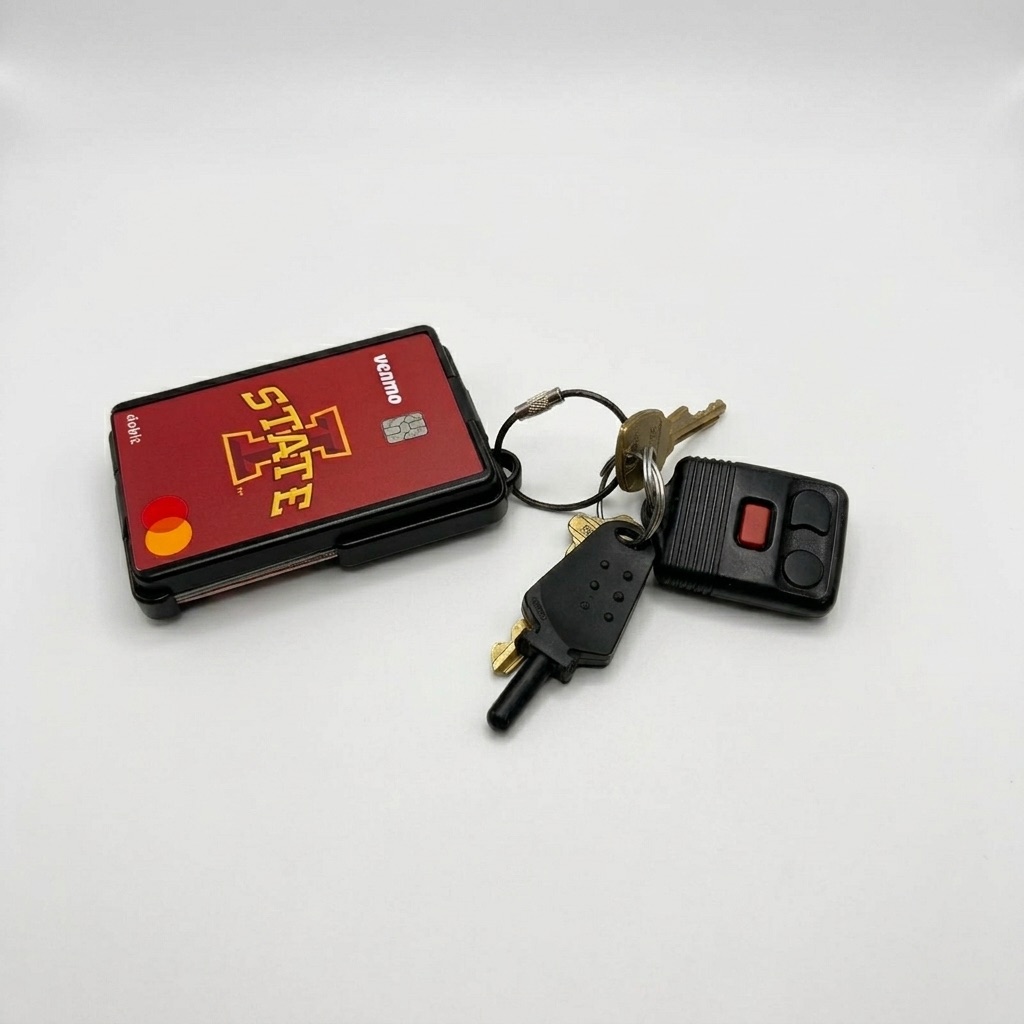
The goal of a slim wallet like the Metal Brik is to consolidate what would be spread across multiple items into one: cards, ID, cash, and keyring in a single flat carry unit. Fewer things to assign spots to, fewer things to lose.
The Morning Routine Check
The simplest organization habit is a five-second morning check before leaving. Phone in right pocket? Check. Wallet in left pocket? Check. Keys? Check. That's it. Three items, three pockets, five seconds.
You can expand this to a pre-departure bag check if you carry a bag, but the pocket basics should be automatic. If you're still patting yourself down at the door every morning, your system needs one more week of consistent habit to lock in.
For a full breakdown of auditing and organizing your carry, see the pocket dump organization guide and the EDC wallet page for wallet options.
Quick answers
Should I carry my wallet in my front or back pocket?
Front pocket. Back pockets let items fall out when you sit, are easier to pick, and a thick wallet in a back pocket affects your posture over time.
How do I stop losing my keys?
Assigned spot, always. Either they're in a specific pocket or on a hook at home. If they're anywhere else, that's where you lose them.
Is a wallet with a built-in keyring actually useful?
If you use one or two keys, yes. Combining wallet and keys into one item means one less thing to track and one less pocket assignment to manage.