
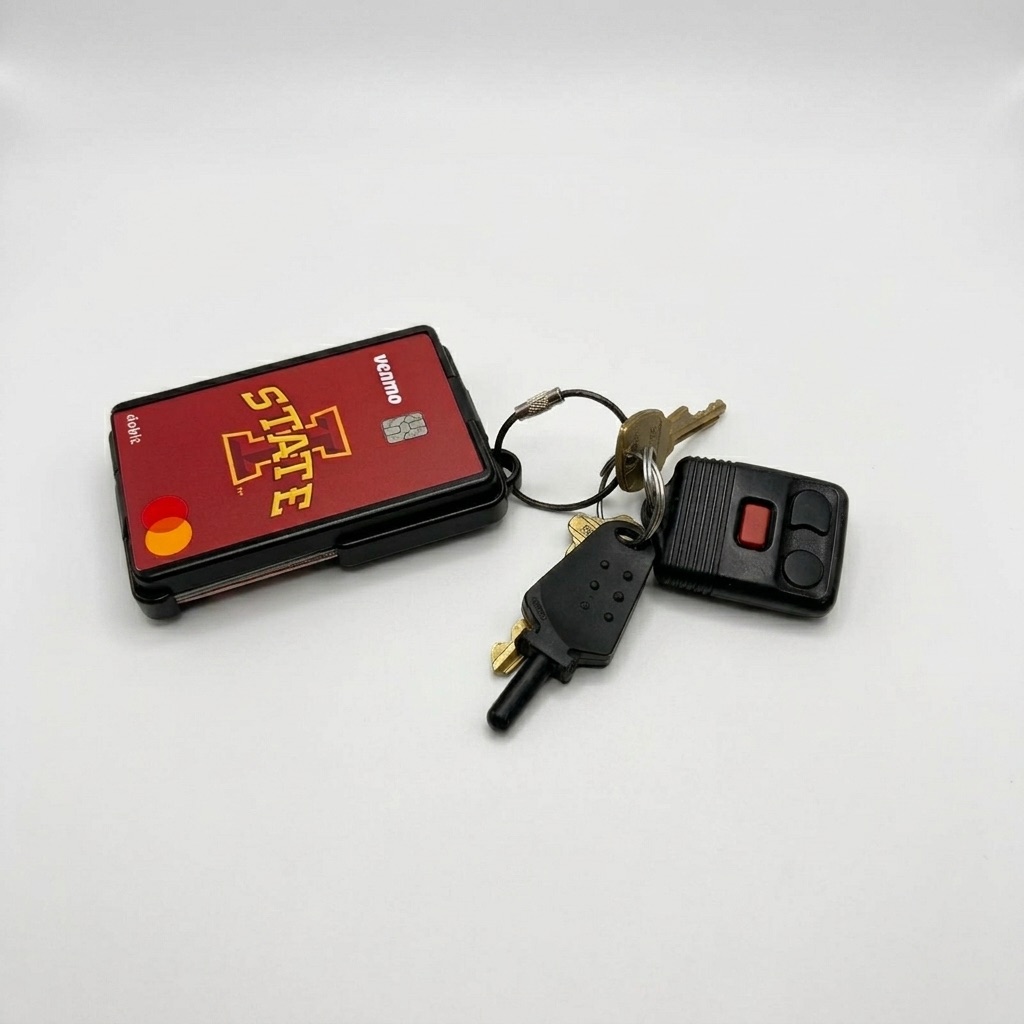
The average man carries more than he needs, not because he thought about it, but because he never did. Cards accumulate. Keys multiply. Items get added and never removed. The result is a pocket that's heavier than it needs to be every single day.
How Overloading Happens Without Deciding To
Overloaded pockets are almost never the result of a decision. They're the result of many small additions with no corresponding removals. You got a new loyalty card, added it. Got a spare key made, added it. Received a gift card at Christmas, added it. Three years later, your wallet is a fossil record of every transaction you've ever had.
The same thing happens with keychains, where keys to places you no longer go live alongside the two keys you actually use.
The Real Costs of Carrying Too Much
Beyond the obvious physical bulk, overloading has quieter costs. A stuffed wallet in a back pocket stresses your hip and lower back on long days. A heavy keyring wears on your ignition switch over time. And the practical cost: you can never find what you need quickly because everything is buried under everything else.
There's also the security angle. A fat wallet in a back pocket is an easier target than a slim wallet in a front pocket. More isn't safer when it comes to pocket carry.
The Fix: A Single Audit, Ten Minutes
Empty your pockets and wallet completely. Lay everything out. For each item, ask: did I use this in the last two weeks? If yes, it comes back. If no, it goes somewhere else or gets discarded.
Most people find they can cut their card count in half and their keyring by a third in one pass. Cards that don't come back every two weeks live in a card holder at home. Occasional-use keys go on a secondary ring in a drawer.
After that audit, you're carrying what you actually need. Which for most people is: one to three cards, an ID, a car key, a house key, and a phone.
- Cards. Keep daily-use only. One payment card, one ID, one health card if relevant. Everything else stays home.
- Keys. Daily keys only. Anything you haven't used in two weeks comes off the ring.
- Receipts and paper. Photograph and discard. No paper lives in a wallet permanently.
- Random items. Hair ties, mints, coins, rubber bands: they all end up in pockets. They all need a drawer, not a pocket.
The Right Wallet Forces the Issue
One useful trick: get a wallet with a hard card limit. A slim wallet that physically holds seven or eight cards can't accumulate twenty. The constraint is built in.
The Metal Brik holds 7-8 cards in the main compartment and one ID in the front slot. If you try to stuff more than that in, it becomes physically uncomfortable. That friction is a feature. It keeps the system honest.
For a deeper look at the audit process, see the guide on how to organize your pocket dump.
Keeping It Lean
The audit is easy. The maintenance is the challenge. A monthly ten-minute check keeps drift from building back up. Before adding anything new to your pocket carry, ask what it replaces. If the answer is nothing, think hard before it earns a daily slot.
Lean carry isn't about deprivation. It's about carrying exactly what you need, finding it fast when you need it, and not thinking about it otherwise. That's the actual goal.
Quick answers
How many cards should I actually carry daily?
Two to four for most people. One payment card, one ID, and one or two others that see regular use. Everything else stays home.
Is it bad to carry a heavy wallet?
Over time, yes. A thick wallet in a back pocket creates uneven pressure on your hip and lower back. Front pocket carry with a slim wallet eliminates this.
What do I do with cards I need occasionally but not daily?
A small card organizer in a desk drawer at home. Take the specific card when you know you'll need it and put it back when you get home.