
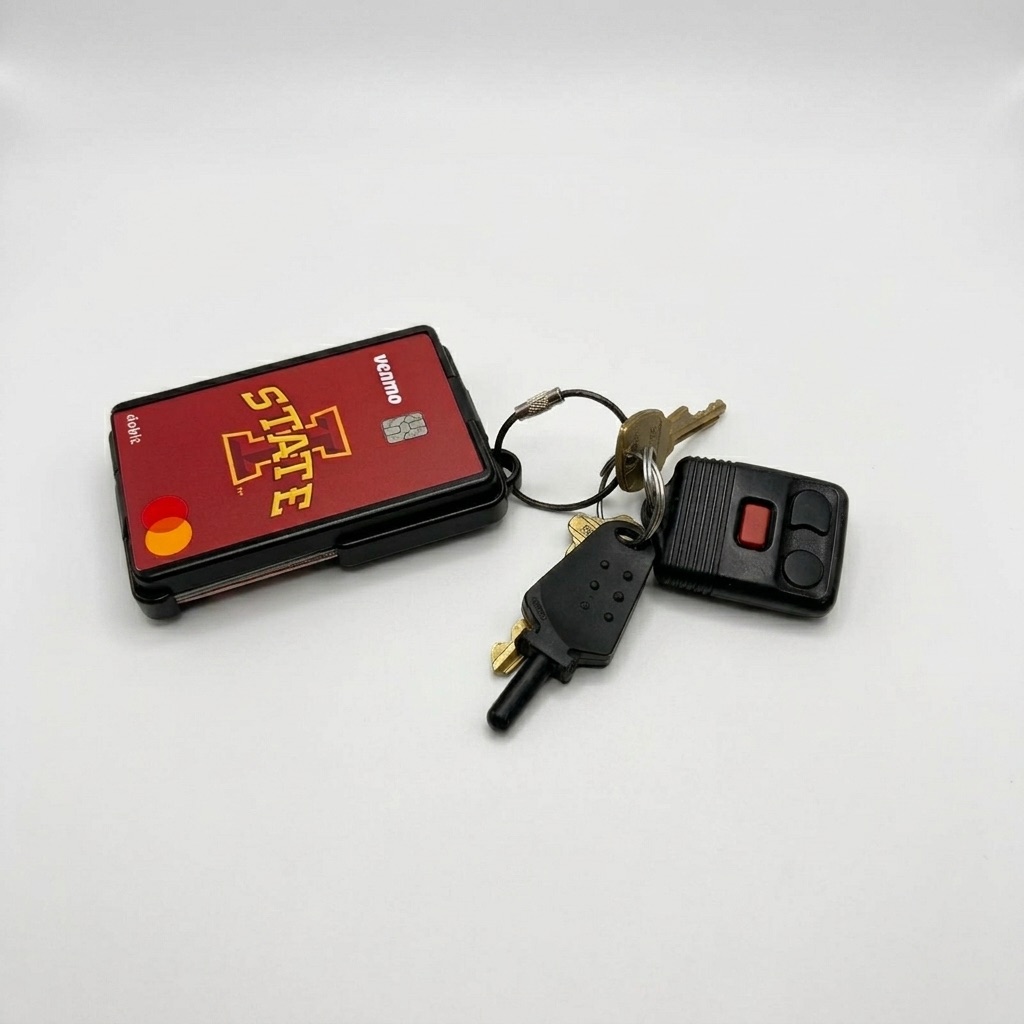
A pocket dump isn't just a gear photo. It's a diagnostic. Lay everything out and you can instantly see what you're actually carrying versus what you think you're carrying. Most people are surprised by how much passive weight they've accumulated.
Step One: The Full Dump
Empty every pocket you carry things in: pants, jacket, bag, hoodie. Put everything on a flat surface. Don't edit yet, just see what's there.
Most people find: a wallet with too many cards, a keyring with keys they can't identify, a phone, and a handful of miscellaneous items that have lived in a pocket so long they've become invisible. Old receipts, loose change, a hair tie that isn't yours, a pen that doesn't work.
Step Two: The Honest Audit
For every item in the dump, ask: did I use this in the last week? If yes, it earns a spot. If no, it goes in a secondary pile.
Be honest about cards especially. A stuffed wallet is usually full of cards you use once every six months. Those don't need to be in your pocket every day. Leave them in a drawer at home and bring them when you know you'll need them.
- Used in the last week. Stays. Earns a permanent pocket spot.
- Used monthly. Candidate for a bag rather than a pocket. Or keep it in the car.
- Used rarely. Does not belong in daily carry. Store it somewhere you can find it when needed.
- Never used. Discard or relocate. No more pocket rent for free.
Step Three: Assign Everything a Spot
Organization isn't about buying new organizers. It's about consistent placement. Pick a pocket for each item and stick to it every single day.
A common system: right front pocket for phone, left front pocket for wallet and keys. Or wallet and keys combined in one pocket if you use a keyring wallet. Right rear pocket for nothing (easier pickpocket target). That's it.
The goal is to reach for something and find it without thinking. That only happens with consistent placement, not with a better bag.
The Wallet as the Center of the System
Your wallet is the densest item in the pocket dump. Getting it right simplifies everything else. A slim wallet that holds only your daily cards and ID means less bulk, faster access, and fewer decisions.
If your wallet is the thick one with every card you've had since 2015, a slim card-count wallet changes the experience. The Metal Brik holds 7-8 cards in the main compartment plus ID in a front quick-access slot. That's enough for daily life for most people without the bulk.
If you want to combine your wallet and keyring into one item, the EDC wallet has an integrated removable keyring. One less thing to track.
Maintaining the System
Pocket dumps accumulate over time. Receipts appear. Cards get added. New items sneak in. A monthly ten-minute audit keeps it from drifting back to chaos.
The same way you'd do a quarterly closet cleanout, do a quarterly pocket dump review. It takes less time than you think and the payoff is daily: less fumbling, less bulk, less weight.
Quick answers
How many cards should I actually carry in my wallet?
Daily-use cards only. For most people that's two to four: a debit or credit card, an ID, maybe a health insurance card, and one store card you use regularly. Everything else stays home.
Is a separate wallet and keyring better than a combined one?
Depends on your key count. One or two keys: combined makes sense. Three or more: a small separate keyring is usually cleaner.
What do I do with receipts?
Photograph them and throw them away. Apps like Apple Wallet or a notes photo can store the image if you need it for returns. Paper receipts in wallets are clutter with a two-week shelf life.