
Working from home does not mean you stop leaving the house. You still run errands, hit coffee shops, go to occasional in-person meetings, and travel for work. The question is what carry system makes those transitions easy without hauling everything you own. See the pro wallet for compact carry built for professionals who move between contexts.
The goal for remote workers is a minimal daily carry that handles the coffee shop session and the impromptu lunch with a client without requiring a bag swap.
What Remote Work Actually Changes About Carry
In a traditional office job, your bag is packed for a full day, every day. Remote work means most days you carry almost nothing but a few days a week you need to be ready for anything. That inconsistency is the real challenge.
The solution is a core carry that is always ready, plus a bag you can add to when the day demands it. The core carry never changes. The bag is optional.
The Core Carry for Remote Workers
See the pro wallet for the full breakdown, but here is what the core carry should cover.
- Cards and ID. Payment cards, a work badge if you use one, and a government ID for any situation that asks for one. A slim wallet that organizes these without bulk is the foundation.
- Keys. Home key, car key if applicable. Keeping these integrated with your wallet means one less thing to track down when you are heading out fast.
- Phone. This is already in your pocket. No action required.
- Backup charging. A small power bank that clips to a bag or slides into a pocket. Coffee shop outlets are not always available or near a good seat.
The Bag You Add When Needed
For coffee shop work sessions, you need a laptop bag or backpack, your charger, headphones, and maybe a notebook. The point is this bag gets added to your core carry, not replaced by it.
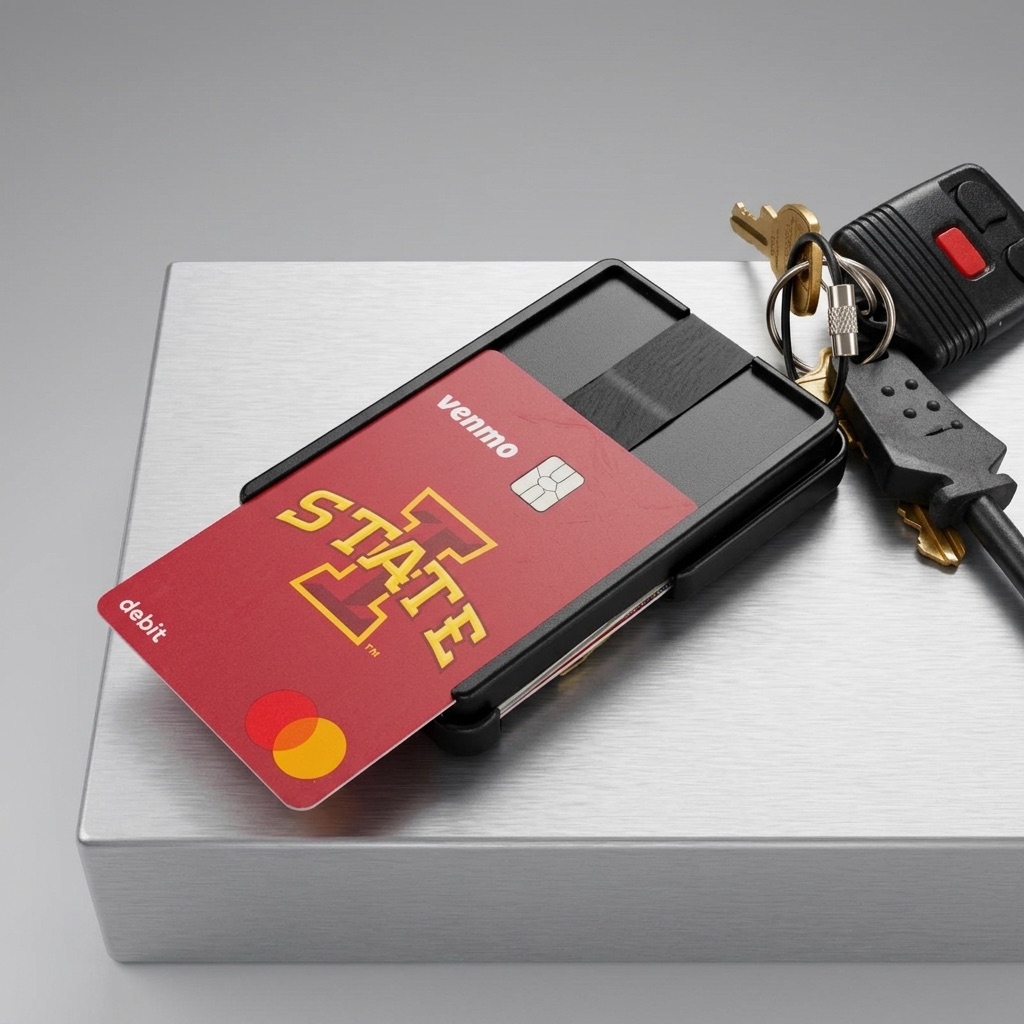
A slim wallet with an integrated keyring means your keys and cards are already organized and can move from pocket to bag to pocket without any reorganization. The Metal Brik ($69.99) has an integrated removable keyring, a front slot for a work badge, and holds up to eight cards with RFID protection. It goes from errand mode to client meeting without any switching.
Travel Days and Client Days
The days remote workers most feel the gap in their carry system are the travel days and unexpected in-person client meetings. These are the days where looking put-together matters and where your carry either supports you or betrays you.
On those days, the compact professional carry that works every day still works. You just add a quality bag, a clean outfit, and whatever the meeting requires. The carry itself does not need to change.
See also: engineer everyday carry for a framework that applies across knowledge-worker roles.
Quick answers
Do remote workers need a work bag?
Not daily, but for coffee shop sessions, coworking days, and client meetings, yes. A compact backpack or messenger bag that fits a laptop and a few accessories covers most scenarios.
What is the difference between remote work carry and regular office carry?
Remote work carry needs to be flexible. It should work for a quick errand and scale up to a full day out. Office carry tends to be fixed for one context.
Is a slim wallet worth it for remote workers?
Yes, especially if you carry fewer cards than you did in an office. When you leave the house less often, you want what you do carry to be organized and compact.