
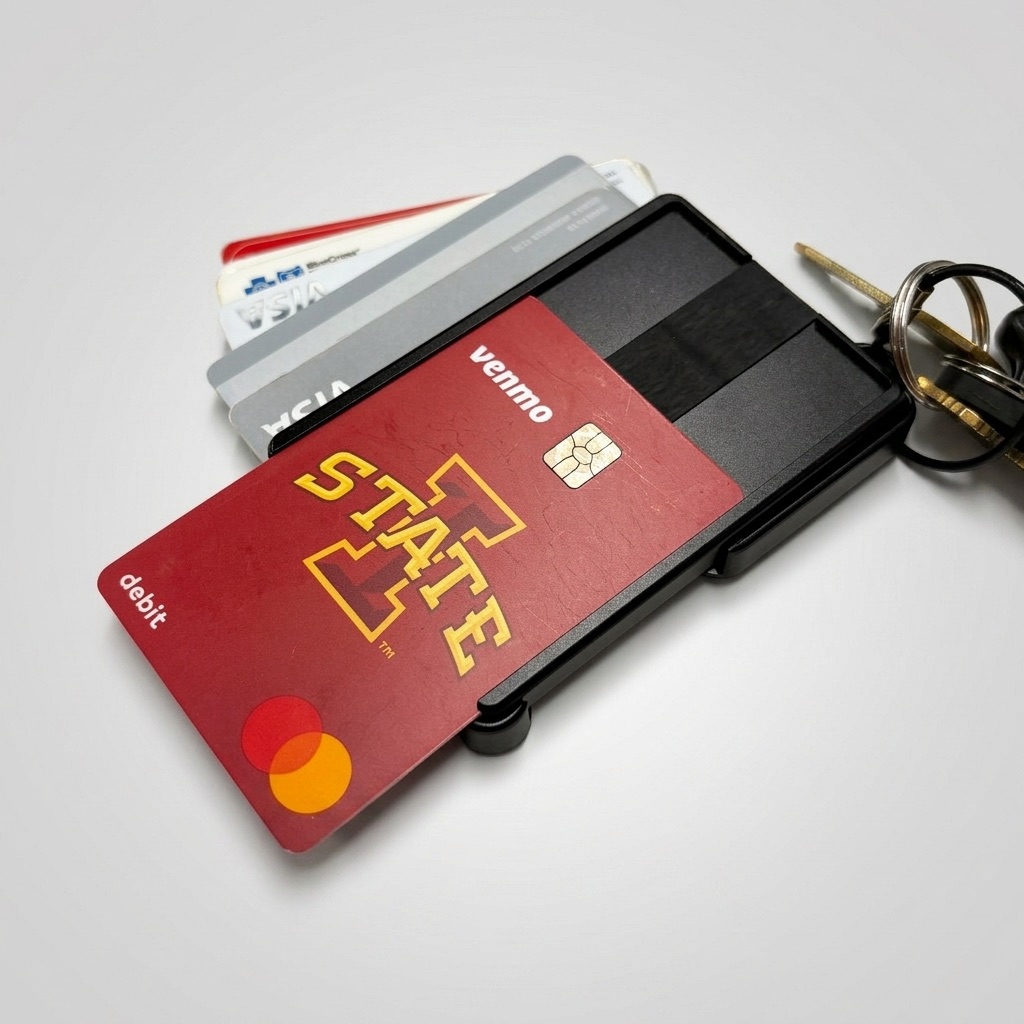
A wallet that lasts a decade needs to handle three things: structural failure, surface wear, and material degradation. Most wallets fail on at least one of these within four years of daily use. The ones that make it to ten years eliminate all three failure modes, usually by using materials that simply do not degrade the same way leather and fabric do.
Why Most Wallets Do Not Make It
Leather bifolds usually fail at the fold first, then at card pocket stitching. Nylon and canvas wallets fray at edges and seams. Slim card holders with snap closures lose their snap. Elastic loses tension. These are all soft material problems, and soft materials have a finite service life under daily mechanical stress.
Heat and moisture accelerate every one of these failures. A wallet that lives in a back pocket absorbs body heat and sweat every day. A leather wallet rinsed in a washing machine is usually finished. Fabric wallets can survive a wash but often come out misshapen.
The average person replaces their wallet two to three times per decade without thinking much about it. If you want to stop doing that, the material choice matters more than the brand.
What Makes a Decade Wallet
Hard materials with no structural stitching. Machined metal wallets have no seams to fail. The wallet body is the material itself. The only soft component is typically an elastic band for cash, which can be replaced or lasts many years at normal tension.
Water resistance matters. A wallet that survives rain, sweaty gym bags, and accidental washing machine trips without structural damage is a wallet that makes it to year ten.
A warranty that covers structural failure is a good signal. If a company stands behind the wallet for the long haul, they have built it to go the distance.
The Cost Comparison Over Ten Years
A $30 leather wallet replaced every two to three years costs $100 to $150 over a decade. A $69.99 metal wallet that lasts ten or more years costs $69.99. The math is simple, and the math does not even account for the time and friction of shopping for a new wallet every few years.
The metal wallet from The Brik is machined from black anodized aluminum, water resistant, and backed by a warranty that covers structural failure. It holds 7-8 cards, one quick-access ID, and cash under an elastic band.
If longevity is the goal, see the metal wallet and check out the guide on why metal wallets outlast leather for the material science behind the difference.
- No stitching. The most common wallet failure mode eliminated entirely.
- Hard material. Machined aluminum does not crack, peel, or absorb moisture.
- Water resistant. Handles rain, sweat, and accidental washing without structural damage.
- Warranty-backed. A structural failure warranty signals the manufacturer believes it will last.
Quick answers
Are expensive leather wallets more durable?
Full-grain leather from quality hides lasts longer than bonded or split leather, but even premium leather wallets rarely pass five to six years of hard daily use. The material ceiling is lower than metal regardless of price.
Can a metal wallet go through the washing machine?
A water-resistant metal wallet can survive an accidental wash cycle better than leather or fabric. Check the specific product specs, but machined aluminum is not damaged by water the way other materials are.
What is the weakest point of a metal wallet?
Usually the elastic band if it has one. Elastic has a service life measured in years, not decades. Look for brands that allow band replacement or use high-quality elastic designed for daily use.