
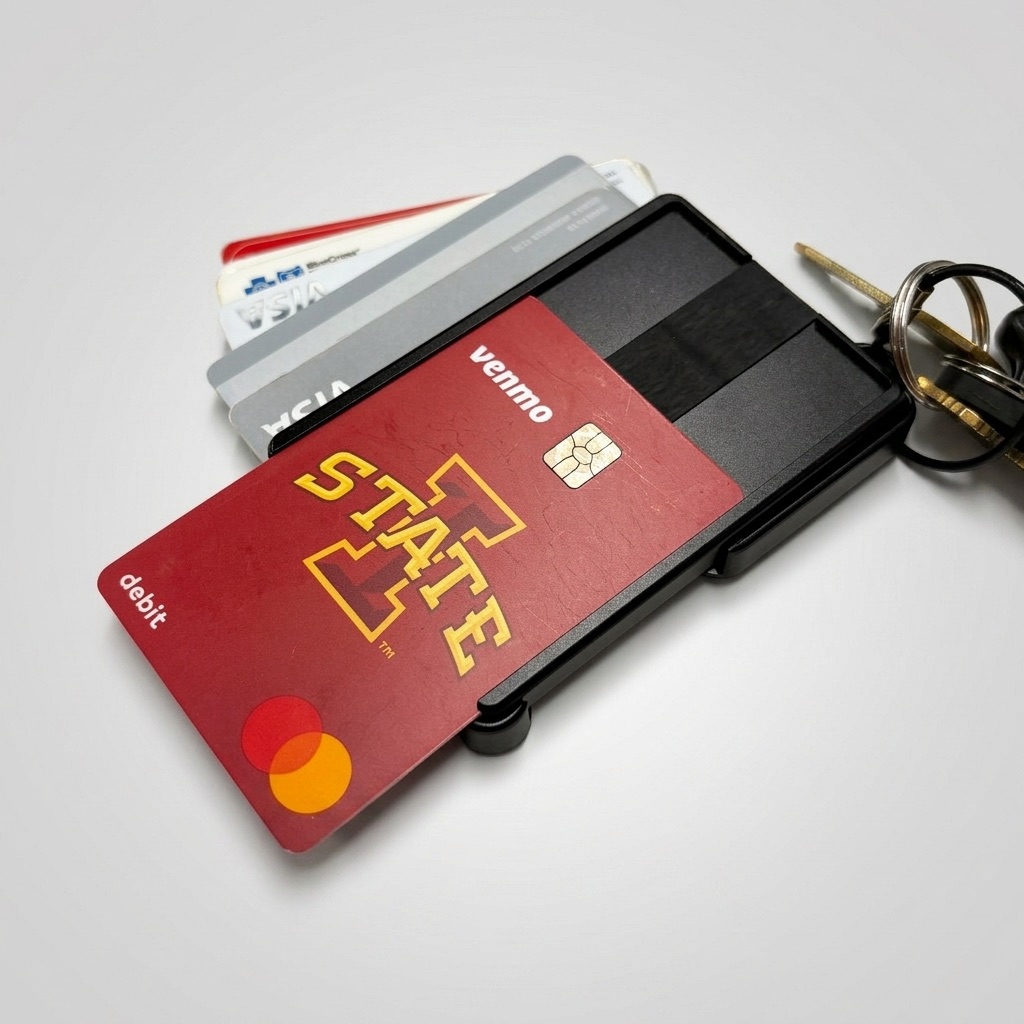
Good wallet organization comes down to one rule: the card you reach for most goes in the most accessible slot. Everything else is sorted by frequency of use. If you have to dig to find your debit card at checkout, your wallet is not organized, it is just full.
Front Slot: The Grab-and-Go Card
If your wallet has a quick-access front slot, it belongs to the one card you pull out ten times a day. For most people that is a debit or credit card. For some it is a work badge or transit card.
The key is consistency. The same card goes in the same slot every time. Muscle memory does the rest. You stop looking at your wallet and start just reaching for what you need.
Main Compartment: Sort by Frequency
Stack cards in order of use, with the most frequently used on the outside and the least used buried toward the back. When you are adding a new card, think about where it should live in the rotation before you slide it in.
In a slim metal wallet with a set capacity, this organization discipline is easy to maintain because the wallet will not accept more cards than it is designed to hold. Overstuffing is physically prevented, which keeps the ordering intact.
The metal wallet from The Brik holds 7-8 cards in an RFID-protected compartment with one quick-access ID slot in front. That structure makes the organization system almost automatic.
Cash: Fold It Right
Cash should be folded consistently. Bills folded in half and sorted by denomination mean you never pull out a $20 when you meant to grab a $5. Some people sort ascending (small bills on the outside), some descending. Pick one and keep it.
Receipts do not belong in the wallet. Photograph them with your phone immediately or drop them in a bag pocket. A wallet that accumulates receipts is a wallet that bloats back to bifold thickness within two weeks.
For people making the transition from a thick wallet, read switching from a thick wallet for a realistic picture of the adjustment period. And if you want a wallet with a built-in organizational structure, the metal wallet page shows how the slots are laid out.
- Front slot. Your single most-used card. Debit card, transit card, or work badge.
- Main compartment front. Cards used several times a week. Backup credit card, health insurance.
- Main compartment back. Cards used occasionally. Rewards card, secondary ID.
- Cash band. Bills folded and sorted by denomination, smallest on the outside.
- No receipts. Photograph and discard immediately. Receipts in wallets are a slippery slope.
Quick answers
Should I organize by card type or frequency of use?
Frequency of use. The most useful organization system is the one that gets your most-used card into your hand fastest. Card type is irrelevant to that goal.
How many cards should I actually carry?
Most people get by with five to seven cards daily. Anything beyond that is likely a card you use less than once a month, which belongs at home.
What is the best way to remember which pocket I put my wallet in?
Pick one pocket and always use it. Front-left or front-right, same every day. It becomes automatic within a few weeks and you will never pat down your pockets looking for it.