
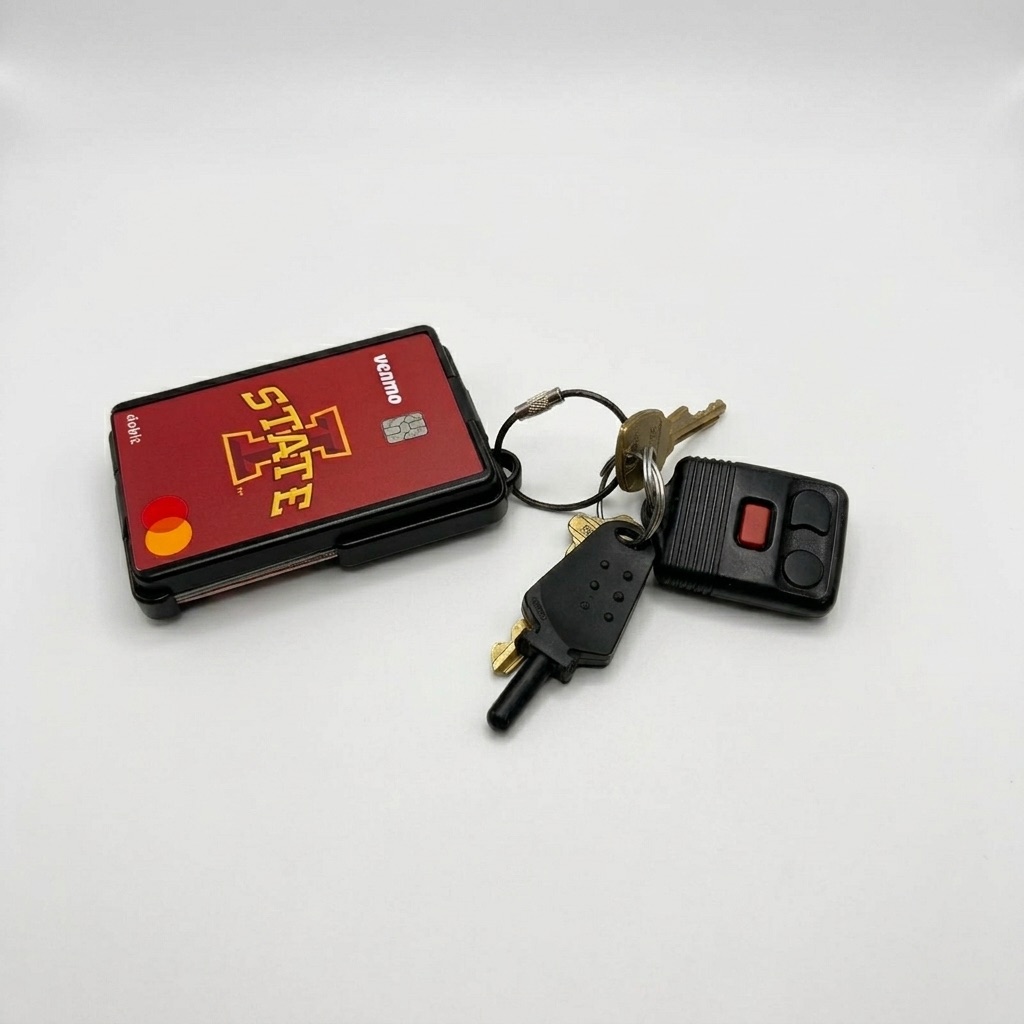
Most traditional wallets are unusable on a run. They're too thick, they bounce, and they make any shorts pocket into an uncomfortable lump. Runners need either a purpose-built solution or a wallet small enough to not matter.
The Running Wallet Problem
Running shorts and tights have minimal pockets, often with zippers. What fits in those pockets is limited: phone, keys, and maybe one more thing if it's flat. A standard bifold doesn't make the cut.
Runners also sweat. Anything porous absorbs it. Leather wallets, fabric card holders, and thick wallets all end up soggy and sometimes damaged after a long run in warm weather.
What Runners Actually Need to Carry
On a short neighborhood run: probably nothing. Phone and house key are enough. On a longer run where you might stop at a store, cross a road where you need ID, or need emergency help: ID, one payment card, and your phone.
The goal is the smallest, flattest package that covers the scenarios you might actually face. A few cards loose in a zip pocket works for some people. Others want a slim rigid wallet that protects the cards and stays put.
- Short runs under 30 minutes. Phone and key is enough. No wallet needed if you're not going far from home.
- Longer training runs. ID and one card covers emergencies and planned stops. A slim wallet or a card in a zip arm band.
- Races. Depends on the race. Many provide bag check. If you're self-supporting, an ID and a card in a zip pocket is the max you want.
Types of Running Wallet Solutions
Running-specific options include: zip arm bands with a card slot (holds one or two cards and a key), running belts or vests with small pockets, and slim rigid wallets that fit in a shorts zip pocket.
For runners who want one wallet that works for running and everyday use, a slim rigid wallet is the best overlap. The Metal Brik is flat enough to fit in a zip shorts pocket without bouncing, the aluminum body doesn't absorb sweat, and it covers daily carry needs when you're not running.
It holds an ID in a front slot and up to 7-8 cards in the main compartment. On a run you might only use the front slot card, but you're not carrying a dedicated running wallet and a daily wallet.
Sweat Resistance Matters
Leather warps and smells after repeated sweat exposure. Fabric absorbs and can mildew. Aluminum, hard plastic, and carbon fiber hold up better.
If your main wallet can't handle sweat, you'll end up carrying something else on runs, which means two wallets and double the tracking. A water-resistant rigid wallet eliminates that split.
For the broader everyday carry question, see the guide on pocket dump organization if you're trying to simplify what you carry across all your activities.
The Keyring Question for Runners
A full keyring is useless on a run. Most runners use a single house key, either loose in a zip pocket, clipped to a shoelace, or attached to a slim wallet keyring.
A wallet with an integrated removable keyring, like the Metal Brik, lets you clip your key to your wallet so you're carrying one item instead of two. On a run, one item in a zip pocket is cleaner than a key and a card holder separately.
Quick answers
Can I just put a card loose in my shorts pocket while running?
Yes, if the pocket zips. A loose card in an open pocket will exit the pocket on a long run. Zip pockets are mandatory for loose items.
What's the best wallet for marathon racing?
Races usually have bag check. For self-supported running, an arm band with a card slot is purpose-built for the task. For training runs where you want one wallet that also works daily, a slim rigid wallet is the overlap.
Do I need a wallet on short runs?
Probably not. Phone and one key is enough for runs under 30-45 minutes near home. The wallet question comes up on longer runs or runs in unfamiliar areas.