For most iPhone users, AirTag wins on network size. Apple's Find My network covers hundreds of millions of devices, so a lost wallet gets location updates faster and in more places. Tile is better if you use Android, want a subscription-free option long-term, or need a card-thin form factor that AirTag cannot match on its own.
The Network Difference
The single biggest factor is crowd network size. When your wallet is lost, your tracker relies on other people's phones to relay its location. Apple Find My runs on every iPhone with a recent iOS version. That is an enormous passive network in most cities, malls, airports, and rideshares.
Tile uses its own network of Tile app users plus integration into some Android phones. The Tile network is respectable but smaller. In dense urban areas the gap may not matter. In suburban or rural areas, the Find My advantage is more noticeable.
Form Factor Reality
Here is the practical problem with AirTag in a wallet: it is a disc, not a card. Sticking an AirTag in your wallet adds a noticeable bump. Some people use AirTag holders that slide into a card slot, which reduces but does not eliminate the bulge.
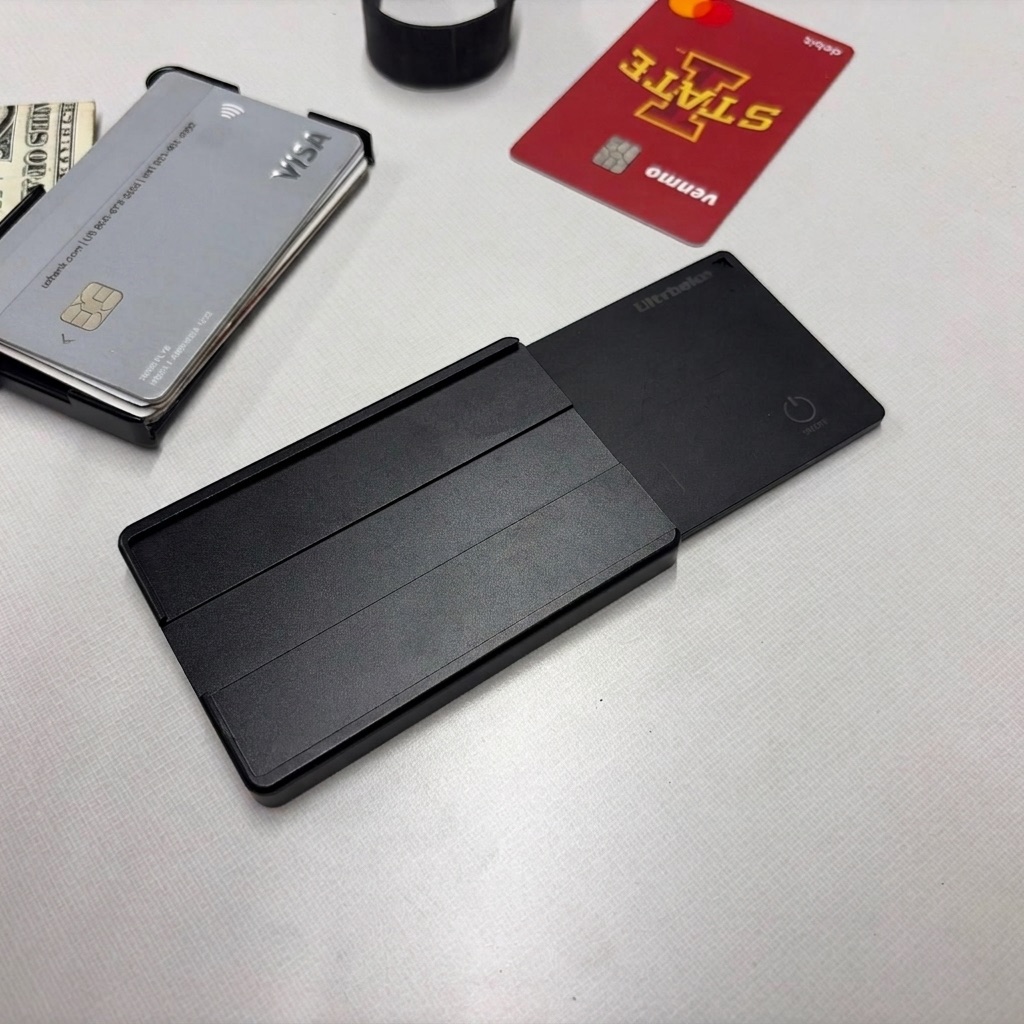
Tile makes card-shaped trackers like the Tile Slim that fit cleanly. Third-party cards built on the Find My network also exist in card form. The Brik tracking wallet solves this differently: the tracker is a built-in card that lives inside the wallet, charges wirelessly, and never adds bulk.
For a full breakdown of built-in vs add-on approaches, see the guide on built-in tracker vs clip-on.
Battery Situation
AirTag uses a CR2032 coin cell that lasts about a year. Replacement is cheap and easy. Tile Slim uses a built-in rechargeable battery that lasts up to 3 years before the card should be replaced. Neither requires a subscription to track, though Tile's premium plan adds smart alerts.
Rechargeable card trackers that charge on a wireless pad are a newer option. They sidestep the battery replacement cycle entirely, which some people prefer especially when the tracker is built into a wallet they plan to use for years.
Price and Ecosystem Lock-In
A single AirTag costs around $29. Tile Slim is similar. Once you are in Apple's ecosystem, you are not locked to a specific brand for the wallet since many third-party Find My accessories exist. Tile requires the Tile app regardless of phone brand.
If you switch from iPhone to Android, your AirTag investment becomes less useful. If you switch from Android to iPhone, Tile still works but you lose the network advantage. This is worth considering if you change phones frequently.
Which Should You Buy
iPhone user who wants the best coverage: AirTag or a Find My card tracker. Android user: Tile or Google Find My Device compatible tracker. Person who wants it already built into the wallet without adding bulk: look at the Brik tracking wallet, which ships with your choice of Apple or Android tracker built in.
- iPhone users. AirTag or Find My card tracker gives the largest crowd network coverage.
- Android users. Tile Slim or a Google Find My Device tracker integrates with your existing phone.
- People who want zero bulk. A wallet with a built-in tracking card avoids the disc-in-slot problem entirely.
Quick answers
Can I use an AirTag with Android?
AirTag is designed for iPhone. Android users can detect AirTags for anti-stalking purposes but cannot track their own AirTag from an Android device.
Does Tile work with iPhone?
Yes. The Tile app runs on both iOS and Android. iPhone users can use Tile, but they will not benefit from Apple's Find My network unless they use a Find My compatible device.
Is there a monthly fee for AirTag?
No. AirTag works with Apple Find My at no subscription cost. Tile offers a free tier with basic tracking and a paid plan for extra features.