
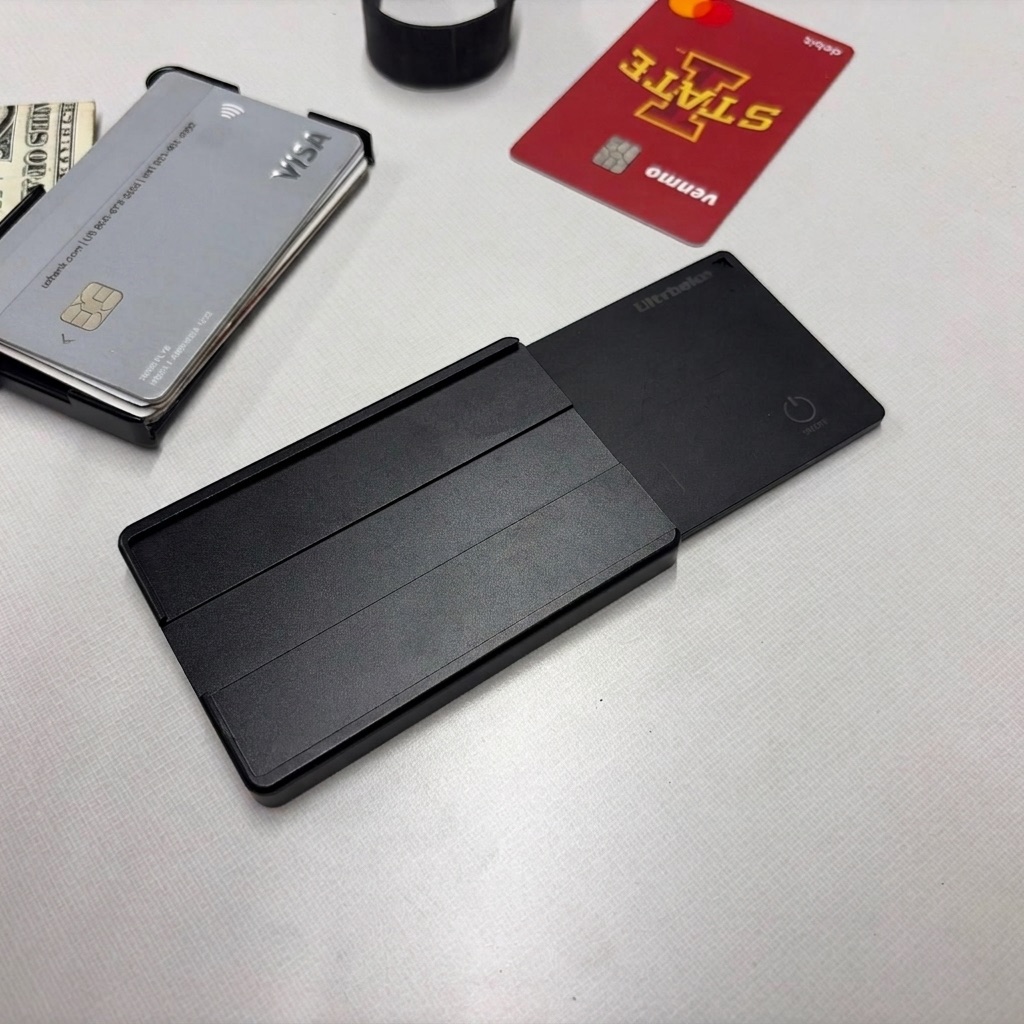
Built-in trackers win on daily convenience because they are always in place, never add new bulk, and cannot be accidentally left behind. Clip-on trackers are more flexible since you can move them between wallets, but they add thickness and have a habit of being removed and forgotten on a nightstand.
The Case for Built-In Trackers
A built-in tracker is one you never think about. It is part of the wallet from day one. You do not buy it separately, you do not pair it to a new wallet, and you do not discover it fell out six months later. It is just there.
Card-integrated trackers designed for specific wallets sit flush in a dedicated slot. They do not compress your cards, they do not create a ridge in your pocket, and they charge when the wallet charges (or separately on a wireless pad). The tracking simply works without maintenance beyond an occasional charge.
The Brik tracking wallet takes this approach: the tracking card lives in the wallet, is removable for charging, and slots back in without any adjustment to how the wallet carries.
The Case for Clip-On Trackers
Clip-on trackers like a slim Tile or an AirTag in a card holder are appealing if you switch wallets often or want to add tracking to a wallet you already love. You buy one tracker and move it around as needed.
The real-world problem is that most people do not move it around. The tracker ends up in one wallet permanently, which defeats the flexibility argument. And if the holder adds 2mm of thickness to your wallet, that is permanent bulk you did not sign up for.
Clip-ons are also prone to getting removed when the wallet gets crowded. Someone cleans out their wallet, pulls out the card holder, sets it on the desk, and the tracker is no longer in the wallet.
Thickness and Pocket Feel
A disc-shaped AirTag in a card slot holder is the worst-case scenario for pocket feel. It creates a hard lump in an otherwise flat object. Card-thin clip-ons are better but still add at least 1-2mm to a wallet that was probably already at its card limit.
A purpose-built integrated tracker adds zero extra thickness because the wallet was designed around it. That is the meaningful difference. If a slim profile matters to you, this distinction is worth paying attention to before buying.
Battery and Maintenance Comparison
Clip-on coin-cell trackers require a battery swap once a year, which is easy but means remembering to do it. If you forget, the tracker dies silently and you do not know until you need it.
Rechargeable built-in cards charge wirelessly, typically every few months. You can set a reminder or just charge it when you charge your phone. Six months of battery life means two charges a year, which is low-maintenance but not zero-maintenance.
For more context on rechargeable vs battery options, see the guide on rechargeable vs battery wallet trackers.
Which to Choose
If you already own a wallet you love and do not want to replace it, a card-thin clip-on tracker is a reasonable addition. If you are buying a new wallet and tracking matters to you, buying a wallet with a built-in tracker is the cleaner solution. You get better form factor, no risk of losing the tracker separately, and a wallet designed around the feature rather than adapting to it.
- Keep your current wallet. A card-thin clip-on tracker like Tile Slim adds tracking without replacing your wallet.
- Buying a new wallet anyway. A wallet with an integrated tracker is the tidier option with no added bulk.
- Switch wallets often. A clip-on lets you move the tracker, but you will probably stop doing this within a month.
Quick answers
Will a clip-on tracker fit in any wallet?
Card-thin trackers fit in most wallets with a card slot, but they occupy one slot and may push the wallet past its comfortable capacity.
Can I remove a built-in tracker from the wallet?
It depends on the wallet. Some integrated trackers are removable for charging but are designed to stay in the wallet otherwise. Check before buying if removability matters to you.
Do built-in trackers use the same networks as standalone trackers?
Yes. Built-in cards connect to the same Bluetooth networks (Apple Find My or Android equivalents) as standalone trackers. The hardware is the same; it is just integrated into the wallet design.