
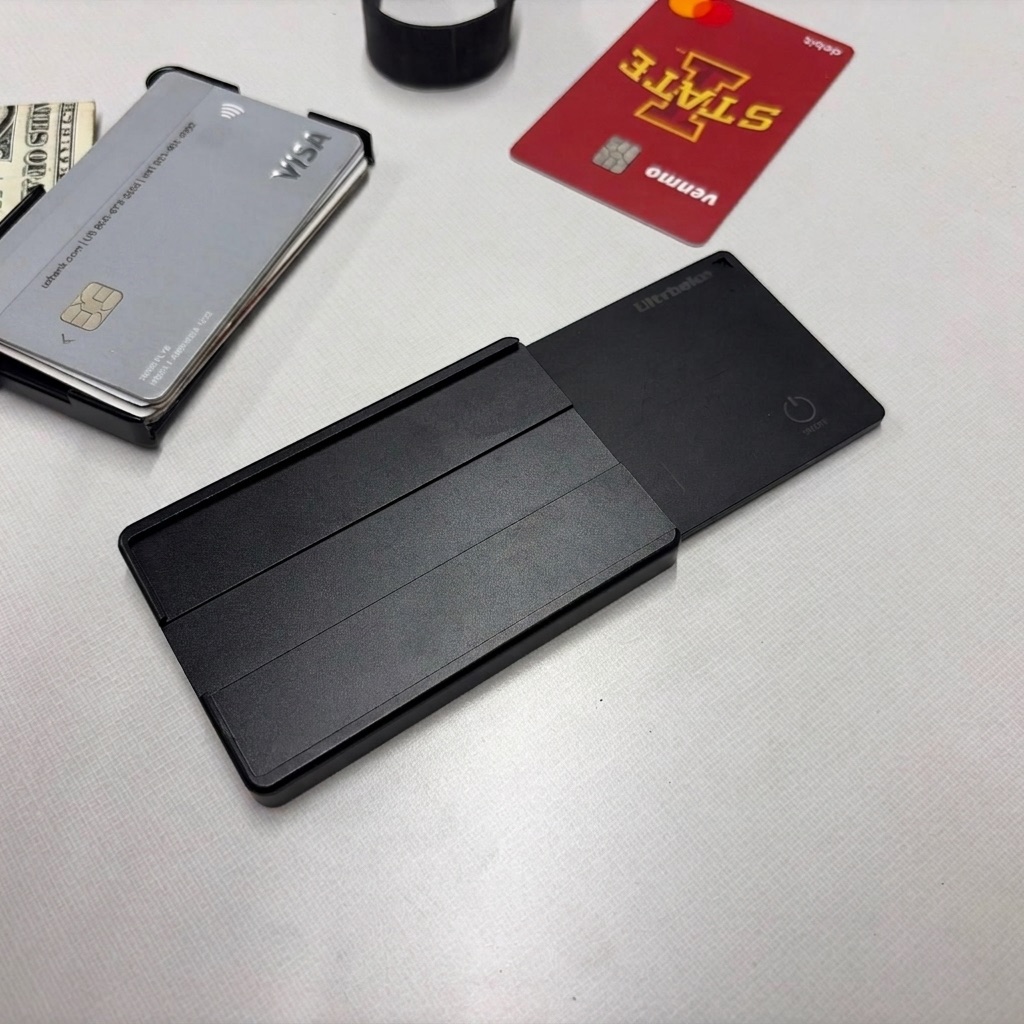
Rechargeable trackers charge on a wireless pad every few months and never need a battery swap. Battery-powered trackers run on coin cells for 6-12 months and then need a replacement. Neither is dramatically better; the right choice depends on whether you would rather remember to charge something or remember to buy a battery.
How Battery-Powered Trackers Work
Most classic trackers like the AirTag and original Tile use a CR2032 coin cell battery. These are available everywhere for under a dollar each. When the battery dies, you pop the cover, swap the cell, and the tracker is back. AirTag gives you about a year per battery.
The advantage is simplicity. No charging cable, no wireless pad, no app reminder to charge. The downside is that you have to buy batteries and remember to replace them. Most people forget until the tracker beeps a low-battery warning.
How Rechargeable Trackers Work
Rechargeable card trackers have a small internal battery that tops up on a Qi wireless charging pad, the same standard used by most wireless phone chargers. You remove the card from the wallet, set it on the pad for a few hours, and replace it. No coins to dig out, no battery compartment to pry open.
The Brik tracking wallet uses a rechargeable card that gets up to 6 months per charge. Twice a year on the charger, and you are done. The card slides out, charges, and slides back in without any adjustment to the wallet's setup.
Battery Life Comparison
AirTag: approximately 12 months per CR2032 cell. Tile Slim: built-in rechargeable rated for 3 years before the device degrades (the card itself is designed to be replaced, not recharged). Card trackers with wireless charging: typically 3-6 months per charge.
On raw time between actions, battery-powered trackers win. But the action for rechargeable is putting it on a pad, while the action for battery-powered is finding a CR2032 at a pharmacy. Neither is burdensome, but your preference probably depends on which kind of forgetting you are more prone to.
The Dead Tracker Problem
Both types have the same failure mode: the tracker dies and you do not know until you need it. The only solution is to check battery level occasionally in the app, which both ecosystems support. Apple Find My shows AirTag battery level. Most tracker apps show a similar indicator.
Rechargeable trackers sometimes make this easier because charging them is a regular active action that you notice, compared to a battery that dies passively.
Cost Over Time
CR2032 batteries cost roughly $0.50-$1 each at a dollar store. At one per year, that is negligible. Rechargeable trackers cost nothing to run after purchase. Over five years the difference is a few dollars either way.
The bigger cost factor is what you pay upfront. A standalone AirTag is about $29. A wallet with a built-in rechargeable tracker costs more than a plain wallet but bundles the tracking hardware. Whether that bundling is worth it depends on whether you would have bought a tracker anyway.
For more on tracker types, see the guide on how wallet tracking cards work.
Quick answers
Can I use any wireless charger for a rechargeable tracker?
Most rechargeable card trackers use the Qi standard, which works with the same pads used for Android phones and AirPods. Check the product specs to confirm compatibility.
What happens if a rechargeable tracker fully drains?
It stops transmitting until charged. Put it on a wireless pad and it should recover. Most trackers retain their pairing even after a full drain.
Are rechargeable trackers better for the environment?
In theory, yes. Fewer disposable batteries means less battery waste over time. In practice the difference at the scale of a single wallet tracker is minimal, but it is a reasonable tie-breaker if you care about it.