
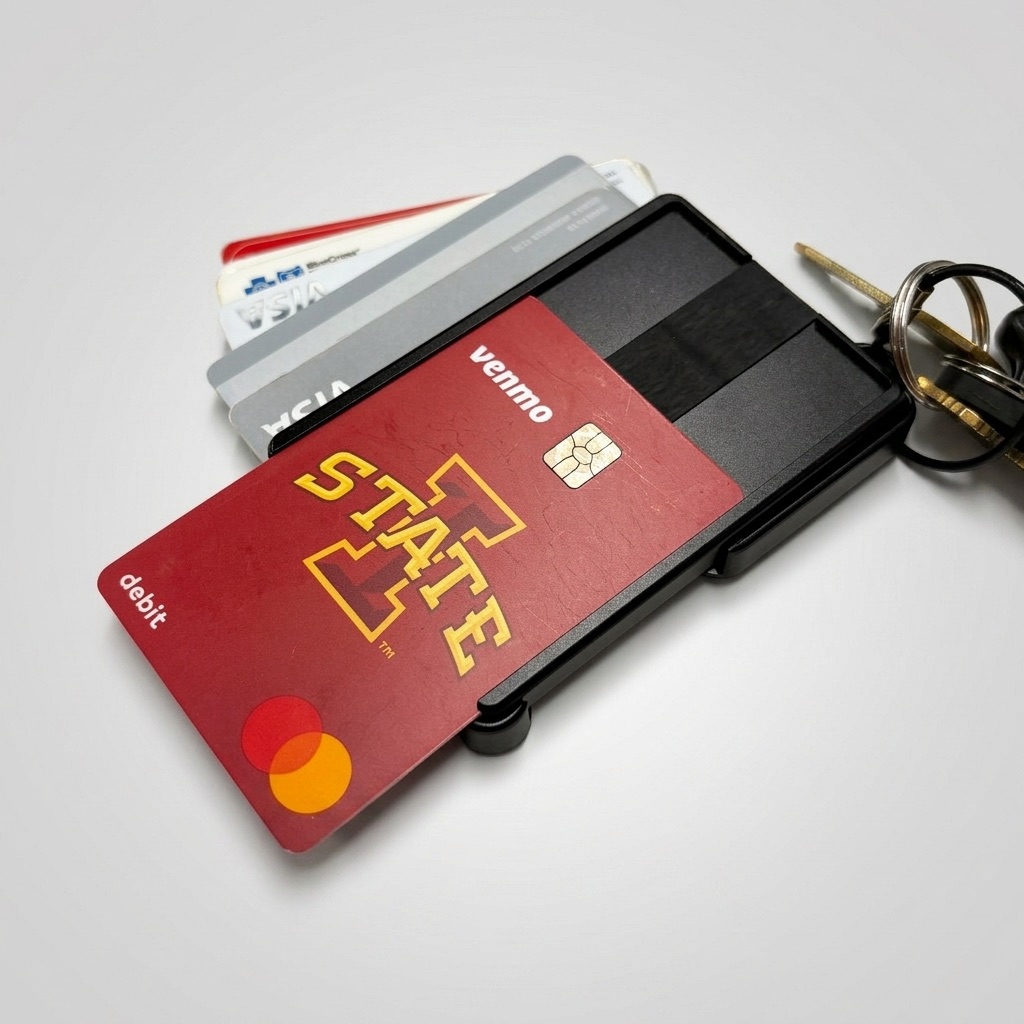
Phone case wallets consolidate your carry but create a single point of failure: if your phone dies, gets stolen, or goes into a pocket with your cards, you lose everything at once. A dedicated metal wallet keeps your cards and phone separate, which turns out to matter a lot in real situations.
The Appeal of Phone Case Wallets
The pitch is simple: one thing instead of two. Your phone is already in your hand constantly, so attaching your cards to it means they are always accessible. You pull out your phone to pay, and the card is right there.
For very light carriers, people with two or three cards and no cash, this can genuinely work. The case adds minimal bulk if you only carry one or two cards, and the convenience is real.
Where Phone Case Wallets Break Down
The single point of failure problem is the biggest one. Leave your phone at the table, hand it to a friend to look at a photo, or have it stolen, and your cards go with it. With a separate wallet, your phone and cards can only be lost or stolen independently.
Phone upgrade cycles are the other practical issue. You replace your phone every two to three years. Your phone case wallet gets replaced with it. A metal wallet has no upgrade cycle.
Cards can interfere with wireless charging. Stacking cards between your phone and a charging pad blocks the signal. Some people remember to remove the cards every night. Most people stop bothering and just plug in, which adds cable friction.
MagSafe and NFC payment can also conflict with cards stored directly against the phone. Some cards demagnetize near certain phone models. It does not happen often, but it happens enough to be a known issue.
Why a Dedicated Metal Wallet Usually Wins
A dedicated metal wallet fits in a front pocket separately from your phone. When you need to pay, you pull out the wallet. When you need your phone, you pull out your phone. Nothing is attached to anything else.
Durability is not tied to your phone's lifespan. A metal wallet machined from aluminum outlasts multiple phone generations. The wallet does not care whether you upgrade to a new phone model.
RFID protection in a metal wallet protects all your cards simultaneously without relying on the phone case material to do the job. The Brik's metal wallet has an RFID-protected main compartment that holds 7-8 cards.
For people curious about what to carry in a dedicated slim wallet, what goes in a minimalist wallet covers the typical daily carry that fits most people's needs.
- Phone case wallet: pro. One less item to carry. Cards always with your phone.
- Phone case wallet: con. Single point of failure. Replaced with every phone upgrade. Wireless charging conflicts.
- Metal wallet: pro. Cards and phone independent. Built to last a decade. No upgrade cycle.
- Metal wallet: con. Two separate items instead of one. Takes adjustment if you are used to combined carry.
Quick answers
Do metal wallets interfere with phone NFC payments?
A metal wallet kept in a separate pocket does not interfere with your phone. The interference issue only applies when cards are stored directly against the phone's NFC antenna, as in a phone case wallet.
Can I use Apple Pay instead of carrying cards?
Yes, for most purchases. But IDs, some transit systems, and certain businesses still require physical cards. A slim wallet with a few cards covers the gaps that digital wallets cannot.
How many cards can a metal wallet hold?
The Brik metal wallet holds 7-8 cards in the main compartment plus one ID in a separate front slot. That covers the typical daily carry for most people.