
The honest answer: $50-$100 buys a wallet that will hold up for years and do everything a wallet needs to do. Under $30 buys something that works but probably won't last. Over $150 buys better materials and sometimes better features, but the quality ceiling is reached well before the price ceiling.
A wallet is a daily-use object that you'll touch several times a day for the next few years. Spending a little more than the absolute minimum is usually worth it. Spending significantly more than $100 requires a specific reason: a preferred material, a feature set you actually need, or a design you'll still want to look at in five years.
What each price tier actually buys
Here's a practical breakdown of what you get at different price points.
- Under $20. Fabric or very thin bonded leather. Works fine for a year or so. The stitching or material starts to give before the cards do. Fine as a temporary wallet or for very light carry.
- $20-$50. Entry-level leather bifolds and fabric slim wallets. The quality varies significantly in this range. You can find durable options, but you can also find wallets that look fine in the store and fall apart in six months. Read reviews carefully.
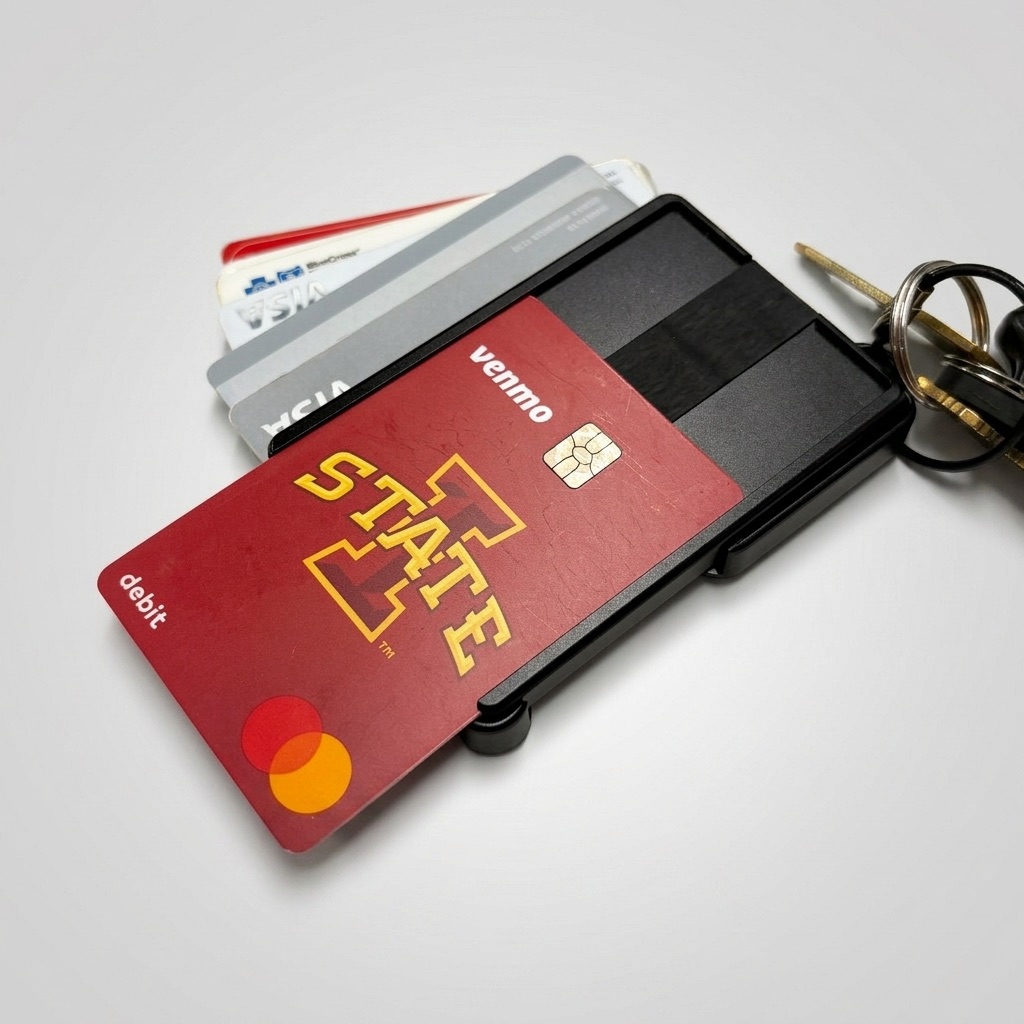
- $50-$100. This is the sweet spot. Quality leather goods, machined metal wallets, and feature-equipped slim wallets all live here. You're buying a wallet that will last several years minimum. The Metal Brik ($69.99) is in this range and includes RFID protection, a removable keyring, a tracking card, and a water-resistant body.
- $100-$200. Luxury leather from heritage brands, titanium metal wallets, and premium carbon fiber options. Build quality is excellent. Whether the premium over the $50-$100 tier is worth it depends on your priorities.
- Over $200. Designer labels and bespoke leather goods. You're mostly paying for the brand name. The functional quality difference over a well-made $100 wallet is marginal.
Features that justify spending more
Within the $50-$100 range, specific features can make spending closer to $100 worth it over spending $50.
- Built-in tracker. A wallet with a rechargeable card-shaped tracking card included is worth meaningfully more than one without, because the tracker alone costs $30-$50 if purchased separately.
- Integrated keyring. Reduces the number of objects you carry. If you'd buy a separate slim keychain anyway, a combined wallet-keyring at a slightly higher price point is cost-efficient.
- RFID protection. Standard on most metal wallets and many quality leather options. If it's absent at a given price point, look elsewhere.
- Warranty. A structural warranty signals that the manufacturer trusts the build. The Metal Brik warranty replaces structural failures. That kind of coverage at the $70 price point is meaningful.
The cost-per-day calculation
A $70 wallet used daily for five years costs about 4 cents per day. A $20 wallet that lasts 18 months costs about 4 cents per day too, but it also means buying a new wallet every 18 months and going through the setup process again. The better wallet wins on both convenience and long-term cost.
For a full feature breakdown at the $69.99 price point, see the Metal Brik. For a direct material comparison, see our guide on aluminum vs titanium wallet.
And if you're buying as a gift, see the Metal Brik for shipping details: it ships in about one business day and arrives in a gift-ready package.
Quick answers
Is a $70 wallet worth it?
For daily use, yes. A wallet at this price point should last several years, include quality construction, and have features that a $20 wallet doesn't. The daily cost is negligible over the life of the product.
Do expensive wallets last longer?
Up to a point. $50-$100 wallets from quality brands outlast $20 wallets significantly. Beyond $150, the durability improvement is marginal. You're mostly paying for material prestige.
What is a reasonable price for a slim metal wallet?
$50-$100 is the reasonable range for a quality slim metal wallet with RFID protection. Under $40 usually means lower-quality machining or thinner material. Over $150 is usually titanium or brand premium.