
Titanium is lighter per unit of strength, more scratch-resistant than anodized aluminum, and costs more to machine. Aluminum is nearly as light, widely available, less expensive to manufacture, and holds up well for daily carry. For most people, anodized aluminum is the right answer. Titanium is the right answer if you specifically want the best possible scratch resistance and are willing to pay a premium for it.
The gap between them in everyday pocket carry is smaller than the price difference suggests. Both are more durable than leather, carbon fiber, or fabric. The choice comes down to priorities, not deficiencies.
Weight
Titanium is about 40% lighter than aluminum for equivalent volume. In wallet terms, this difference is felt but not dramatic. Both are considerably lighter than a stainless steel wallet and meaningfully lighter than a stuffed leather bifold.
If shaving grams matters to you, titanium wins. If you're switching from a leather wallet loaded with cards and receipts, either material will feel like a significant reduction.
Scratch resistance
This is where the materials separate most clearly. Titanium in a raw or brushed finish develops a consistent patina over time but resists deep scratches. Anodized aluminum shows micro-scratches more visibly because the scratch cuts through the anodized color layer to the lighter base metal.
If you keep your wallet in a dedicated pocket without other hard objects, anodized aluminum holds up fine. If it's sharing a pocket with keys and coins, the finish will show wear faster than titanium would.
Price
Titanium wallets typically run 30-60% more than comparable aluminum models, sometimes more. The machining cost for titanium is higher and the material itself costs more.
At current market prices, a quality aluminum wallet runs $50-$100. A comparable titanium model runs $120-$200 or more. The functional difference in everyday carry does not match that price gap for most users.
Which one to choose
Choose aluminum if you want a quality metal wallet at a reasonable price, don't mind the possibility of micro-scratches over time, and want more feature options at a given budget.
Choose titanium if you specifically value lighter weight, want the best scratch resistance available in a metal wallet, and are buying for the long term with the expectation that the finish will look clean for years.
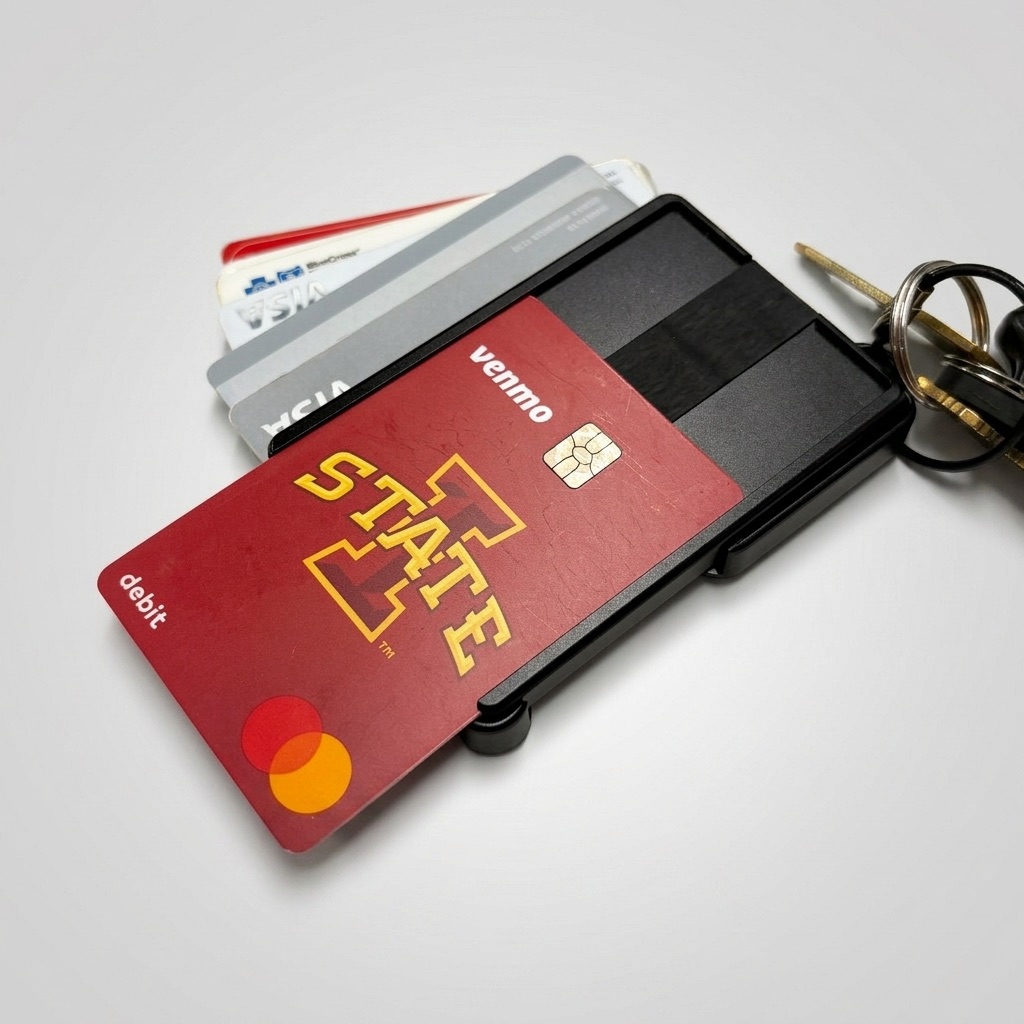
The Metal Brik ($69.99) uses black anodized aluminum. It's a strong daily carry material with a feature set, keyring, tracker, RFID protection, that titanium-only models rarely include at comparable prices. See the Metal Brik for details.
For help deciding what matters most in your wallet, see our guide on how to choose a wallet. And for a direct comparison with another popular metal wallet, see Brik vs Ridge.
If aluminum is the right call for your carry habits, see the Metal Brik for full specs, pricing, and shipping details.
Quick answers
Is titanium worth the extra cost in a wallet?
If scratch resistance and lighter weight are high priorities, yes. For most everyday carry users, the functional difference compared to anodized aluminum doesn't justify the price premium.
Will an aluminum wallet scratch in my pocket?
Anodized aluminum will show micro-scratches over time if carried with other hard objects. In a dedicated pocket, it holds up much better.
Does material affect RFID blocking?
Both aluminum and titanium can provide effective RFID blocking. The shielding effectiveness depends on the construction design, not just the material choice.