
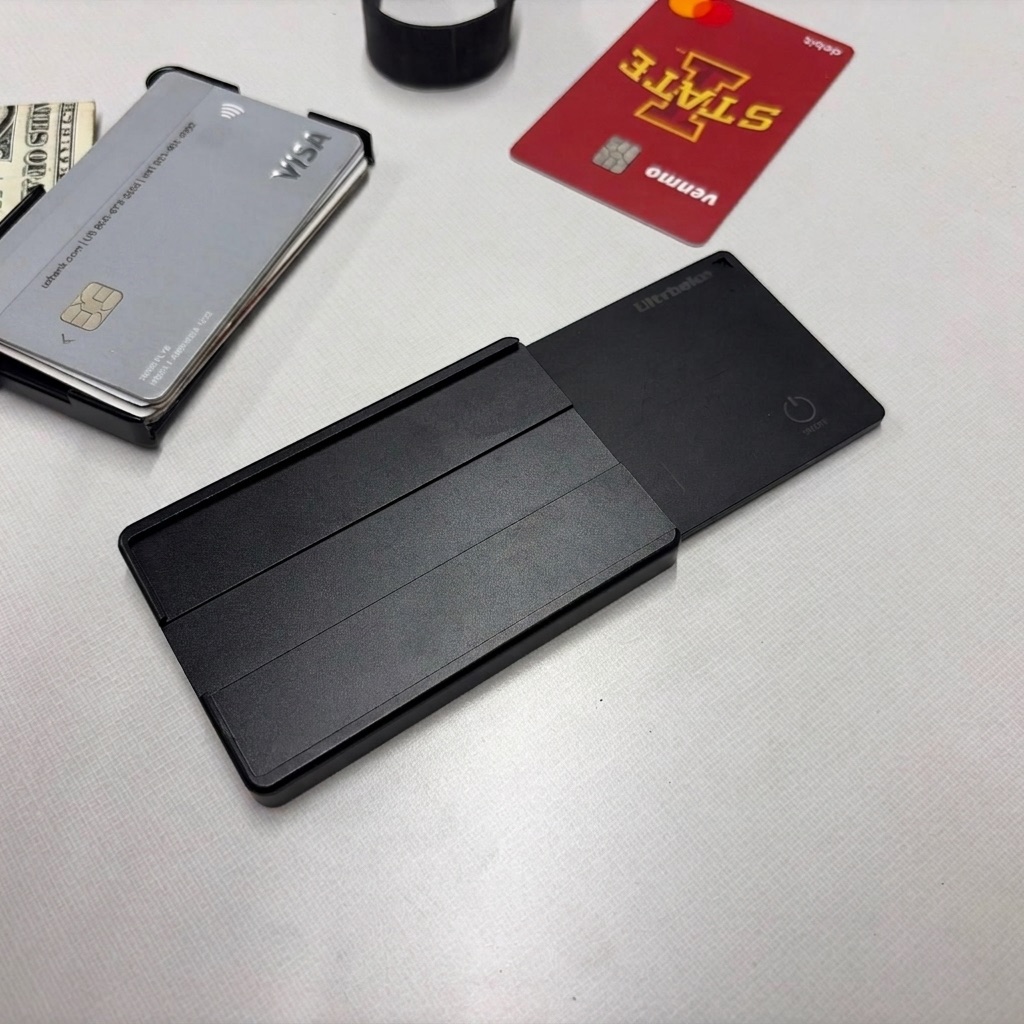
Most card-shaped Bluetooth wallet trackers last between three and twelve months depending on the battery type and how often they ping the network. Rechargeable card trackers tend to land around six months per charge. Coin-cell models vary by brand and usage, and when they die, you replace the battery or the entire tracker.
Coin-Cell Battery Trackers
Coin-cell trackers are thin and widely available. The battery is a standard CR2032 or similar, which you can buy at any pharmacy. Battery life ranges from about six months to a year depending on how frequently the tracker broadcasts and how often you trigger the ring feature.
The downside is that when the battery dies, you either open a tiny housing and swap the cell, or the housing is sealed and you buy a replacement tracker entirely. Apple's AirTag uses a coin-cell and is user-replaceable. Many card-format trackers have sealed housings and require full replacement.
If your tracker app sends low-battery alerts, pay attention to them. A tracker sitting in your wallet at 2% battery is not doing much for you.
Rechargeable Card Trackers
Rechargeable card-shaped trackers eliminate the battery-replacement problem. You put them on a charging pad every few months and they are ready to go. The tracking wallet from The Brik includes a card tracker that lasts up to six months per charge and recharges on any standard wireless charger.
Six months is generous enough that most people can charge it once, forget about it, and pick it up again on a quarterly routine. Tie it to something you already do, like changing your smoke detector batteries or doing a seasonal gear check.
The trade-off with rechargeable trackers is that if you forget to charge and the card dies, you are without tracking until you remember to plug in. A low-battery notification from the app solves this in practice.
What Shortens Battery Life Faster
Ringing the tracker from your phone uses significantly more power than passive location updates. If you use the ring function frequently to find your wallet around the house, you will shorten battery life faster than the rated estimate.
Temperature also matters. Leaving a wallet in a hot car or very cold conditions can degrade both coin cells and rechargeable batteries faster than normal. Room temperature storage is best when the wallet is not in use.
For context on choosing a tracker overall, see GPS vs Bluetooth Wallet Trackers for how battery life compares between tracking technologies.
- Typical coin-cell life. Six months to one year, then replace the battery or the tracker.
- Typical rechargeable life. Around six months per charge for most card-format trackers.
- What kills it faster. Frequent ringing, extreme temperatures, and forgetting to charge.
- The fix. Set a calendar reminder every six months to check the tracking wallet and top it off.
Quick answers
Can I check my tracker battery level remotely?
Most tracker apps show a battery indicator. It is not always precise, but it will warn you when the battery is running low. Check the app occasionally rather than waiting for a problem.
Are rechargeable trackers more reliable than coin-cell ones?
Neither is inherently more reliable. Rechargeable means no surprise dead batteries, but requires remembering to charge. Coin-cell means easy swaps but you need to keep batteries on hand.
Does the tracker still work when the wallet is in a bag?
Yes. Bluetooth signals pass through fabric and leather easily. The tracker will still broadcast from inside a bag or buried under other items.