
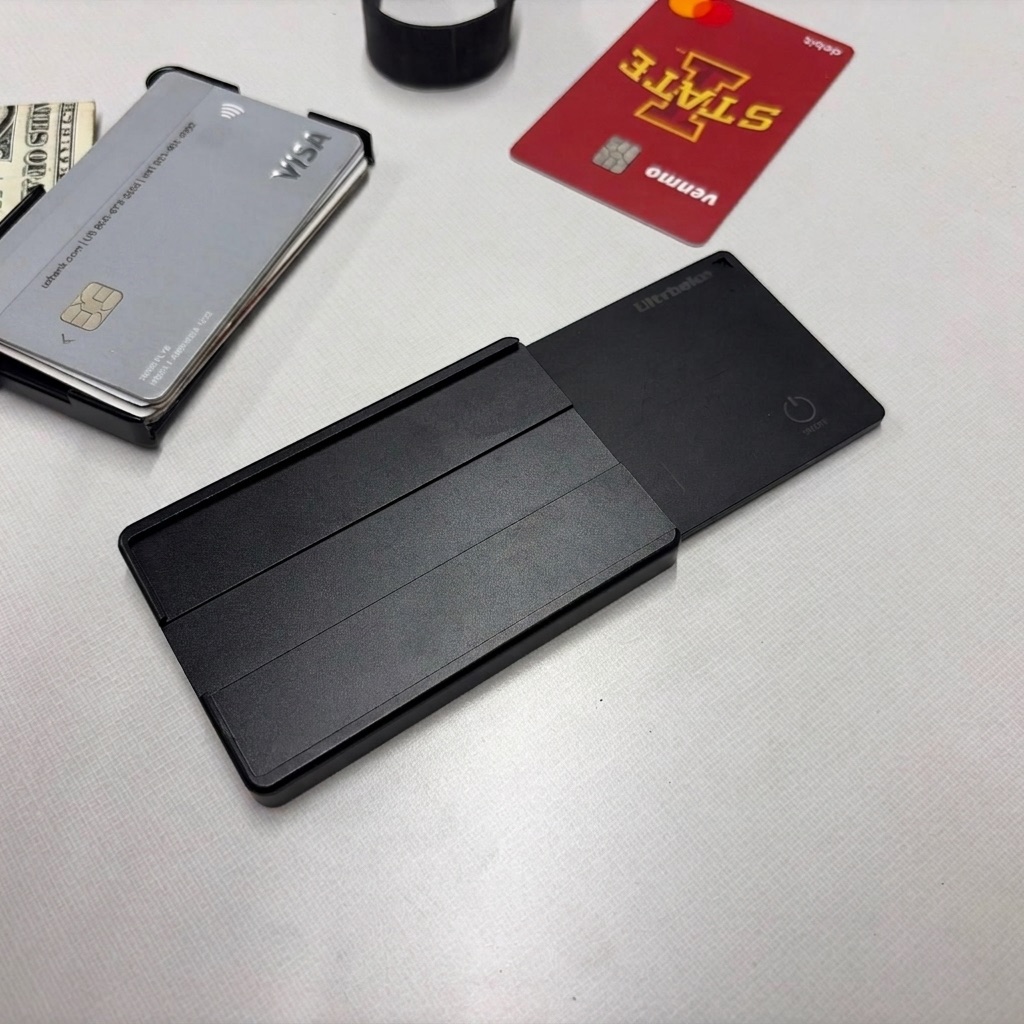
Bluetooth trackers work within a short range and rely on other phones to update a lost item's location. GPS trackers pinpoint location anywhere on Earth using satellites. For wallets, Bluetooth almost always wins on size and battery life, while GPS wins on raw range.
How Bluetooth Trackers Work
Bluetooth trackers broadcast a signal that nearby phones in the same network pick up anonymously. When another user's phone passes your lost wallet, it silently pings the network and updates your map. Apple's Find My network and Tile's network both operate this way.
The catch is coverage. In a dense city, crowd-sourced pings come quickly. In a rural area or a thief's car trunk on a back road, updates can be slow or nonexistent. Range from your own phone is usually 100 to 300 feet depending on walls and interference.
Battery life is the big win for Bluetooth. A good card-shaped tracker can run six months on a single charge. The tracking wallet from The Brik uses a card-shaped rechargeable tracker that lasts up to six months and recharges on any wireless charger.
How GPS Trackers Work
GPS trackers communicate directly with satellites to report their location. They do not rely on any crowd network, which means they can report from anywhere. You open an app and see a dot on a map in near real time.
The trade-offs are significant. GPS chips consume far more power, so batteries drain in days or weeks instead of months. GPS devices tend to be thicker than a card, which makes them awkward inside a slim wallet. Many also require a cellular data subscription to relay location back to your phone, adding a monthly fee on top of the hardware cost.
For a wallet specifically, a GPS tracker that needs its own SIM and monthly fee starts to feel like carrying a tiny phone in your pocket. That's more burden than most people want.
Which One Is Right for a Wallet?
For wallets, Bluetooth trackers are almost always the practical choice. The form factor fits. The battery life is manageable. And the crowd networks are large enough in most US cities to be genuinely useful.
If you travel internationally to places with thin network coverage and you carry significant cash or documents, a GPS option is worth considering, though the subscription cost and bulk are real downsides.
See the tracking wallet if you want a wallet that ships with a card-shaped Bluetooth tracker already built in, with no subscription required. You can also read more in the guide on wallet trackers with no monthly subscription.
- Bluetooth pros. Card-sized, long battery life, no subscription, large crowd networks in cities.
- Bluetooth cons. Coverage thins in rural areas, range from your phone is limited.
- GPS pros. Works anywhere with satellite coverage, real-time location updates.
- GPS cons. Bulkier, drains faster, usually requires a monthly data subscription.
Quick answers
Do wallet Bluetooth trackers work internationally?
Yes, as long as there are other phones in the same network nearby. Apple Find My works wherever iPhones are common. Tile works wherever Tile users are present. Coverage varies by country.
Can I use a GPS tracker in my wallet?
Technically yes, but most GPS trackers are too thick for slim wallets and require a monthly cellular subscription. Bluetooth card trackers are a better fit for everyday wallet use.
Does a wallet tracker drain my phone battery?
No. The tracker in your wallet does the broadcasting. Your phone only needs to be on for you to check the app or make the tracker ring.