
Apple Find My has a larger network in the US by a significant margin. There are estimated to be over a billion Apple devices participating. Tile's network has tens of millions of users. For most urban and suburban US locations, Apple Find My will return faster and more frequent location updates on a lost item.
How Each Network Works
Both networks use the same fundamental idea. Your tracker broadcasts a signal. A passing phone in the network picks it up and anonymously reports the tracker's location to the cloud. You open the app and see where it was last seen.
Apple's implementation has one major structural advantage: opt-out is not easy. Every iPhone with Find My enabled participates automatically. Tile users must actively download the Tile app and agree to participate in the crowd network. That difference in opt-in vs default participation is the main reason Apple's network is larger.
Google's Find My Device network is newer but growing fast, especially as it becomes a default feature on Android phones. For Android users, this may eventually rival Apple's reach.
Where Tile Has an Advantage
Tile works across both iPhone and Android, which matters in environments where Apple device share is lower. Some industrial settings, warehouses, and older demographics skew heavily Android. In those environments, Tile's cross-platform reach can be meaningful.
Tile also has a longer track record. The ecosystem of Tile-compatible devices is larger, with speakers, remotes, and other household items that can double as network nodes.
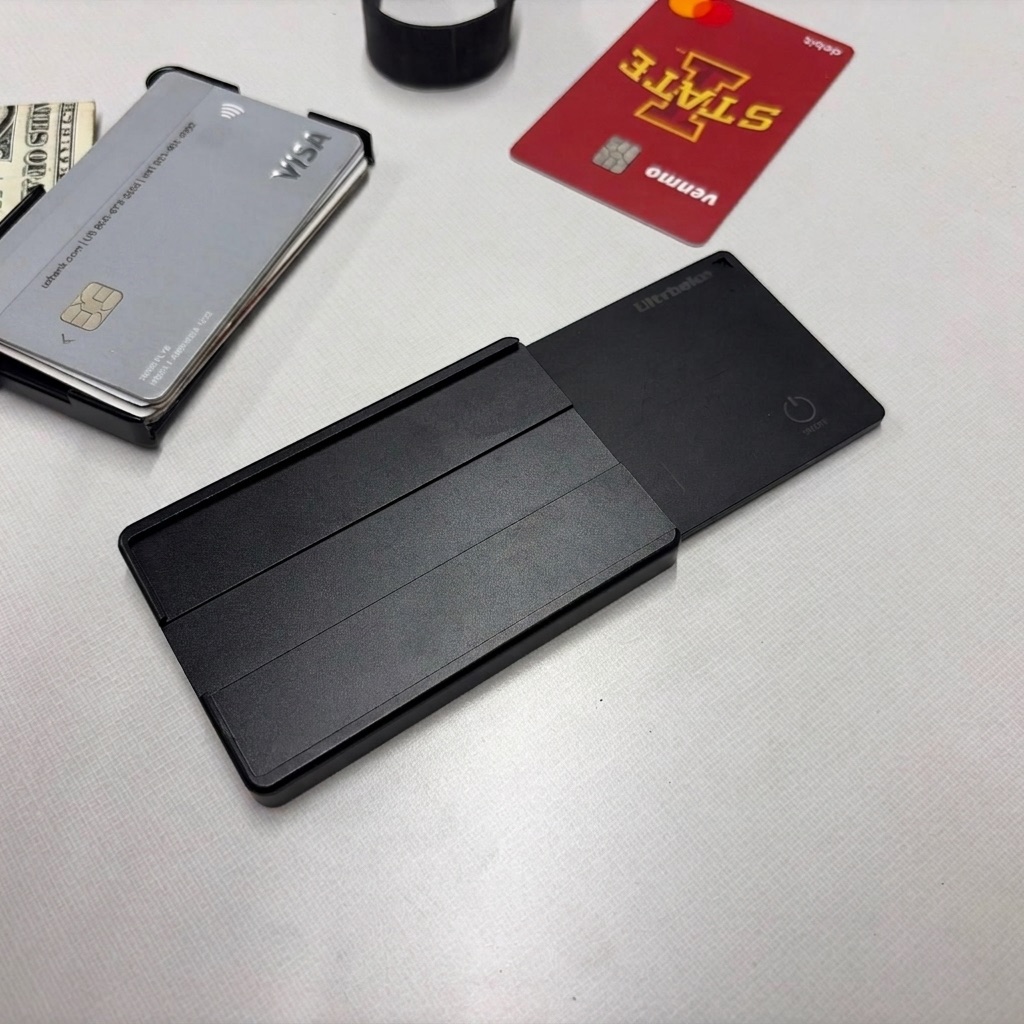
For a wallet specifically, the question is which network covers the places your wallet is most likely to go missing: coffeeshops, restaurants, rideshares, and transit. All of those are high-iPhone environments in most US cities. If you want a wallet with tracking already built in, the tracking wallet from The Brik lets you pick Apple or Android at checkout.
Privacy Considerations
Both Apple and Tile use encryption so that the phones relaying your tracker location cannot see where it is going or who owns it. Apple's system is designed so that even Apple cannot read your location data. Tile's privacy policy is less aggressive on this front.
Apple also built in anti-stalking features. If an unknown AirTag is traveling with you, your iPhone alerts you. Tile has added similar features but they are not as tightly integrated.
If you want tracking for your wallet specifically, read wallet trackers with no monthly subscription to understand the cost structure before choosing a network. The tracking wallet from The Brik lets buyers choose Apple or Android at checkout, so you can match the tracker to the network that fits your phone.
- Apple Find My. Largest US network, iPhone-only, strong privacy, built-in anti-stalking alerts.
- Tile. Cross-platform iPhone and Android, older ecosystem, slightly weaker privacy protections.
- Google Find My Device. Growing fast on Android, newer but increasingly competitive in Android-heavy environments.
- Best for wallets. Apple Find My in most US cities. Tile if you or your social circle skews Android.
Quick answers
Can I use an AirTag in my wallet?
Standard AirTags are circular and too thick for most slim wallets. AirTag-compatible card adapters exist but add bulk. Card-shaped trackers designed for wallets are generally a better fit.
Does Tile work without a smartphone?
You need the Tile app on a phone to see locations and ring the tracker. However, you can also use Tile trackers from a computer via the web interface.
Which network works better at airports?
Apple Find My tends to perform very well at airports due to high iPhone density. For more on travel tracking, see [how to track your luggage when you travel](/guides/tracking-device-for-luggage).