
Commuter students don't have the luxury of running back to their room. If you forgot it, you go without it until you drive or ride home. That pressure makes packing intentionally more important for commuters than for anyone living on campus. The goal is carrying everything you'll need without carrying so much that it becomes a burden.
The Daily Carry Core
These items belong with you every time you leave the house for campus.
- Student ID and campus access card. You need this to enter buildings, use the library, scan into dining, and verify your identity for exams. Keep it front-and-center in your wallet, not buried in a stack of cards.
- Transit pass or parking permit. If you ride public transit, your transit card or app needs to be ready before you board. If you drive, your parking permit needs to be accessible when you pull in.
- Payment method. One or two cards and a small amount of cash covers campus dining, vending, and off-campus food runs. You don't need your full card collection every day.
- Laptop and charger. Commuters spend more time in libraries and between-class spaces. A charged laptop covers most academic needs. The charger matters because you're there for a full day, not an hour.
- Water bottle. Refillable water saves money and keeps you from getting dehydrated on long commute days. Campus buildings have fill stations.
- Phone and backup power. Navigation, class schedules, campus apps, and your campus ID app all live on your phone. A small portable battery is cheap insurance for a long day.
- Keys. Car keys and house keys need to be with you. Losing track of these on campus is a real problem. A wallet with an integrated keyring keeps them together with your ID and cards.
Keeping Your Wallet Commuter-Ready
A stuffed traditional wallet is a problem for commuters. You're pulling it out multiple times a day for different cards: student ID at the library, transit card at the bus, debit card at lunch. If it takes 15 seconds to find the right card every time, that adds up.
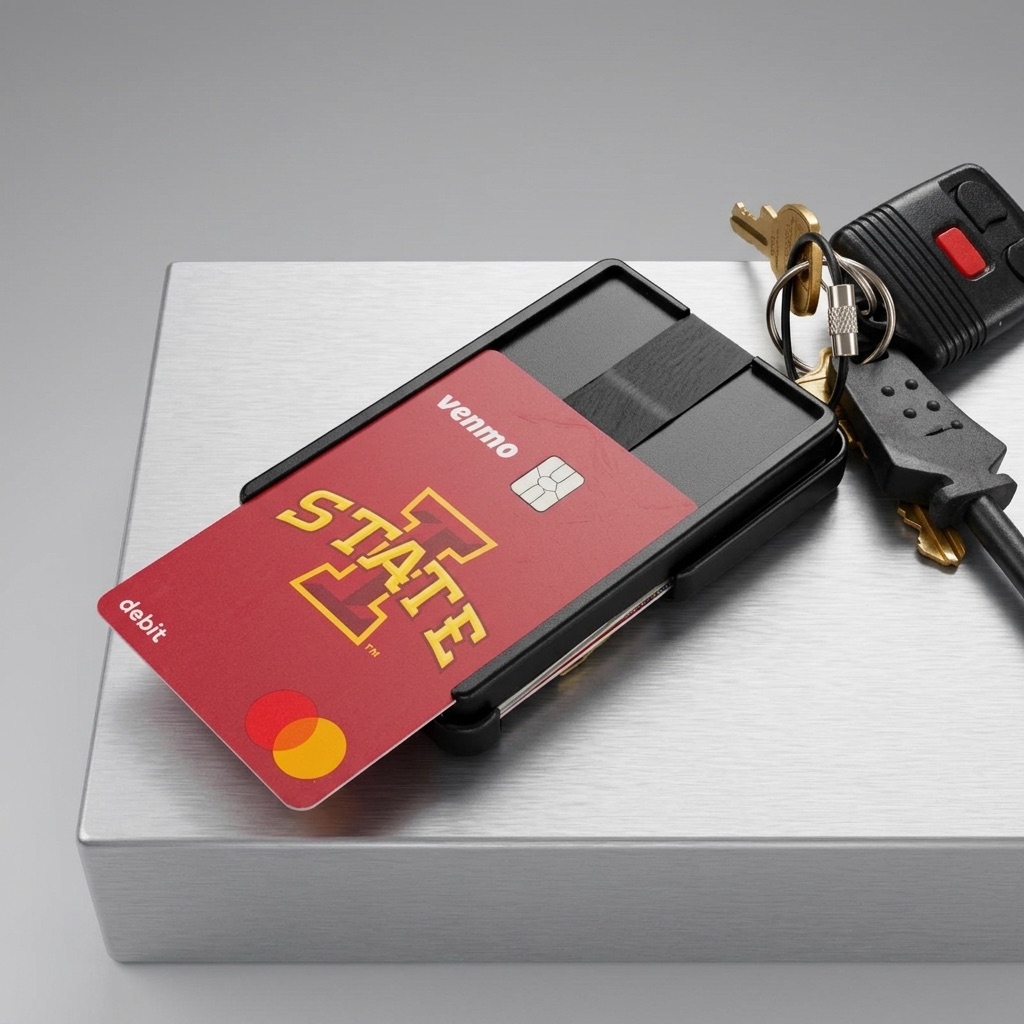
A slim wallet built for students keeps things organized without the bulk. The Metal Brik holds up to 8 cards in an RFID-protected compartment and has a quick-access slot for the card you use most. It also includes a removable keyring, which means your keys and wallet become one unit instead of separate things to juggle.
Food Planning for Long Campus Days
Commuters who don't plan food end up spending $15 on campus between classes because they're hungry and didn't bring anything. Pack a lunch when you can. Even a simple meal from home is cheaper and faster than waiting in campus dining lines.
If you're on campus from 8am to 6pm, plan two meals and a snack, not just one. Skipping lunch to save time doesn't save time when your focus crashes at 2pm.
Managing the In-Between Time
Commuter students have gaps in their schedules that residential students can fill by going back to their rooms. The library is your best friend for productive in-between time. So is building a list of tasks you can knock out during a 45-minute gap.
Email your professors during gaps. Do assigned readings. Review notes from earlier classes. Treat in-between time as scheduled work time rather than dead time.
For help optimizing what goes in your bag specifically for library sessions, see the guide on what to bring to the college library.
The Gear That's Worth It for Commuters
A good commuter bag has a laptop sleeve, external access pockets, and doesn't hurt your back after four hours. A padded shoulder bag or a structured backpack with chest strap works well for long days.
A reliable student wallet that keeps your ID accessible and your cards organized is one of those small investments that pays back every single day. Commuting is already friction. Your gear should reduce it, not add to it.
Quick answers
Is commuting to college worth it?
It depends on your situation. Commuting saves housing costs but costs time, transportation, and some campus immersion. If you're within 30-45 minutes and want to save money, it's often worth it. Beyond that, the math gets trickier.
How do commuter students stay connected to campus life?
Join one or two clubs that meet at times you can make. Get involved in your department. Build relationships with classmates in your major. You don't need to live on campus to have a social life, but you have to be intentional about it.
What's the biggest mistake commuter students make?
Driving home between every class instead of staying on campus. That burns time and gas. Build a schedule that keeps you on campus for a block of time and use that time productively.