
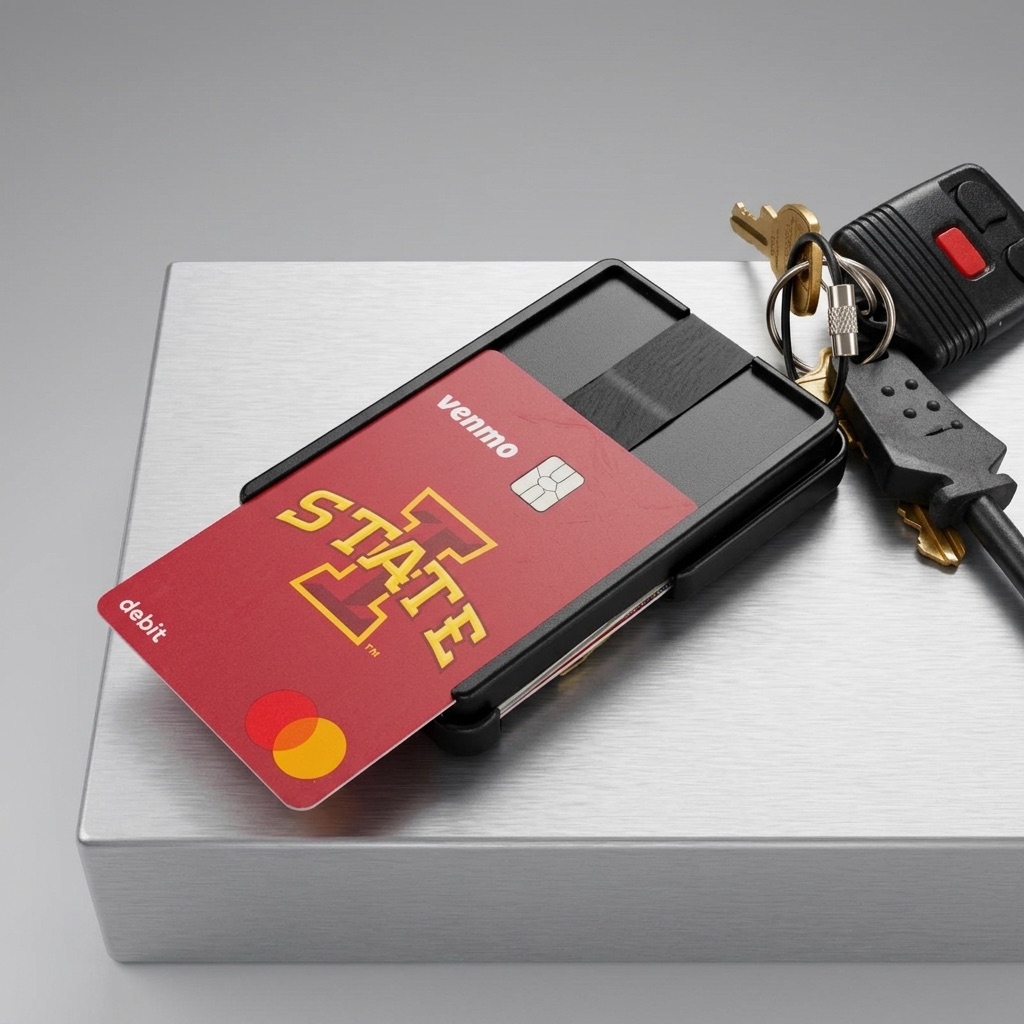
The lanyard alternatives are a retractable badge reel, a clip holder, a phone-case slot, or a wallet with a scannable front slot. Which one is right depends on one question: do you tap your badge or show it? Tap-based offices favor the wallet slot; show-and-swipe jobs favor the reel.
The lanyard persists for one reason: it's free and it arrives with the badge. That's a default, not a decision. Here's the actual menu.
The four alternatives, honestly
- Retractable badge reel. Clips to a belt or pocket, badge zips out on a cord. Best for jobs with constant badge-out moments: nursing, labs, secure floors with visual checks. Cons: it's still visibly work-wear at lunch, the cord wears out, and it's one more thing clipped to you.
- Clip or badge holder. A rigid card case on a clip. Cheap, protects the badge from cracking, still lives attached to your outfit. Fine, uninspiring, frequently left on yesterday's shirt.
- Phone-case slot. The badge rides behind your phone. Works until you hand your phone to someone at a reader, or the case's card pressure ejects it in a bag. Also merges your two most important items into one droppable object.
- Wallet front slot. The badge lives where your cards already are, in a slot that stays scannable, and you tap the whole wallet at the reader. Best for tap-based offices, which is most of them now. The Metal Brik is built around exactly this: an intentionally unshielded front slot for the badge, RFID protection for the payment cards behind it, keys on the ring, so the work carry is one item.
The RFID caveat that decides everything
Most office badges are tap-based RFID or NFC cards, and most 'protective' wallets block RFID everywhere. Put a tap badge in a fully shielded wallet and you'll be fishing it out at every door, which recreates the original problem with extra steps.
The spec to look for is a wallet with one deliberately unshielded slot (for the badge or ID) and shielding on the main compartment (for payment cards). That split is the entire trick. Test it on day one: tap the closed wallet on a reader; if the door doesn't open, the badge needs a different slot or a different wallet.
When the lanyard is actually right
Fairness requires saying it: if your job requires the badge to be visible at all times (hospitals, some government floors, event staff), the lanyard or reel is correct and this article is not for you. Compliance beats aesthetics.
For everyone else, the lanyard is a habit from your first week that nobody re-evaluated. The badge is a card. Cards belong in the wallet, and the rest of the first-week logistics are covered in what to carry to the office.
Quick answers
Will my badge scan through a wallet?
Tap-based badges scan through most materials at close range, but not through RFID-blocking slots. You need a wallet with one intentionally unshielded slot; test it on a reader on day one.
What's the best badge holder for nurses and lab staff?
A retractable reel. Constant badge-out jobs need the badge to travel to the reader while staying attached to you. Wallet slots suit tap-in office jobs better.
Is keeping a work badge in a phone case a bad idea?
It works until you hand someone your phone or drop it. It also concentrates your badge, cards, and phone into one loss event. A wallet slot spreads the risk.