
Choose a cardholder if you carry three or four cards and no cash. Choose a wallet if you need room for cash, receipts, extra cards, or anything beyond the basics. The useful middle ground is a slim wallet that keeps a cardholder profile without forcing you to carry the rest of your essentials separately.
The labels are loose, so ignore the product name for a minute. Empty your current wallet and count what you actually use in a normal week. That pile tells you which format fits.
The quick comparison
- Card capacity. A cardholder is best with roughly two to six cards. A traditional wallet usually holds more, although extra capacity makes it easy to keep expired cards and old receipts.
- Cash. Most cardholders make folded cash an afterthought. A wallet usually has a dedicated bill section or an exterior band.
- Pocket size. Cardholders win on minimum size. Slim wallets come close, while a loaded bifold takes the most space.
- Organization. A cardholder makes every slot visible. A wallet separates cards, ID, and cash, which is useful only if those sections do not become storage.
- Extra functions. Wallets have room for features such as RFID protection, a key attachment, or a tracking card. Most cardholders focus on cards alone.
When a cardholder is the better choice
A cardholder works well when your phone handles most payments, your ID and one backup card cover the rest, and you almost never use cash. It is also easy to move between a work bag, gym bag, and small pocket.
The tradeoff is fragmentation. If your cardholder is in one pocket, a loose key is in another, and cash is folded behind your phone case, the carry is small but not simple. You reduced the wallet without reducing the number of things to remember.
When a wallet is the better choice
A wallet makes more sense when you regularly carry cash, several payment or access cards, and want one reliable home for them. It is also the more flexible choice for travel, work badges, student IDs, and days that do not run entirely on mobile payments.
That does not mean returning to a thick bifold. Start by removing anything you did not use in the last month, then choose a wallet sized for the remaining stack. Our guide to how many cards you should carry gives you a practical cutoff.
The middle ground: a slim wallet
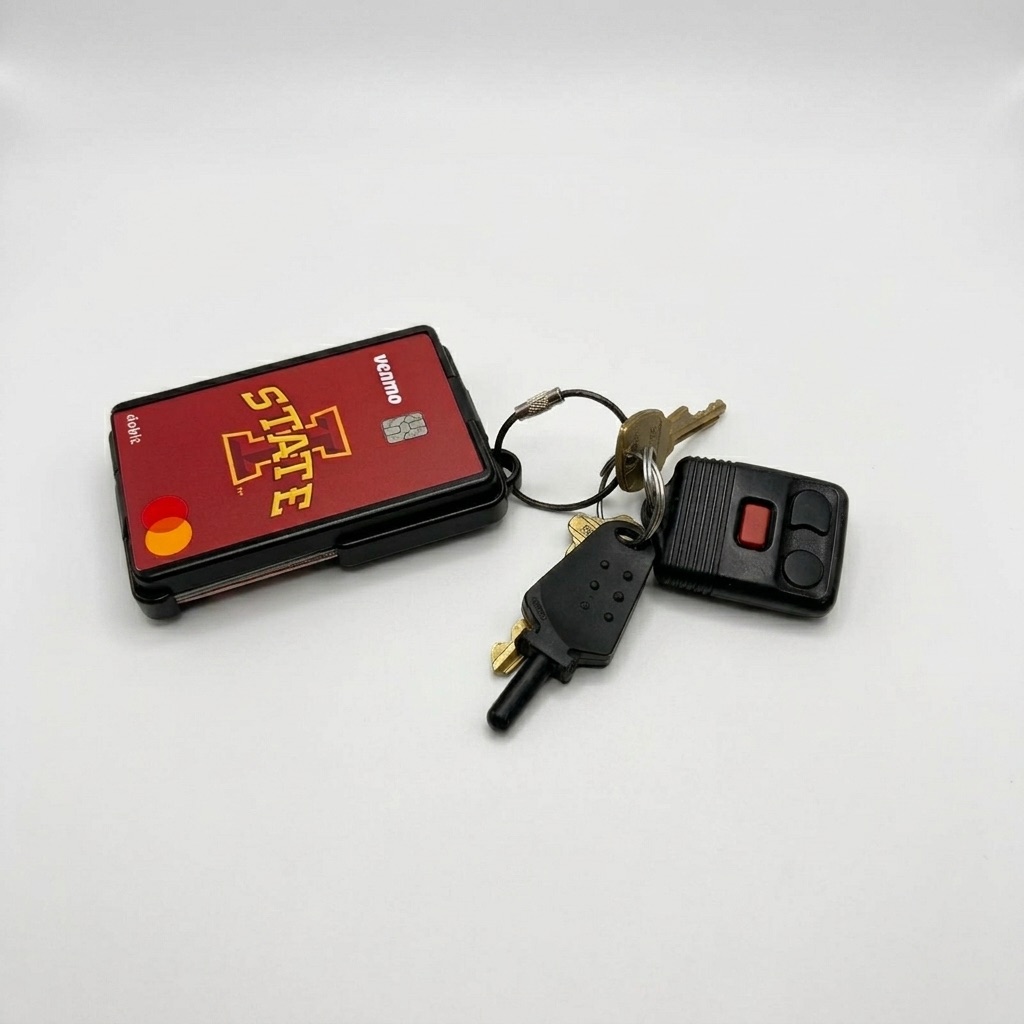
A slim wallet keeps the compact shape that makes a cardholder appealing while adding deliberate space for ID and cash. The Metal Brik takes that approach: a quick-access front ID slot, an RFID-protected compartment for 7-8 cards, folded cash under the back band, an integrated keyring, and a rechargeable tracking card.
It is more capable than a basic cardholder but avoids the open-ended storage that makes a bifold grow. If your real choice is between a cardholder and a bulky wallet, the better answer may be neither.
Quick answers
Is a cardholder better than a wallet?
A cardholder is better for two to six cards and little or no cash. A wallet is better when you need cash storage, more organization, or features such as RFID protection and tracking.
Can a cardholder replace a wallet?
Yes, if your entire daily carry is an ID and a few cards. If you regularly add folded cash, receipts, keys, or access cards, a slim wallet will usually work better.
Do cardholders damage cards?
A properly sized cardholder should not. Damage is more likely when too many cards are forced into one slot or a rigid card is repeatedly bent in a back pocket.