
Camping EDC is separate from your pack. Your pack has the big stuff. Your pockets hold the items you need access to constantly, the things you'd dig through a pack for five times a day if they weren't already on you.
What Camping EDC Actually Means
A lot of camping gear guides bundle pocket carry with pack contents. They're not the same. Pocket carry at camp is about the small items you reach for constantly: a knife or multitool, a light source, your ID and one card in case you drive to town, and your phone.
The rest of your survival kit, first aid, navigation, and shelter belong in a bag, not your pants.
Core Pocket Items for Camp
Start with what you'll actually reach for. A small folding knife or multitool handles food prep, gear repairs, and a dozen small tasks. A headlamp or small flashlight beats digging through a pack after dark. Your phone for navigation, weather, and emergencies. And your wallet, which you'll need if you make a run to town for supplies.
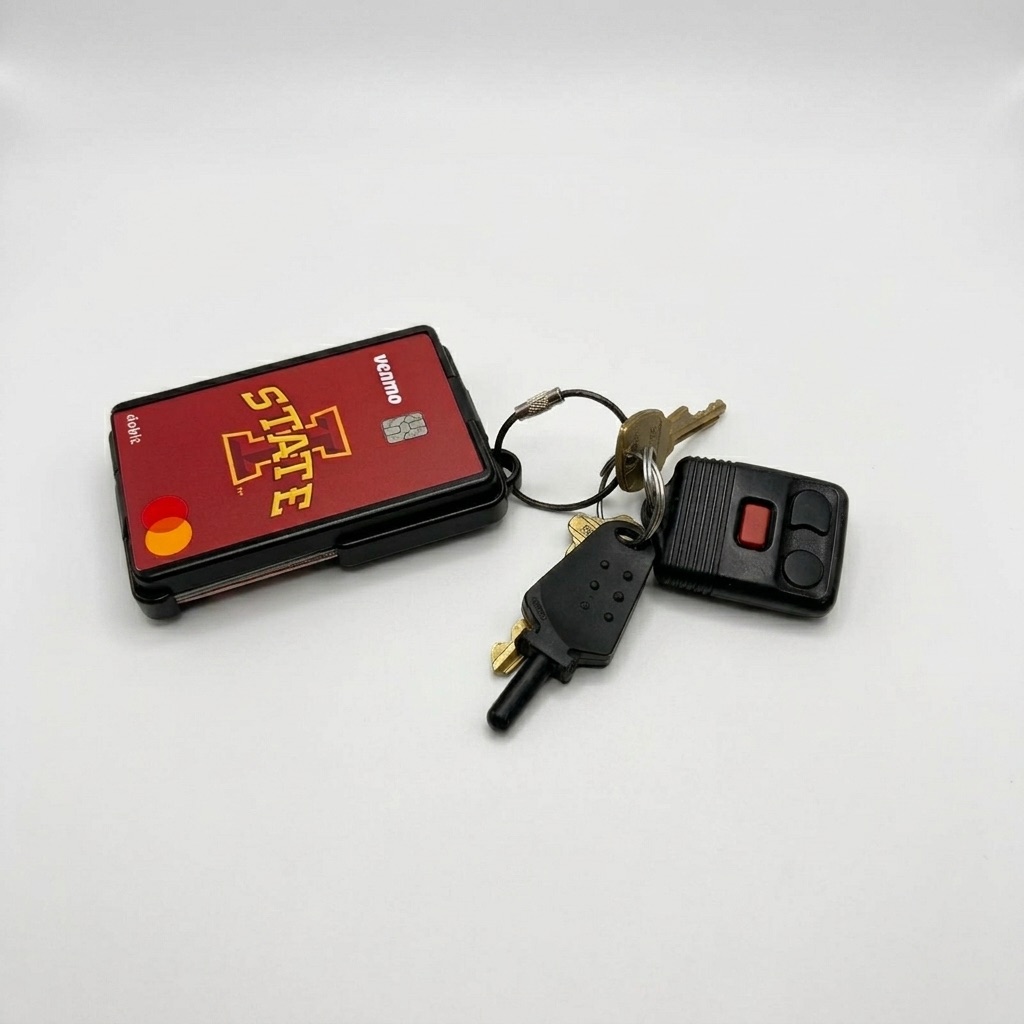
Camping is also one of the contexts where an integrated keyring wallet makes real sense. Your car key and your ID and payment card all in one item means one pocket slot covers transportation and payment.
- Knife or multitool. A small folding knife handles the majority of camp tasks. A multitool adds pliers and a screwdriver if you want more versatility.
- Light source. A headlamp keeps your hands free. A small flashlight works too. Your phone flashlight is a backup, not a primary.
- Phone. Offline maps, weather apps, and emergency communication. Keep it charged and in a pocket you can zip or button.
- Slim wallet with car key. You need to be able to make town runs. A wallet with an integrated keyring means one item covers your ID, card, and car key.
What to Leave in the Pack or Car
First aid kit, fire starter kit, navigation maps, water treatment: all of these belong in your pack, not your pockets. So does your full keyring if it's heavy.
At camp, most of your valuables are better off in a locked car than in your tent. That includes your main wallet if you're car camping. Take a stripped-down pocket carry to the campsite and leave the rest secured.
Durability Matters More at Camp
Leather wallets don't love campfire smoke, humidity, or getting stuffed into a damp jacket pocket. A rigid wallet holds up better. The Metal Brik has a water-resistant aluminum body that handles outdoor conditions better than most traditional wallets.
The same logic applies to your other pocket items. Cheap is fine for many things, but gear you depend on daily should be durable.
Car Camping vs. Backpacking Pocket Carry
Car camping lets you be a little looser with what you keep on you because your car is nearby. Backpacking demands that your pocket carry be extremely tight since every ounce matters.
For backpacking, the wallet question becomes: do you need it at all? If you're in the backcountry for three days, an ID and one emergency card in a small zip pocket might be all you need. No wallet required.
For more on stripping down your everyday carry, check the guide on pocket dump organization.
Quick answers
Do I need my full wallet while camping?
For backcountry camping, probably not. For car camping where you might make town runs, yes. A slim wallet with just your ID and one card is enough.
Should I carry a knife or a multitool at camp?
Both have merit. A knife handles cutting tasks more cleanly. A multitool gives you more options. Many campers carry both: a small multitool in a pocket and a fixed blade on a belt.
Where should I keep valuables while camping?
In a locked car, not in your tent. A tent is not a secure storage location. If you're backpacking, keep valuables in a bag you sleep with or inside your sleeping bag.