
A briefcase looks professional. What's inside determines whether it actually is. Most briefcases end up as mobile junk drawers. Here's a clear list of what to pack, what to skip, and how to keep it working for you rather than against you.
What Belongs in a Briefcase
Start with purpose: a briefcase carries the things you need to do your job away from your desk. Everything else stays at home or at the office.
- Laptop and charger. The main event. Keep the charger in a dedicated pocket so you never arrive somewhere without it.
- Notebook and two pens. Meetings, notes, signed documents. Two pens because one will run dry at the worst moment.
- Business cards. Keep a small stack in an easy-access pocket or card holder. You want to pull them out smoothly, not excavate them.
- Documents or folders you need today. Only the current day's relevant papers. Clear out anything from last week. A briefcase with months of accumulated paper is a filing cabinet you're carrying everywhere.
- Phone charger or battery pack. If your meetings run long and you need your phone to navigate home, a small battery pack earns its weight.
- A slim wallet. Even in a briefcase context, your wallet should be on your person, not loose in a bag. It's easier to access and harder to forget.
What to Leave Out
A briefcase becomes useless when it becomes a catch-all. These items should not live in your briefcase on a regular basis:
Spare shoes, gym clothes, snacks from two months ago, receipts you meant to file, three different charger cables for devices you don't own anymore, or anything that lives there because you've never thought to take it out.
Audit the bag monthly. It takes ten minutes and makes the rest of the month easier.
Briefcase vs. Bag: When It Matters
A traditional hard-sided briefcase signals formality. A slim leather or structured tote is more versatile. In most modern offices, a clean backpack is acceptable. The choice matters more in client-facing or law and finance contexts where appearance signals competence.
Whatever you choose, the interior organization should be consistent. Same pocket for your phone, same pocket for your charger, same pocket for your wallet or cards. Consistency means you stop looking and start reaching.
The Personal Items Inside Your Briefcase
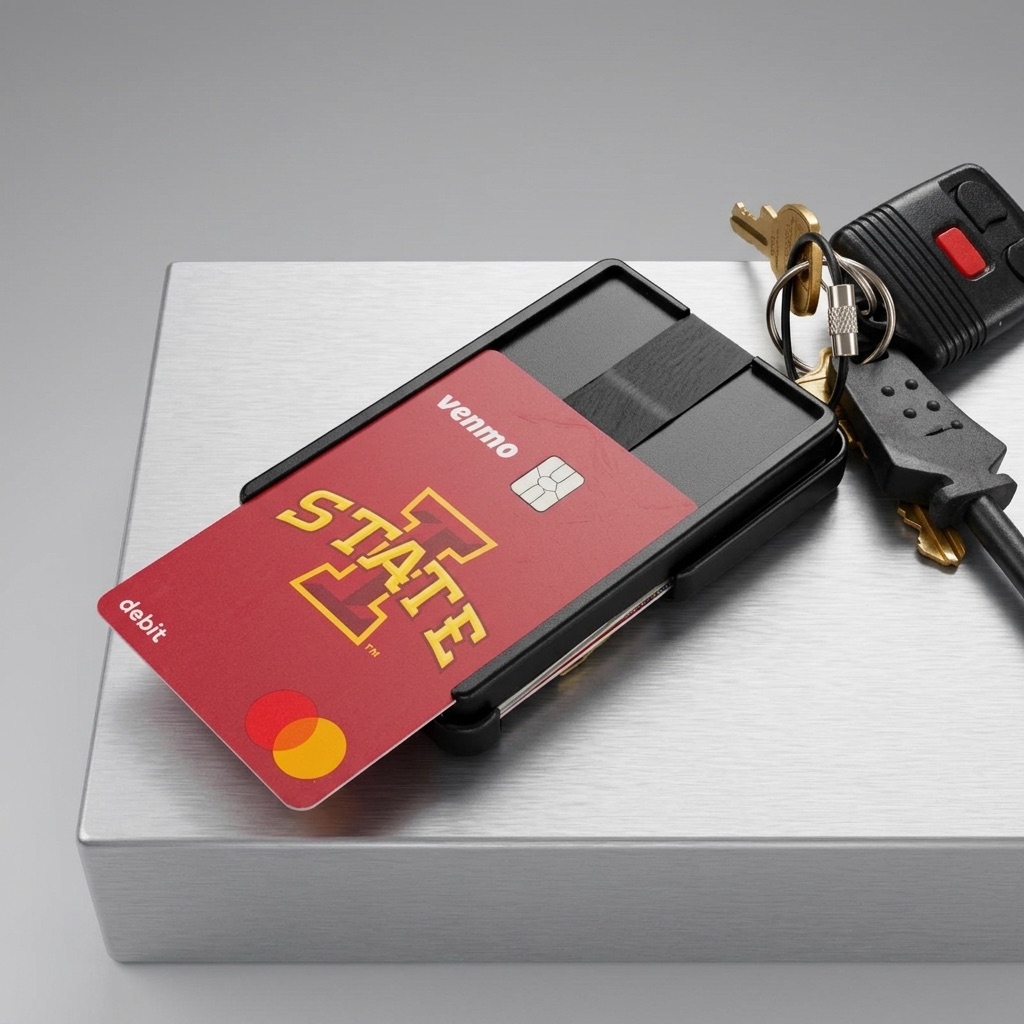
Your wallet should be on your body, not floating in a bag pocket. A slim wallet with a keyring means your wallet and keys are one item, which means one thing to grab as you leave the office.
If you're curious about a wallet built for this kind of professional setup, the Metal Brik holds 7-8 cards with RFID protection, keeps your badge scannable in a front slot, and includes a removable keyring. For details see the pro wallet page.
For more carry guidance, check /guides/young-professional-essentials-checklist.
Quick answers
Should your wallet go in your briefcase or your pocket?
Your pocket. Wallets in bags get left behind. If it's on your person, it travels with you automatically.
How do you keep a briefcase organized?
Assign a specific pocket to every item type and don't let anything live outside its spot. Audit monthly to clear accumulated clutter.
Is a briefcase still professional in modern offices?
Depends on the industry. Traditional briefcases signal formality in finance, law, and client-facing roles. In tech and creative industries, a clean backpack or tote is equally professional.