
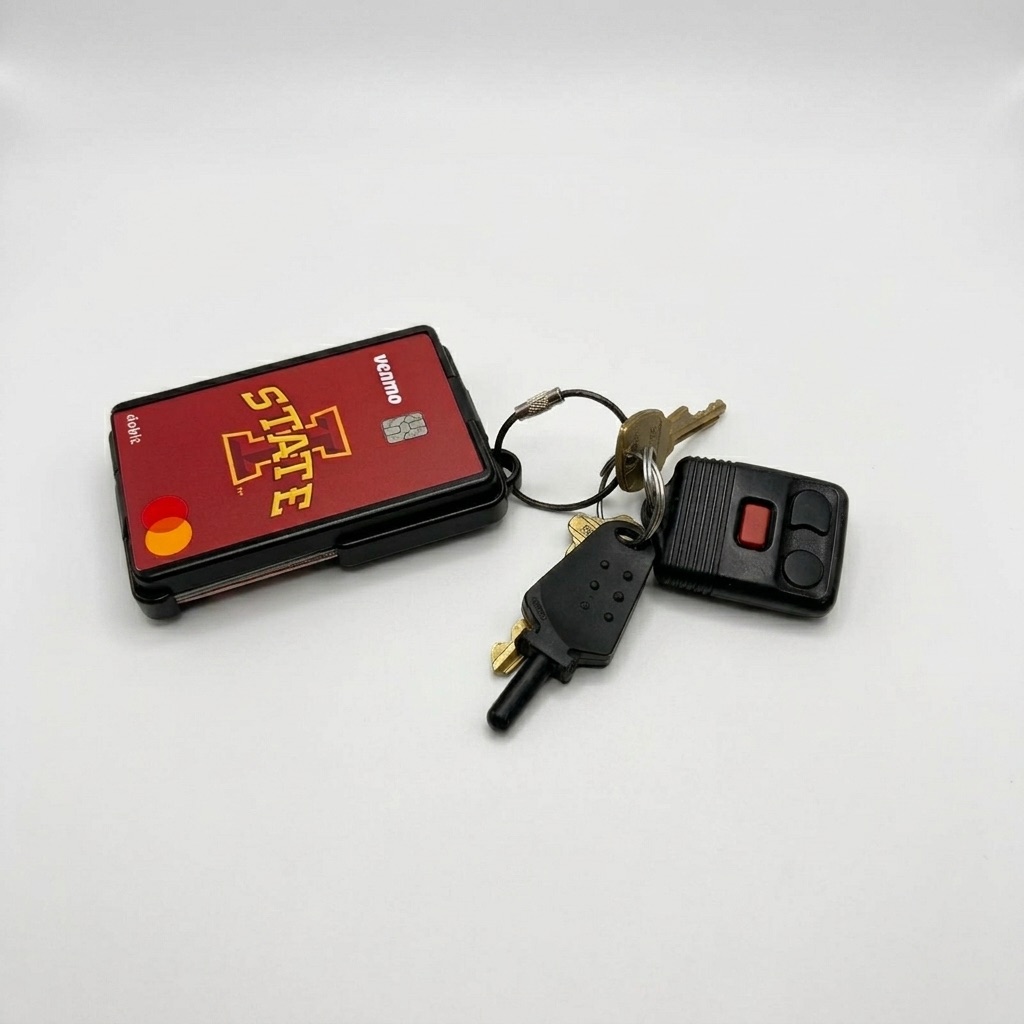
RFID blocking is shielding, usually a metal layer, that stops the wireless chip in your contactless cards from being read through your wallet. Do you need it? Honestly: it's low-cost insurance against an uncommon crime, not a necessity. The more practical question is which slots to shield and which one to deliberately leave open.
Here's the whole topic without the fearmongering.
How contactless skimming works, in theory
Contactless cards carry an RFID/NFC chip that responds to a reader held very close, a few inches at most. In theory, someone with a portable reader in a dense crowd could trigger a read through a pocket. In practice, it's uncommon: modern cards generate one-time transaction codes, banks eat fraudulent charges, and criminals have found that phishing scales better than standing very close to strangers in train stations.
So the honest framing: the threat is real but small, and the protection is nearly free. That's the definition of cheap insurance.
When shielding earns its keep
- Crowded transit and events. The only environments where close-range reads are plausible, since someone can stand against your pocket without being weird.
- Travel. More cards on you than usual, more crowds, and a worse week if anything goes wrong far from your bank.
- Metal wallets get it free. An aluminum body blocks radio signals by physics, no special lining required. It's a side effect of the material, which is one reason the EDC wallet crowd defaults to metal.
The slot you should NOT block
Here's the part most RFID marketing skips: some cards in your wallet are supposed to be readable. Your office badge, student ID, transit pass, and hotel key all work by tap. Put them in a fully shielded wallet and you'll be pulling them out at every reader, forty times a day, which is how tap cards end up loose in pockets and then lost.
The right design shields the payment compartment and deliberately leaves one quick-access slot open. That's how the Metal Brik splits it: the main compartment blocks RFID for your 7-8 payment cards, while the front ID slot is intentionally unshielded so a badge or student ID taps through without leaving the wallet.
How to test whether a wallet actually blocks
Put a contactless card in the compartment, close the wallet, and tap it on a reader you trust: a transit gate, a self-checkout, your own office door. If it reads, that slot isn't shielded. Run the same test in reverse for the slot you want open. Two taps tell you more than any product page.
And keep the priorities straight: RFID blocking protects against an uncommon crime, while losing the entire wallet is a common one. Shielding plus a way to find the wallet itself covers both ends. For the broader buying checklist, the EDC wallet page covers what else matters.
Quick answers
Is RFID skimming actually common?
No. It's technically possible at very close range but rarely reported in practice, and banks cover fraudulent contactless charges. Treat RFID blocking as cheap insurance, not a requirement.
Do metal wallets block RFID without a special lining?
Largely yes. An aluminum body interferes with radio signals by nature of the material. Check that any slot you need scannable, like a badge slot, is designed to stay open.
Will RFID blocking stop my tap badge from working?
If the badge sits in a shielded slot, yes. You want a wallet with one deliberately unshielded quick-access slot for tap badges and IDs, and shielding on the payment compartment.