
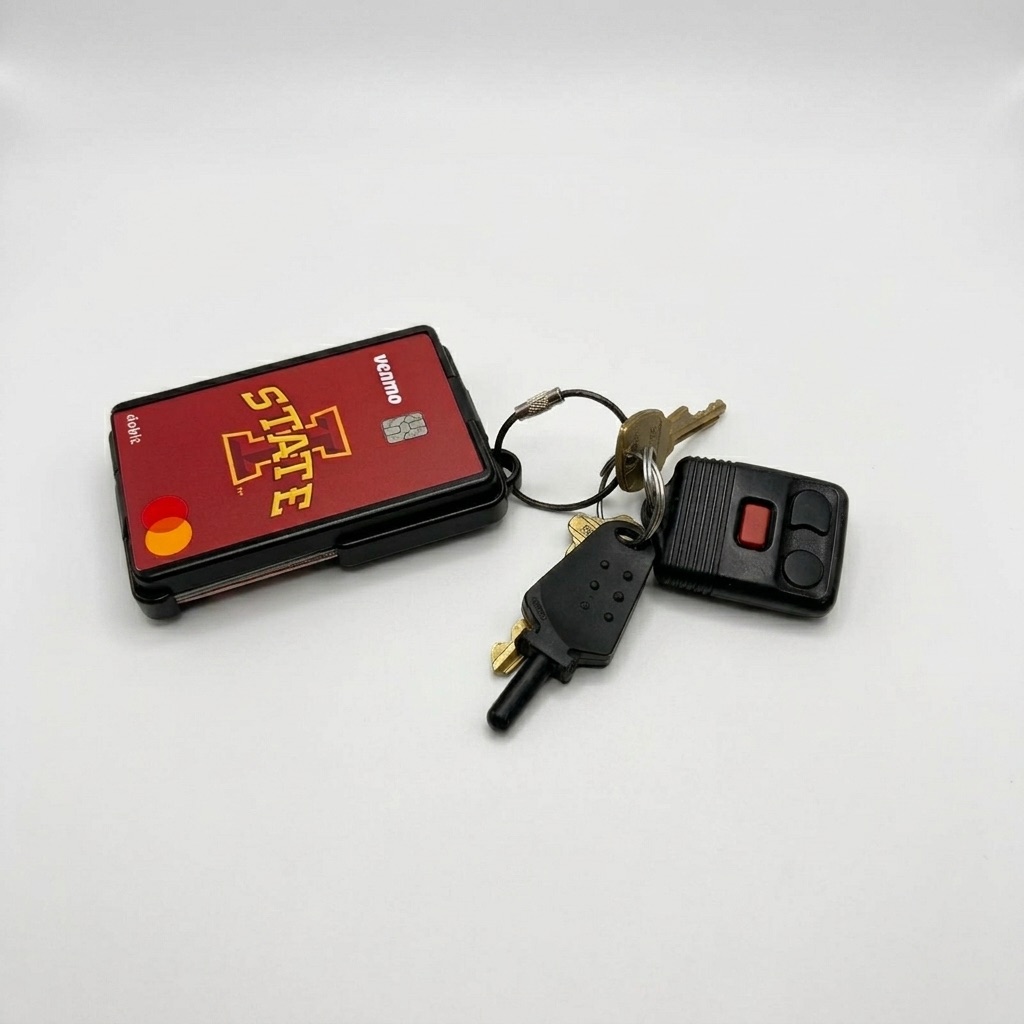
The short version: leather feels warmer, ages into character, and holds more, but it sags, frays, and invites overstuffing. Metal holds its shape forever, blocks RFID by nature, and enforces a card diet, but it scratches and never feels soft. Neither is wrong. They fail differently, and you should pick by failure mode.
Here's the honest column-by-column.
Feel and aging
Leather wins the first handshake. It's warm, it breaks in, and a good full-grain piece develops a patina that looks better at year three than day one. The catch: most leather wallets aren't good full-grain, and cheap leather ages like fruit, not wine.
Machined aluminum feels cold and precise, and it doesn't age so much as accumulate honest wear: fine scratches, worn anodizing at the corners. Whether that reads as character or damage is pure taste. It will look like a used tool, never like an old glove.
Durability and failure modes
Leather fails at the seams: stitching wears, card slots stretch loose, the fold cracks. A daily-carry leather wallet typically has a lifespan measured in a few years.
Metal fails cosmetically long before it fails structurally. The body outlasts the elastic parts, which is why serviceability matters: the Metal Brik's bands and keyring are replaceable, and a structural failure of the body is a warranty replacement. Rigid also means no sagging, ever, and no sitting on a slowly fattening lump, a difference your back pocket notices.
The practical columns
- Capacity discipline. Leather expands to enable your receipt archive. Metal has a fixed capacity, typically a handful of cards plus cash, and forces a one-time cleanout. Whether 'holds less' is a con or the entire point depends on you.
- RFID. Built into metal by physics; an added lining in leather that varies by maker. Either way, make sure a tap badge slot stays unshielded.
- Weather. Rain and sweat are leather's enemies and largely a shrug for anodized aluminum. Pool-adjacent lives favor metal.
- Cash and coins. Leather handles cash natively with a bill fold. Metal handles folded bills under a band or clip and handles coins not at all. Heavy cash users, that's a real difference.
- Price. Overlapping ranges: decent leather typically $30-$150, quality metal typically $50-$130. The Metal Brik sits at $69.99 with the keyring and tracking card included, which is where integrated extras shift the math.
Who should pick which
Pick leather if you carry 10+ cards and paper, love the feel, pay cash constantly, and enjoy replacing a wallet every few years as a small ritual.
Pick metal if you want a card diet enforced for you, carry keys you'd rather attach than pocket, sweat or swim near your wallet, or want tracking built in rather than bolted on. Already sold on metal and comparing within the category? That's Brik vs Ridge. And for the full slim-carry philosophy either way, start with the Metal Brik page's spec rundown.
Quick answers
Do metal wallets damage your cards?
No. Cards sit in fixed compartments rather than rubbing in stretched leather slots. The cards' magstripes and chips don't mind aluminum.
Which lasts longer, metal or leather?
Structurally, metal, by a wide margin. Leather's stitching and slots wear out in a few years of daily carry; an aluminum body accumulates scratches but keeps working.
Is a metal wallet too bulky for a front pocket?
The opposite, usually. Rigid and flat carries smaller than soft and overstuffed. A loaded bifold is typically thicker than a loaded metal wallet.