
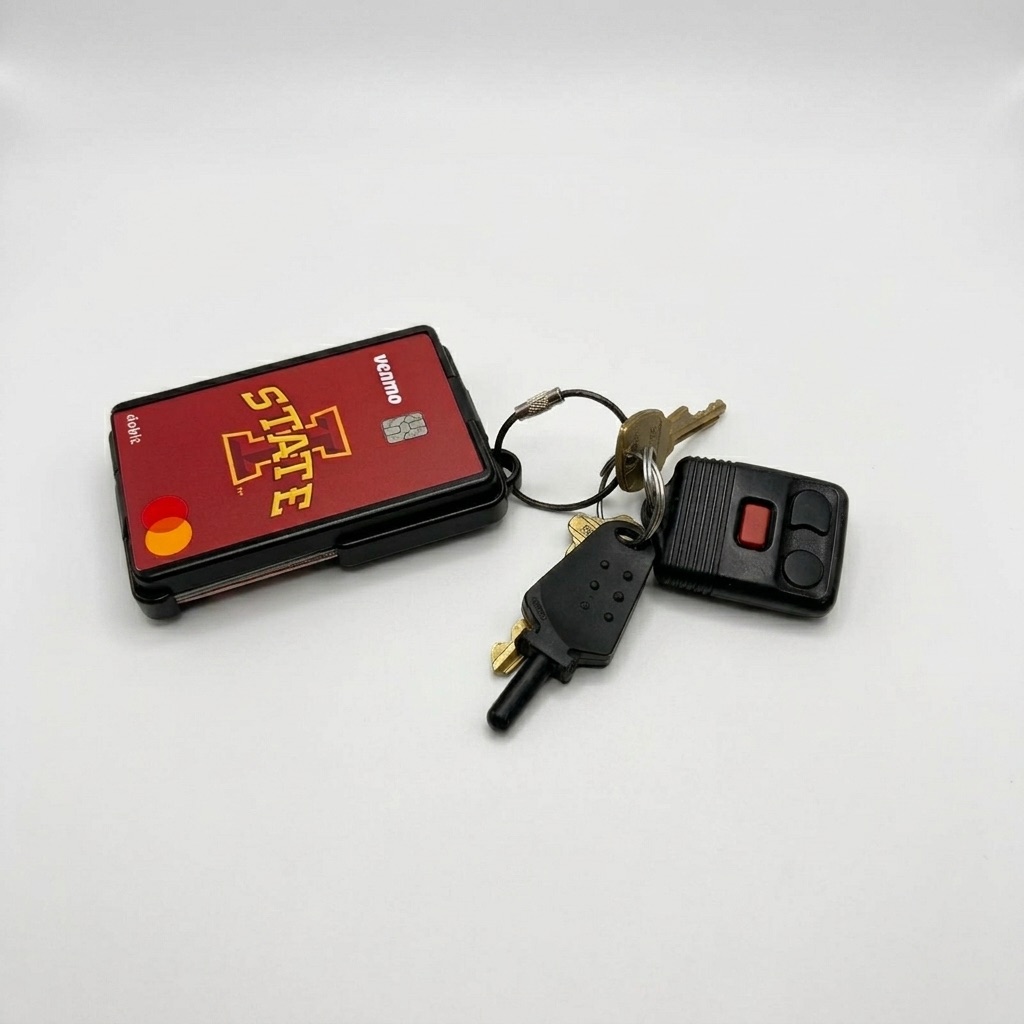
The average person's keychain has three to four keys they use every day and two to six they haven't touched in months. Cutting your keychain down takes about ten minutes and immediately makes your pockets more comfortable.
Why Keychains Get Out of Control
Keychains grow through passive accumulation. You get a key, you add it. You stop using a key, but it's already on the ring. A loyalty card fob here, a mini flashlight there, a bottle opener from a trade show three years ago. Nobody actively decides to carry eight things on their keys. It just happens.
The fix is a quick, intentional audit, not a new organizer or a fancier keychain.
The Ten-Minute Keychain Audit
Pull everything off your keychain and lay it flat. For each item, ask: did I use this in the last two weeks? If no, it doesn't go back on the daily ring.
Create two piles: daily use and occasional use. Daily use goes back on your main ring. Occasional use (storage unit key, spare car key, gym locker key you use twice a year) goes on a separate ring that lives in a drawer.
- Car key. Yes. Goes on the ring.
- Home key. Yes. Goes on the ring.
- Work badge or key fob. If you use it daily, yes. Otherwise, keep it at work or in a bag.
- Old apartment key. Probably not. Off the ring.
- Loyalty card fobs. Most of these are on your phone app now. Off the ring.
- Novelty items. Bottle openers, mini tools, and decorative items add weight and noise. Keep only what you actually use.
How to Keep the Keychain Small
The hardest part isn't cutting it down once, it's not letting it grow back. The habit to build: before adding anything new to your keychain, remove something else or confirm the new thing will be used daily.
Some people keep a secondary ring for occasional-use keys on a hook by the door. That way the key is accessible when needed without adding permanent weight to the daily carry.
Combining Your Wallet and Keys
One effective minimalism move is combining your wallet and keyring into a single carry item. A wallet with an integrated keyring means you're tracking one thing instead of two, and you've eliminated the question of which pocket the keys go in.
The Metal Brik includes a removable integrated keyring, which lets you decide whether you want keys attached. If you're a one-key person (car key only, or home key only), attaching it to your wallet makes sense. If you have multiple keys, a separate slim keyring is still better than a heavy traditional ring.
Browse the EDC wallet page if you want to see how this works in practice.
When Minimal Isn't Enough: Smart Keys
If your goal is truly minimal, worth knowing that many newer car key fobs can be replaced with an app, and many smart locks eliminate physical keys entirely. Not everyone wants to depend on their phone for entry, but the option exists if you're serious about reducing what you carry.
For most people, a good audit plus a clean ring gets you from eight items to two or three. That's the real win.
Quick answers
How many keys should I actually carry?
As few as you need daily. For most people that's two to three: car, home, and maybe a work key. Everything else can live on a secondary ring.
Is it worth getting a separate keychain organizer?
Only if you genuinely need multiple keys organized. If the goal is fewer keys, an organizer just makes a big keychain tidier, not smaller. Audit first.
What do I do with keys I might need occasionally?
A labeled secondary ring in a specific drawer at home. When you need it, you know exactly where it is. It just doesn't live in your pocket every day.