
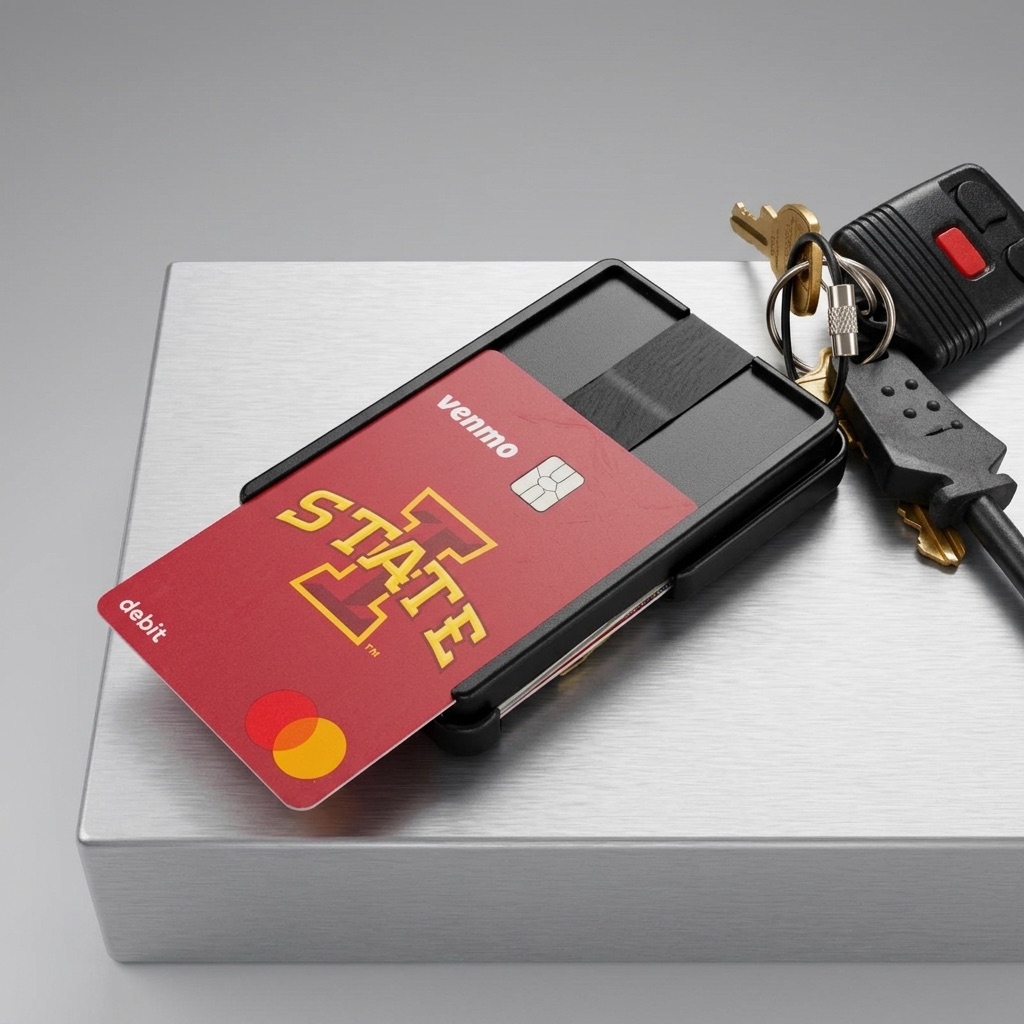
The way to stop losing your student ID is to give it one permanent home that you also can't lose: a wallet with a dedicated ID slot, anchored to the same pocket every day, ideally trackable from your phone. Willpower is not on that list, because willpower is what you've been using.
Your student ID is the most-used object you own after your phone. It opens your dorm, pays for dinner, checks you into the gym, and releases your printing. Which is why losing it doesn't just cost the replacement fee.
What losing it actually costs
The replacement card itself typically runs $15-$35 depending on the school. The real cost is the gap: locked out of your dorm until the front desk bails you out, borrowing meal swipes, missing the gym, and re-linking anything tied to the card. If your dining dollars or door access get misused before you report it, the bill grows.
And IDs travel with keys. A lost lanyard usually means a lost dorm key too, and lock changes can run well over $100. Our founder's ran $160 at Iowa State, which is the entire reason this wallet exists.
Where student IDs actually go missing
- The lanyard. Comes off at the dining hall table, the gym, and every time you sit down. A lanyard is a device for placing your ID on surfaces you're about to walk away from.
- The phone case. The ID-behind-the-phone move works until the day you hand your phone to someone, drop it, or swap cases. It also means one lost object takes out your ID and your ability to call for help.
- The loose pocket. A bare card in a pocket exits with your hand, your keys, or your laundry. Speaking of which: the washing machine is a top-three ID destroyer.
- The 'somewhere in my backpack' system. Not a location. A prayer.
The fix, in three layers
Layer one: one permanent home. The ID lives in a wallet with a dedicated front slot, and it goes back there after every swipe, every time. A slot that stays scannable for tap readers removes the main excuse for carrying it loose: the Metal Brik's front slot is intentionally not RFID-blocked, so most tap IDs read without leaving the wallet, and the dorm key rides the wallet's keyring so the two can't separate.
Layer two: one pocket. Same pocket every day, checked at every transition: leaving the room, leaving the dining hall, leaving the library. Your hand learns the habit in about a week.
Layer three: tracking, for the day layers one and two fail. A wallet built for college with a tracking card inside turns 'my ID is gone' into 'my wallet is at the library, third floor,' which is a very different Tuesday.
Quick answers
How much does a replacement student ID cost?
Typically $15-$35 depending on the school, plus the hassle of re-linking door access, dining plans, and printing. Lost dorm keys are the expensive part, often $100+.
Should I report a lost student ID right away?
Yes, immediately. Your ID is a payment card and a door key. Most schools let you deactivate it online, which caps the damage while you search.
Can tap student IDs be read through a wallet?
Only if the slot isn't RFID-blocked. Many wallets shield everything, which forces you to remove the ID for every reader. Look for a design with one intentionally unshielded quick-access slot.