
Healthcare workers deal with a specific carry challenge: scrub pockets are small, lockers are far from the floor, and you need your badge accessible all shift. Your carry has to be minimal, secure, and fast. Here's what actually makes sense.
The Core Healthcare Carry
Your daily carry at a hospital, clinic, or care facility is shaped by two constraints: limited pocket space and the need to move fast. That narrows the list considerably.
- Badge and ID. Your hospital badge needs to be on your person at all times. A badge reel clipped to scrub pockets is the standard, but your ID for payments and personal access should be in a wallet slot that stays scannable.
- Slim wallet. Scrub pockets weren't designed for bifold wallets. A slim card holder with 5-6 cards and some cash is about all the space you have, and that's really all you need.
- Phone. Usually required for secure messaging apps, patient lookup systems, and being reachable on call. Keep it charged.
- Keys. Home keys and car keys only. A keyring that clips to a wallet or a belt loop keeps them from getting lost in scrub pockets.
- Small personal items. Lip balm, a hair tie, or a compact hand lotion if your hands are cracked from constant washing. That's it.
What Doesn't Work on a Healthcare Shift
Large wallets fall out of scrub pockets constantly. Keychains with a dozen fobs snag on equipment. Anything with a lot of metal or bulk is uncomfortable when you're leaning over patients all day.
Also worth noting: some healthcare environments have restrictions on personal electronics in certain areas. Know your facility's rules before carrying a tracker or anything with a wireless component.
Locker Strategy
Your car key fob and anything non-essential can stay in your locker if you have one. Bring in the minimum: badge, wallet, phone, keys you actually need during the shift.
This also reduces what you lose. Lockers are an unplanned security measure that most healthcare workers should use more aggressively.
A Wallet That Works in Scrubs
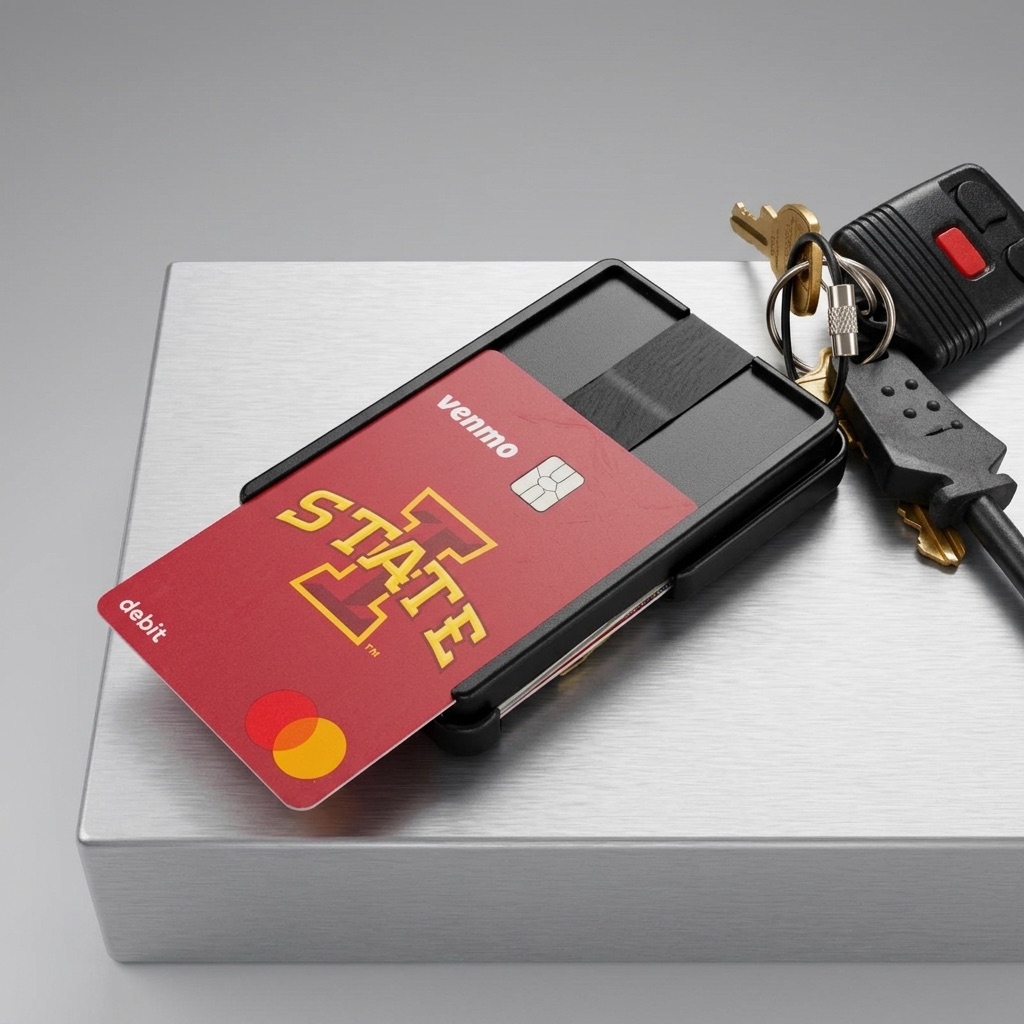
The Metal Brik is worth looking at if you want a wallet designed around this kind of carry. It holds 7-8 cards in an RFID-protected compartment and has a front ID slot that stays scannable, which matters when you're tapping in and out of secured areas. It comes with a removable keyring, which helps consolidate keys and wallet into one item.
For nurses or techs who work across multiple facilities, the optional tracking card (card-shaped, charges wirelessly, rings from your phone) is a practical add-on. See the details at the pro wallet page.
If you want a broader look at building a professional carry, see /guides/young-professional-essentials-checklist.
Quick answers
Can healthcare workers use RFID wallets?
Yes, but keep your tap badge or hospital ID in an unblocked slot so it scans without removing it. Most slim wallets with an outer ID slot handle this fine.
Where should a healthcare worker keep their wallet during a shift?
A scrub pocket or a locker, depending on what you need access to. Wallets with a flat profile stay in scrub pockets better than bulky billfolds.
Is a tracker card safe to carry in a hospital?
Generally yes for Bluetooth trackers, but check your facility's policy on personal electronics in sensitive areas like OR suites or radiology.