
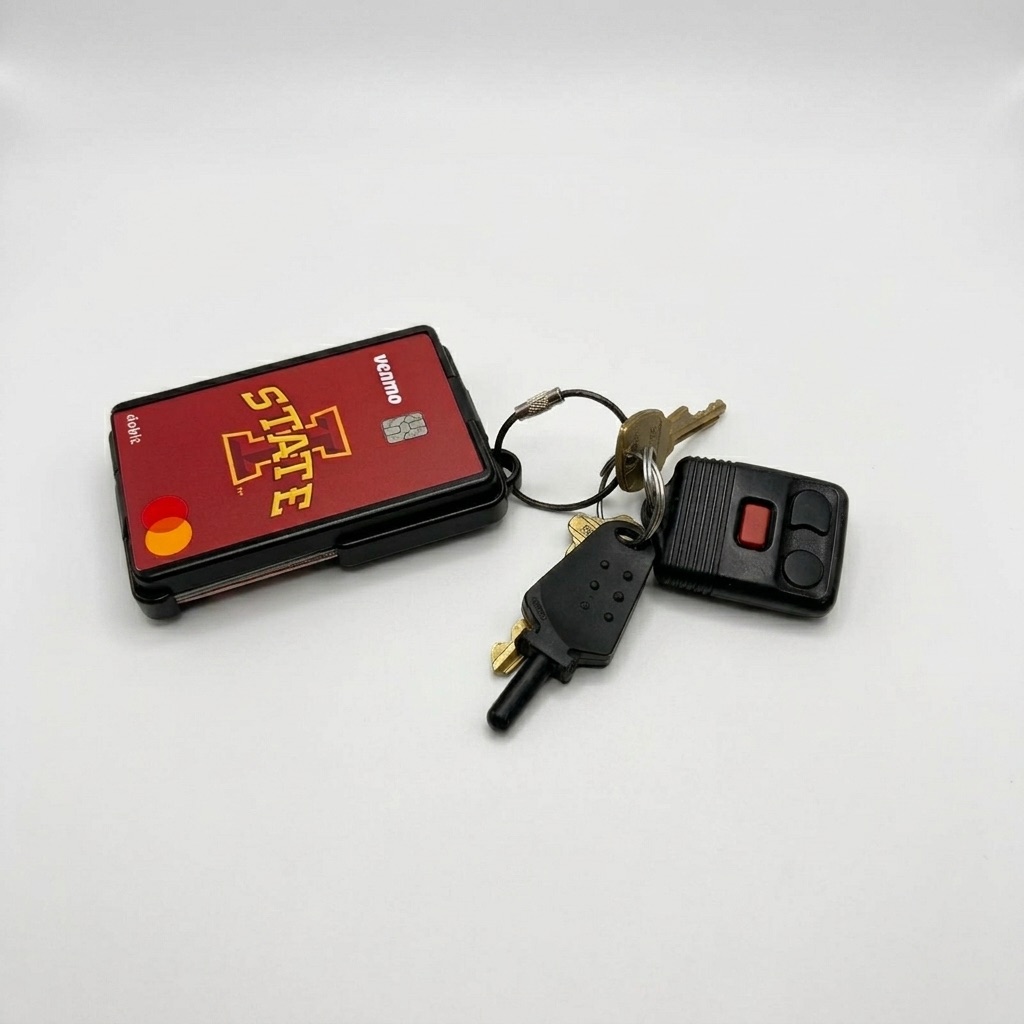
Front pocket wins on every measurable axis: you're not sitting on your cards, the wallet is visible to you and invisible to pickpockets, and the wallet itself lasts longer. Back pocket carry persists for exactly two reasons: habit, and the fact that most wallets are too fat to ride in front comfortably. Fix the wallet and the pocket fixes itself.
Here's the case, plus the switching guide.
The case against sitting on your wallet
- Your body. Sitting tilted on a leather lump for hours a day is commonly reported as a driver of hip and lower-back discomfort, enough that the complaint has its own nickname among clinicians. You don't need a study to feel a fat wallet under one side of your pelvis on a long drive.
- Your cards. Body heat plus hundreds of pounds of intermittent pressure is a lamination test your cards didn't sign up for. Cracked cards and worn magstripes are back-pocket products.
- Your security. The back pocket is the only pocket you can't see and the first one a pickpocket checks. Every crowded-city travel guide says the same sentence for a reason.
- Your wallet. Sat-on wallets curve, crack, and burst their stitching. The banana-shaped bifold is not a design; it's an injury.
What makes a wallet front-pocket-able
Three properties: flat, rigid, and small. Soft, overstuffed wallets create a bulge that looks and feels wrong in front, which sends people right back to sitting on them. A rigid card-shaped wallet disappears against the thigh.
This is most of why the EDC crowd converged on slim metal designs: a flat aluminum body with a fixed capacity is front-pocket-shaped by definition. The Metal Brik adds the two things that usually stay behind in other pockets, keys on an integrated ring and a tracking card inside, so the front pocket carries everything and the back pocket retires entirely.
Switching without the phantom-wallet panic
The first week of front-pocket carry, your hand will fly to your empty back pocket roughly hourly. This is normal and it passes. Speed it up with a hard rule: the wallet lives in the front right, always, checked at every transition (leaving the car, the restaurant, the office). One location, no exceptions, and the new reflex overwrites the old one in about ten days.
If the phantom panic is your personality rather than your week, tracking is the backstop: a wallet you can ring from your phone converts 'is it gone?' into a two-second check. That, plus the slimming method in how to slim down your everyday carry, is the whole migration.
Quick answers
Is sitting on your wallet actually bad for your back?
Sitting tilted on a thick wallet for long periods is a commonly reported contributor to hip and lower-back discomfort. Thinner helps; not sitting on it at all helps more.
Why do fat wallets feel wrong in a front pocket?
Soft, overstuffed wallets bulge. Front-pocket comfort requires flat, rigid, and small, which is why slim metal designs dominate front-pocket carry.
How long does it take to get used to front pocket carry?
About a week to ten days of deliberate same-pocket habit. The phantom back-pocket check fades once the new reflex forms.