
Your first week at a new job is not about productivity. It is about showing you are organized, paying attention, and easy to work with. What you carry and how you show up signals a lot before you have said anything meaningful. Keep it simple, keep it professional, and show up a few minutes early.
Documents and IDs to Have Ready
HR will almost certainly need your identification for onboarding paperwork. In the US, you need documents for Form I-9: typically a passport, or a driver's license plus a Social Security card or birth certificate. Check what your employer requires before day one.
Bring your offer letter or at minimum have it accessible on your phone. If there is any discrepancy in your start date, salary, or title, having the offer letter settles it immediately. You will probably not need it, but it is the kind of thing that is painful not to have.
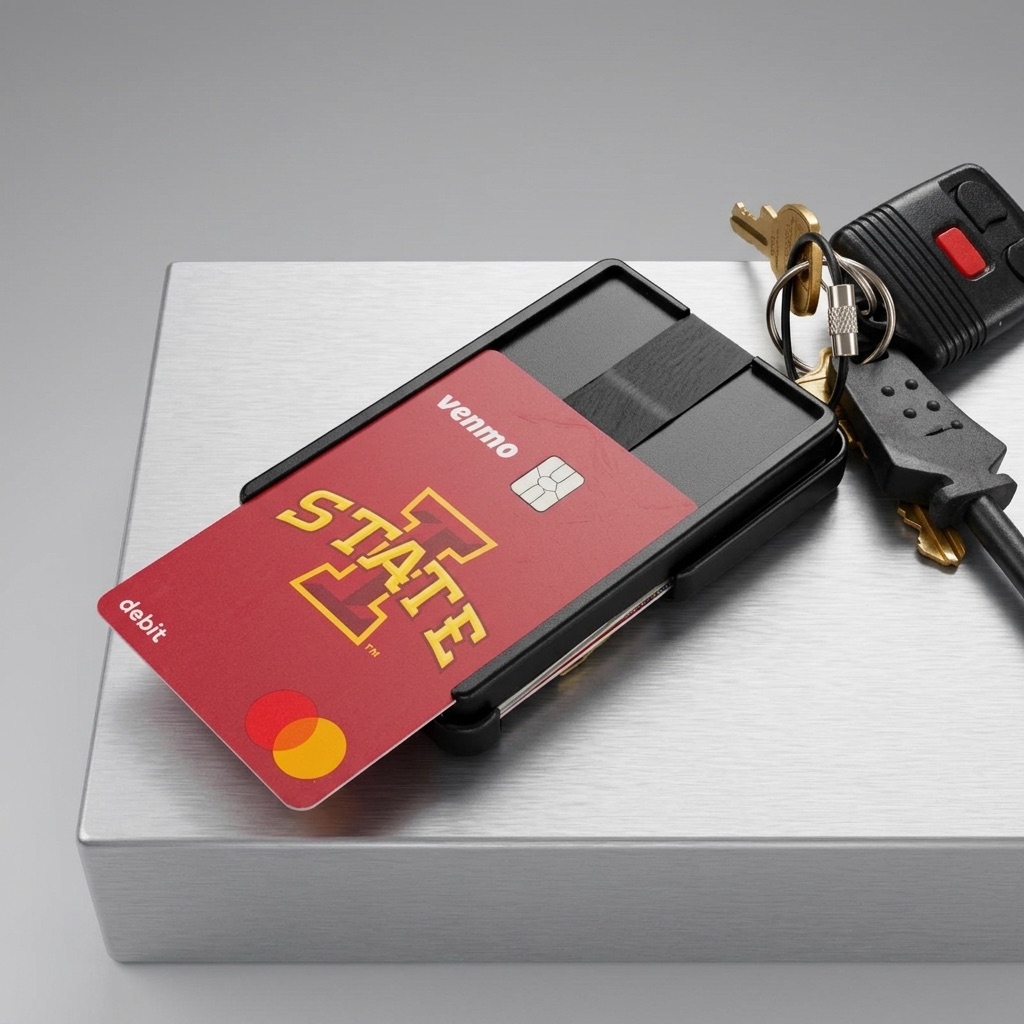
Your work ID or badge will likely be issued during your first day. Keep it accessible for building entry. A wallet for professionals with a front quick-access slot means your badge is ready at every door instead of buried in your bag.
- Government-issued ID. Passport or driver's license plus a secondary document. Know your I-9 documents before you arrive.
- Social Security card or card number. For payroll setup. Do not carry the actual card daily after the first week.
- Offer letter. Digital copy on your phone is fine. Just have it somewhere accessible.
- Bank account information. Routing and account numbers for direct deposit setup. A voided check or a screenshot from your banking app works.
Daily Carry for Week One
Week one is dense with information: new faces, new systems, new building layouts, new tools. Your daily carry should be simple enough that navigation is not one more thing to manage.
Phone, wallet, keys, a small notebook, and a pen. That covers it for pocket and light bag carry. Your notebook is for names, terms, processes, and questions you want to ask. Write everything down. You will not remember it all.
A good pen matters slightly more than you think in week one. You will be signing forms, writing your name, and using it in meetings. A pen that works reliably is a small signal that you are prepared.
What to Wear and Carry
If the dress code is unclear, err toward more formal for week one and calibrate from there. It is easier to dress down than to make up for an underdressed first impression.
Bring a bag that fits a notebook, your phone charger or power bank, and any documents you need. A clean slim briefcase or structured backpack works for most office environments.
The wallet for professionals is worth having organized before you start: work badge in the front slot, payment card and ID in the main compartment. The first week involves a lot of building entry, ID checks, and small purchases. A slim wallet that does not slow you down removes one small friction from an already high-stimulus week.
Check the job interview what to bring guide if you have a final interview before your start date. The overlap is significant.
The Mindset Piece
No one expects you to know what you are doing in week one. They expect you to be curious, attentive, and easy to work with. Ask more questions than you think you should. Write down names when you meet people. Send a brief follow-up or thank you after any one-on-one your manager schedules.
The goal of week one is to make a positive impression, absorb as much context as possible, and get set up operationally. That is it. Productivity comes in week three.
Quick answers
What documents do I need for my first day at a new job?
Government-issued ID and a secondary document for Form I-9. Typically a passport or a driver's license plus Social Security card. Check with HR beforehand.
Should I bring my laptop to my first week?
Ask HR before you start. Many companies issue a work laptop. Bringing your personal one without being asked can create IT complications.
What do I bring to note-take in my first week?
A small paper notebook and a pen. You will be getting information in a lot of formats, some without a screen in front of you. Paper is the most reliable backup.
Is it okay to ask a lot of questions in the first week?
Yes. The first week is the window where asking questions is completely expected. After three months, the same questions signal you were not paying attention.