
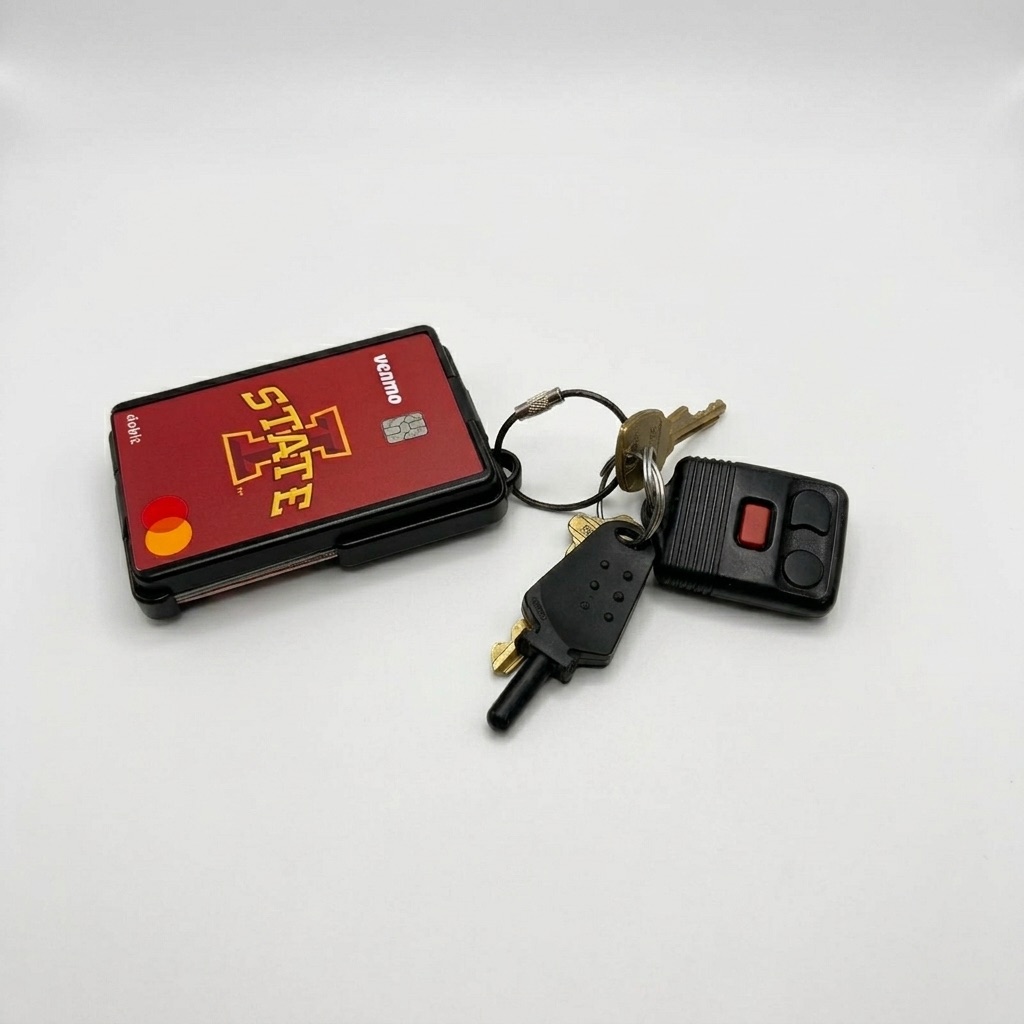
Travel EDC should be leaner than your daily carry, not heavier. Cut your gym loyalty card and the coffee punch card you forgot about. Keep your ID, one payment card, one backup card, travel insurance info, and your hotel confirmation. Everything else is cargo.
Most people pack for travel by adding to their normal carry rather than rebuilding it from scratch. That is how you end up at the airport with a wallet stuffed with fourteen cards, half of which are useless two thousand miles from home. A travel-specific audit takes about five minutes and makes every airport interaction faster.
What to Cut for Travel
Remove anything that is only useful near your home: local grocery store loyalty cards, your regular gym card, your library card, regional transit cards. These cards are dead weight on the road.
Also reconsider your everyday backup card if you have a digital wallet. Apple Pay and Google Pay work at most major retailers worldwide. A second physical card only matters if your phone dies with no way to charge it, which is an edge case, not a plan.
Business cards from people you just met can go in your bag, not your wallet. A stack of business cards in your wallet is the fastest way to destroy whatever slim profile you started with.
What to Add for Travel
Carry your travel insurance card or a photo of the relevant policy info. Keep your Real ID or passport card accessible. If you use a lounge membership card, that earns its place.
A small amount of local currency is worth carrying, especially if you are landing somewhere where card acceptance at ground transport or small restaurants can be spotty. Even forty dollars in local currency smooths out the first hour in a new city.
If you rely on a badge to access your hotel room via tap, make sure it is not buried in an RFID-blocked slot. Keep tap-based room keys somewhere they can actually be read.
Wallet Setup for Airport Security
Metal wallets will flag the security X-ray and you will need to place them in the bin. This is standard and takes about three seconds. It is not meaningfully slower than a fabric wallet, which also needs to come out of your pocket for many screening setups.
Keep your ID in a front-access slot so you are not opening your wallet six times in the security line. The EDC wallet has a quick-access front slot for exactly this reason. You hand your ID to the TSA agent and put it back in one motion.
For more on how metal wallets interact with airport screening, the metal wallet airport security guide covers what to expect in detail.
The Tracker Card Advantage for Travel
A lost wallet at home is annoying. A lost wallet in another city or country is a much bigger problem. A wallet with a built-in tracker card lets you see its location on a map or ring it from your phone, which changes the stakes considerably.
The EDC wallet includes a removable rechargeable tracking card that lasts up to six months per charge and recharges on any wireless charger. You can ring it from your phone if it slips under a hotel bed, or see its location on a map if you left it at a restaurant.
Travel is the scenario where the tracker earns its keep. Build your travel EDC around a wallet that does not make losing it a catastrophe.
Quick answers
Should I use a different wallet for travel?
Not necessarily. A wallet that covers your daily needs usually handles travel fine if you do a quick card audit before you leave. The main addition for travel is thinking through which cards are actually useful away from home.
Do metal wallets cause problems at airport security?
They go in the bin like any metal item. This adds about three seconds to your security process. It is not a meaningful inconvenience for most travelers.
Is a tracker card useful for travel?
Very. Losing your wallet at home is annoying. Losing it abroad can derail your trip. A tracker that lets you ring your wallet or see it on a map is worth having when you are away from your routine.