
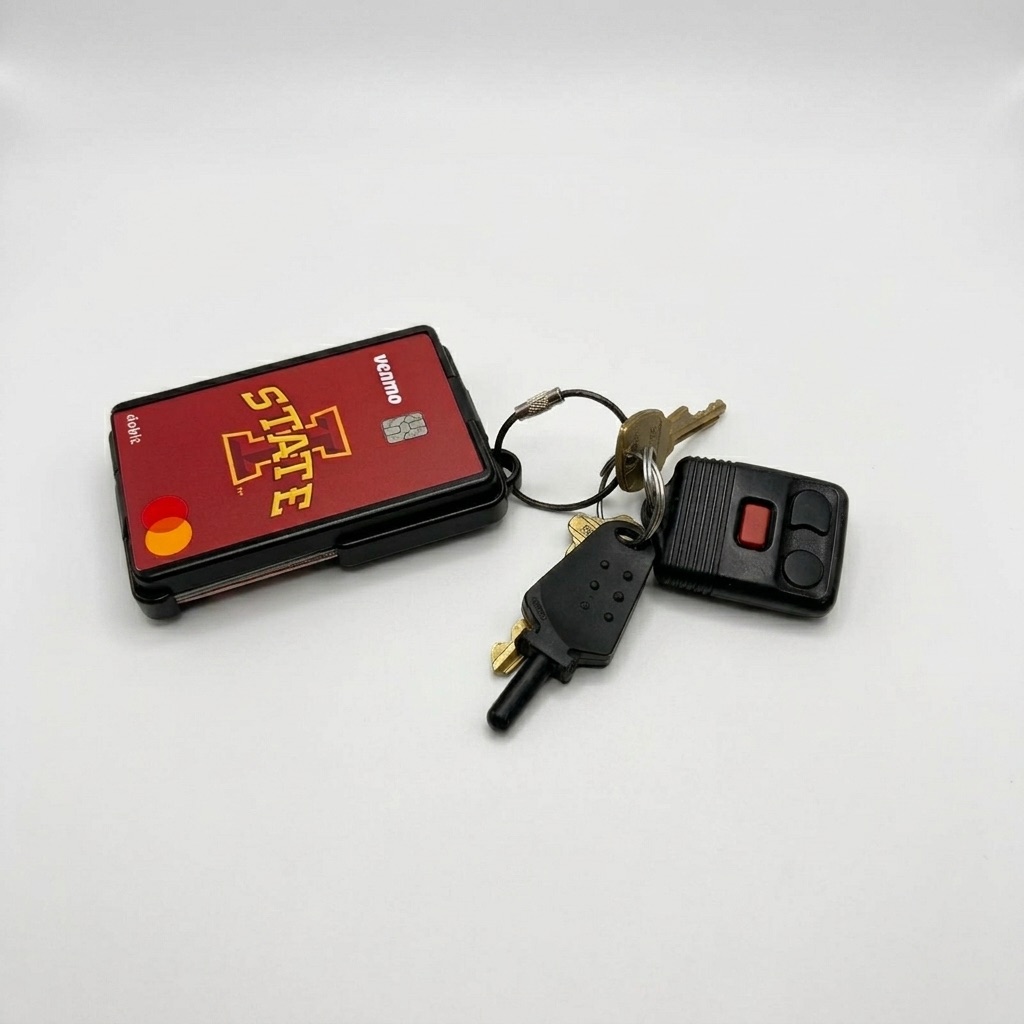
College EDC is different from professional EDC in one big way: you're moving between a lot of environments fast, from class to the gym to a party to the dining hall, and you rarely want to carry a bag to all of them.
The Campus Carry Problem
Campus life has a pocket problem. You're going between contexts constantly, and some of them (gym, social events, dining hall) don't accommodate a backpack. Your pocket carry needs to work as a standalone kit for those situations.
Most college students also carry a student ID that doubles as a meal card and sometimes a dorm key. That ID goes with you everywhere. Building your pocket carry around it makes sense.
Core College EDC
Student ID and meal card, phone, one debit or credit card, and your dorm key. That's the floor. Everything else is optional.
A slim wallet that holds your student ID in a quick-access slot, your bank card, and maybe a health insurance card covers most of college life without bulk. The Metal Brik has a front slot specifically for quick-access cards, which works well for a student ID you're scanning multiple times a day.
If your dorm key is a card-style key, it fits in the wallet. If it's a physical key, an integrated keyring wallet keeps your key and cards together in one pocket. That matters when you're sprinting between classes.
- Student ID / meal card. The most-used item in your daily kit. It needs to be instantly accessible.
- Debit or credit card. One is enough. Leave your backup cards in the dorm.
- Dorm key or key card. Attached to your wallet if possible. Losing your dorm key is expensive, as the founder of The Brik learned firsthand after a $160 dorm key replacement.
- Phone. Your calendar, navigation, entertainment, and communication. Already glued to your hand anyway.
Dorm Room Key Insurance
Losing your dorm key is a rite of passage that costs real money. Key replacement fees vary by school, but they're rarely cheap, and they often involve replacing the whole lock, not just the key.
Attaching your key to your wallet with a keyring means losing your wallet and losing your key are the same event instead of separate disasters. And a wallet with a built-in tracker means you can find it when you inevitably set it down somewhere during a busy week.
The story behind The Brik starts here: founder Asray Gopa built the first version after paying $160 for a dorm key replacement at Iowa State. The first prototype was cardboard. The wallet you can buy now is machined aluminum.
Night Out and Social Carry
Social situations in college often mean no bag. You're going out in jeans with front pockets only. Your kit needs to fit in two pockets and be secure enough that you don't lose anything in a crowded space.
Slim wallet in the front pocket beats thick wallet in the back pocket for two reasons: more comfortable and harder to pickpocket. Your phone goes in the other front pocket. That's the kit.
For more on gifts for college students (if you're shopping for someone else), see the gifts for college students page and the EDC wallet page.
Quick answers
Should I carry my full wallet to class?
You don't need much at class: student ID, one card, and your phone. A slim wallet beats a full bifold for this context.
What happens if I lose my dorm key?
Most schools charge for key replacement, and the fee often covers lock rekeying, not just a copy. Costs vary by school but rarely under $50. Keep your key attached to something you track.
Do I need cash in college?
Less than ever, but campus events, food trucks, and some off-campus spots are still cash only. A folded twenty in your wallet covers most situations.
Is an EDC wallet worth it as a college student?
If you're constantly losing cards, carrying a bulky wallet, or frustrated by your dorm key situation, yes. A slim wallet that fits in any pocket is a real quality-of-life improvement.