
Commuters need a carry built for motion: tap-to-pay transit cards, fast bag access, nothing that falls out of a pocket on a moving train. The items that made sense in a car-only life often create friction in a transit commute. Here's how to set it up right.
Transit-Specific Carry Needs
If you're on a train or bus, your carry requirements shift from car commuters. You're standing, your bag is on your back or in your lap, and you need to tap a card fast.
- Transit card or mobile pay. Keep your transit card in an accessible slot or use Apple Pay or Google Pay on your phone. Digging through a wallet while people queue behind you is a bad way to start a morning.
- Slim wallet. Back pockets are pickpocket territory on packed trains. A slim front-pocket wallet removes the target. Five to eight cards plus cash handles everything.
- Earbuds or headphones. Commute sanity. Over-ear headphones for a longer train ride, earbuds for a short bus hop.
- Phone, fully charged. Maps, transit apps, work messages. Charge it at night and keep a battery pack in your bag as backup.
- Book or tablet (optional). A commute is reading time if you let it be. The physical book is fine if you have bag space.
- Keys and badge together. Car commuters need car keys plus office badge. Transit commuters often just need keys to their home and office badge. Combining them on a single keyring attached to a wallet reduces what you're managing.
Car Commuter Adjustments
If you're driving, pocket carry is less critical since your wallet isn't a pickpocket risk. But you still want a slim wallet: parking payment, drive-through taps, and the dashboard card clip you swore you'd stop using. Keep it simple.
Car commuters also tend to accumulate receipts and loyalty cards in the center console. That's fine as long as your carried wallet stays clean.
The Bag for Commuting
A commuter bag should have a back panel or hidden pocket for your wallet and phone so they're not accessible to anyone standing behind you. A slim backpack or messenger bag with laptop padding is the standard.
Don't carry more than you use on a given day. A heavy bag ruins your posture over a long commute faster than you'd expect.
Wallet Setup for Transit
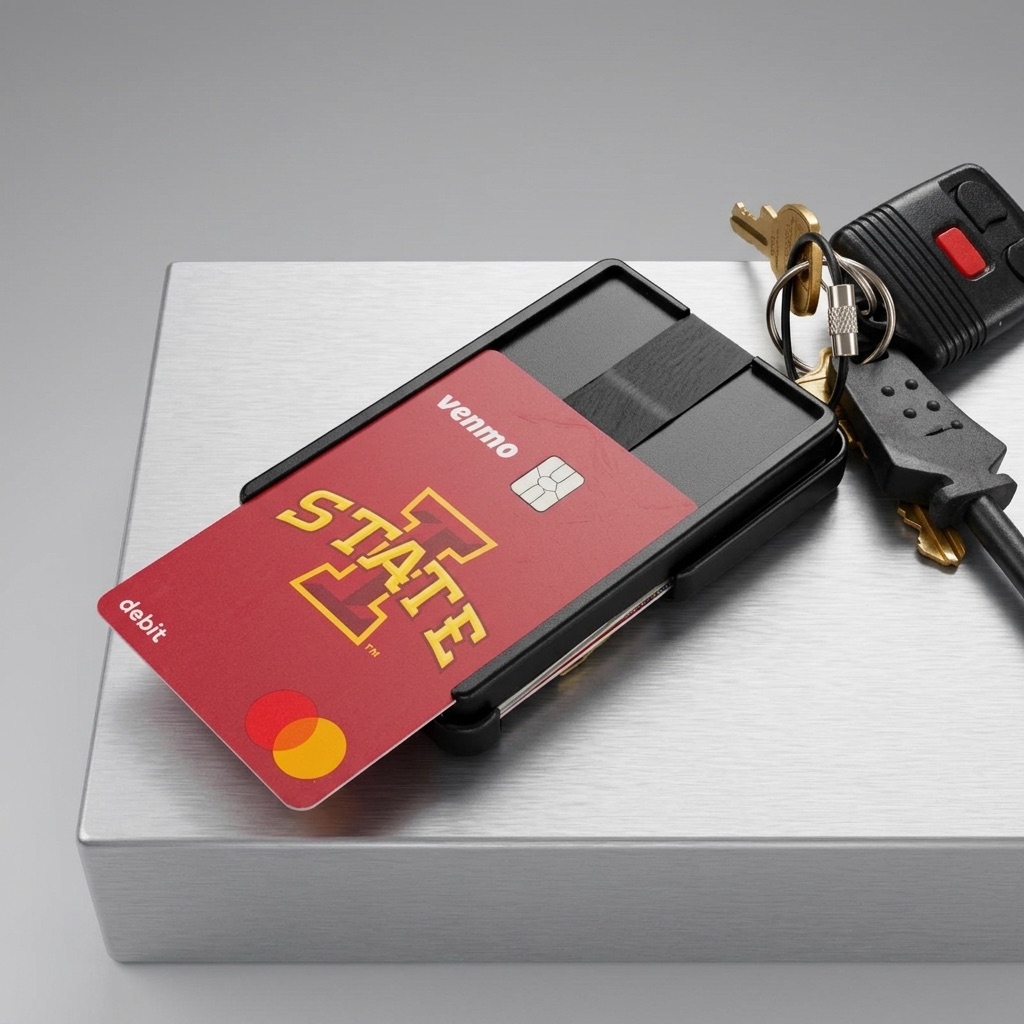
The Metal Brik works well for transit commuters because the front ID slot keeps your transit card or office badge scannable without removal. The RFID protection on the main compartment protects your payment cards while keeping the tap card accessible.
If you're a commuter who occasionally loses your wallet in a jacket pocket or bag, the optional tracking card rings from your phone, which beats retracing your steps through a subway station. See the full setup at the pro wallet page.
For more on building a complete professional carry, see /guides/young-professional-essentials-checklist.
Quick answers
Is a front-pocket wallet safer on transit?
Significantly, yes. Back pockets on crowded trains are a known pickpocket location. Front pocket slim wallets remove the obvious target.
Should a transit card be RFID-blocked?
No, you need it to scan. Keep transit cards and office badges in an unblocked slot and protect only your payment cards.
What bag works best for a train or bus commute?
A slim backpack with a hidden or back-panel pocket for valuables is the most secure option. Messenger bags work too if they have a secure inner pocket.