
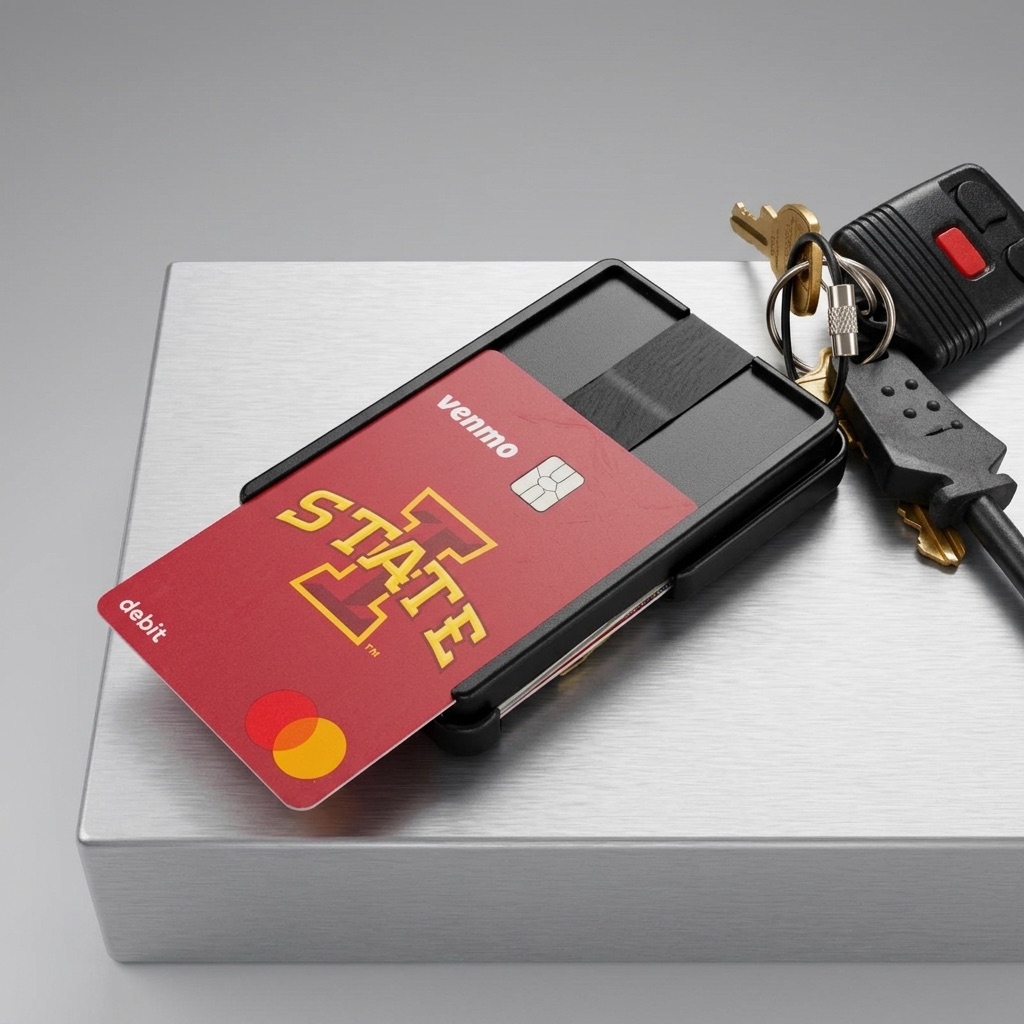
College students lose their student ID more than any other card because student ID systems are built around tap access, which means the card gets pulled out and used dozens of times a day, then set down somewhere, left in a coat pocket, or dropped outside a dining hall. The fix is not to be more careful. The fix is a wallet system that keeps the card accessible without requiring you to take it fully out. See the college wallet for a setup built around that specific problem.
Why the Student ID Problem Is Different
A driver's license or a bank card gets used a few times a day and stays in a wallet most of the time. A student ID gets used at the dorm door, the dining hall, the library, the gym, the campus store, the health center, and wherever else the university has access controls.
Every tap is a moment where the card is out of the wallet. Every moment the card is out of the wallet is a moment where it can end up somewhere else.
The students who lose IDs least frequently are the ones who never fully remove the card. They hold the wallet up to the reader and the card taps through. That only works if the card is in an accessible front slot and if that slot does not RFID-block the card.
The Replacement Cost Problem
The founder of The Brik started the company because a lost dorm key cost him $160 his freshman year. A lost student ID at most universities runs between $20 and $50 to replace, and at some schools it resets your meal plan access, dorm access, or printing credits until the replacement arrives.
This is not a rare situation. It is a predictable one. The same students who lose their ID once tend to lose it again because the underlying carry problem was not fixed.
See the college wallet for a wallet with a front slot specifically for this kind of tap-access card, alongside RFID protection for the financial cards in the main compartment.
Other Common Reasons Students Lose Their ID
Beyond the tap-and-set-down problem, a few other patterns show up consistently.
- No designated spot in the wallet. When the student ID lives in the main card stack with everything else, it gets shuffled around. A dedicated slot eliminates this.
- Carrying it separately from the rest of daily carry. Some students carry their ID in a separate lanyard or sleeve and their other cards in a wallet. When the two are separated, the ID is the one that gets left somewhere.
- Coat pocket storage in winter. In colder climates, IDs get moved to coat pockets for fast access. When the coat comes off at the dining hall, the ID stays in the coat.
- No tracking and no backup. An ID with no tracking is just gone when it is lost. A wallet with an integrated tracking card means you can ring or locate it before it becomes a $40 replacement.
The Integrated Tracking Option
A wallet with a built-in tracking card changes the lost ID math. Instead of replacing the ID, you ring the wallet from your phone, find it under a pile of laundry or in the seat cushion of the library couch, and move on with your day.
The Metal Brik ($69.99) includes the option to add a rechargeable tracking card, card-format so it adds no bulk, with a battery that lasts up to six months per charge and recharges on any wireless charger. Buyers pick Apple or Android compatibility at checkout.
For college students specifically, see the college wallet to see how the wallet is configured for campus carry, including the front slot that keeps the student ID accessible without removing it.
See also: gifts for college guys if this is going on a gift list for someone heading to campus.
Quick answers
How much does it cost to replace a student ID?
Typically between $20 and $50 at most universities. Some schools also charge for access reset or have a waiting period before the replacement is active.
What is the best way to keep a student ID from getting lost?
A wallet with a dedicated front slot for the ID keeps it accessible without fully removing it. For added security, a wallet with an integrated tracker means you can find it if it does go missing.
Can a student ID be tracked?
The ID card itself cannot, but the wallet carrying it can be. A wallet with a built-in tracking card lets you ring it or see its location on a map from your phone.