
Carrying less to work is not an aesthetic preference. It is a performance decision. The physical weight in your bag, the number of items you manage in your pockets, the time you spend looking for things: all of it creates small cognitive loads that add up over a day. Minimizing what you carry minimizes the overhead, and that overhead has a real cost.
This is not about owning less. It is about bringing only what you will actually use during the day you are about to have.
The Decision Fatigue Argument
Decision fatigue is the documented tendency for decision quality to decline after a long series of decisions. Most people think of it in the context of big choices, but it applies to small ones too. Every time you search through a bag for something, touch an item you do not need, or manage something on your person that should not be there, you are spending a small amount of cognitive budget.
A well-organized minimal carry means fewer of those micro-decisions per day. Your badge is in the front slot. Your card is in the main compartment. Your keys are on the ring. Nothing to decide, nothing to search for.
Professionals who carry intentionally report spending less mental energy on logistics and more on actual work. The correlation is anecdotal but consistent enough to be worth paying attention to.
The Physical Load
A bag that weighs more than 10 to 15 percent of your body weight on a long commute is a posture problem. Shoulder strain, back tightness, and neck tension from an overloaded bag are not dramatic. They are slow and cumulative. They get attributed to the chair or the stress, not the bag.
Weigh your work bag sometime. Most people are surprised. The laptop is heavy. Add the charger, the water bottle, the gym clothes you are definitely going to use, the extra pair of shoes, and the items that have been in there since last month and you are often at 20 to 25 pounds.
Cut the bag to what you actually use and the physical carry becomes significantly lighter. The walk to the office or the commute on transit is a different experience.
Slim Wallet, Sharper Mind
Your pocket carry follows the same logic as your bag carry. A thick wallet with fifteen cards you do not use, receipts from three months ago, and loyalty cards for stores in a city you visited once is dead weight. Not dramatic dead weight, but real dead weight.
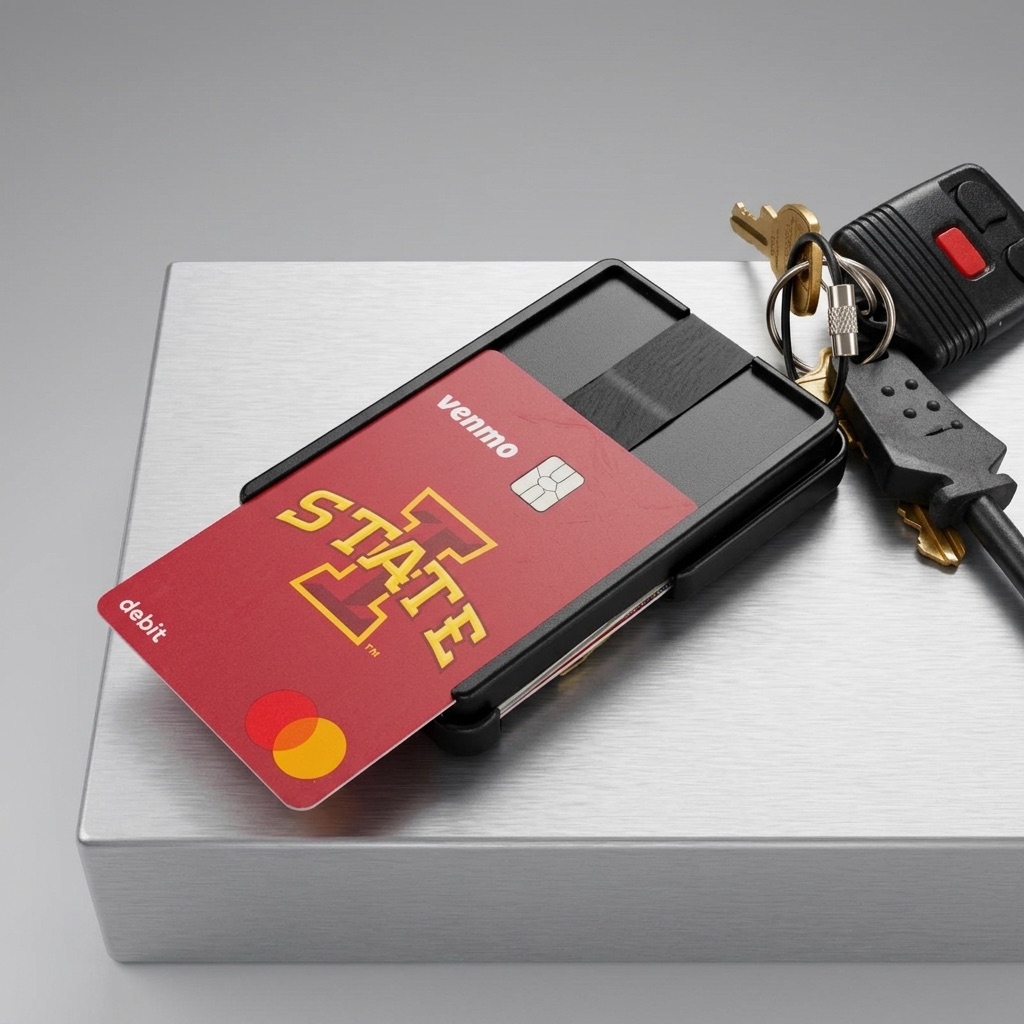
The wallet for professionals the Metal Brik holds 7-8 cards plus an ID in an aluminum body that does not add bulk to your pocket. The RFID protection in the main compartment means you are not spending mental cycles worrying about proximity theft in dense commutes.
The slim wallet is the smallest version of the same principle that applies to your bag: carry what you use, secure it well, and stop managing the rest.
What to Actually Cut
From your bag: gym clothes you do not use, extra cables for devices you do not carry, snacks from a previous week, duplicate chargers, the book you have not opened in two months.
From your wallet: loyalty cards you can put in a phone app instead, cards for accounts you do not use, receipts, anything that has not moved in three weeks.
From your pockets: keys to things you do not access daily, coins if you never use cash, the extra item you carry "just in case" that has never been used in six months.
See the professional minimalism carry guide for how to build a complete minimal carry system that holds up over time, not just on a clean-out day.
The wallet for professionals is a good starting point for the pocket side of that system. Everything else is a bag problem you can solve with the same mindset.
Quick answers
Does carrying less actually improve work performance?
The evidence is indirect but consistent. Reduced physical load and fewer micro-decisions around logistics correlate with better focus. The direct impact is small per decision but meaningful across a full workday.
How heavy should a work bag be?
Under 10 to 15 pounds for daily carry. Weigh yours. Most people find it heavier than expected. Cut anything you have not used in the last two weeks.
What is the most effective thing to remove from a work bag?
Extra cables and chargers for devices you do not carry. They are heavy, they create bag clutter, and you never use them because the device is not there.