
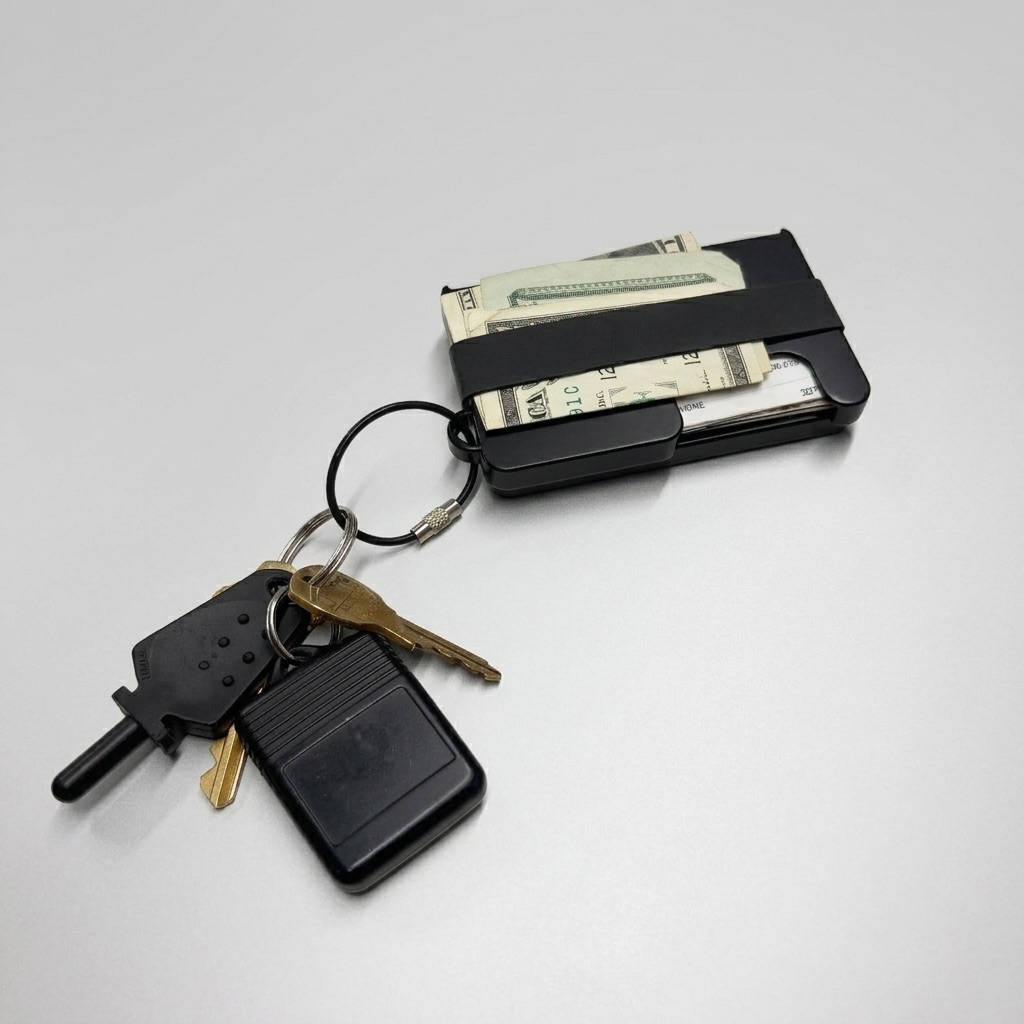
A good wallet for a dad needs four things: enough capacity for his real card count (usually 5 to 9), materials that survive a decade of pockets, RFID protection for the main card stack, and ideally some answer to the question 'where is my wallet,' which he asks more often than he admits.
This guide covers how dad wallets fail, which features actually matter, and how the three main wallet types compare, whether you're shopping Father's Day gifts or just replacing your own.
How dad wallets fail
Wallets rarely die dramatically. They fail in one of three slow ways.
- Overstuffing. A bifold designed for 8 cards carrying 14, plus receipts from 2019. The stitching goes first, then the shape, then his lower back files a complaint about being sat on.
- Material fatigue. Leather creases, cracks, and stretches. Fabric frays. Most wallets are replaced not because they were lost but because they slowly disintegrated.
- Loss. The couch, the jacket he wore twice, the rental car. A wallet with no tracking is always one distracted afternoon away from a full card-cancellation ceremony.
Features that actually matter
Ignore the marketing and check these five things.
- Capacity. Count his actual cards first. Most dads carry 5-9 cards, one ID, and some folded cash. Buying a 20-card wallet just re-enables the receipt archive.
- Durability. Metal and full-grain leather age best. Stitching and glued seams are the usual failure points, so fewer seams means longer life.
- RFID protection. Blocks wireless skimming of contactless cards. One caveat: if he taps a badge or ID at work, that one card needs to sit in an unshielded slot so it stays scannable.
- Key handling. If his keyring could pass for a janitor's, a wallet with an integrated keyring consolidates two pocket items into one.
- Trackability. Tracker-ready wallets can be rung from a phone or located on a map. For the man who loses his wallet twice a week inside his own house, this is the feature.
Wallet types, compared honestly
None of these is wrong. They just fit different dads.
- Leather bifold. The classic. Pros: familiar, soft, handles cash naturally, typically around $30-$150. Cons: bulky when full, wears out after a few years of daily use, offers no tracking, and actively invites overstuffing.
- Slim card holder. Pros: forces a card diet, disappears into a front pocket, cheap to try at typically around $15-$50. Cons: minimal cash handling, no key solution, and thin leather or fabric versions wear fast.
- Metal wallet. Pros: a rigid body that can't sag or overstuff, built-in RFID blocking, and the longest lifespan of the three. Cons: costs more upfront and feels different from leather. In the metal wallet category, the Metal Brik ($69.99) is one example: black anodized aluminum, a water-resistant body, a quick-access ID slot that stays scannable, room for 7-8 cards, a cash band, a removable keyring, and an included tracking card that recharges on any wireless charger and runs up to 6 months per charge.
How to pick
Ask three questions. One: how many cards does he really carry? Two: has he ever lost a wallet, and does he tap a badge at work? Three: back pocket or front pocket?
A heavy carrier who never loses anything does fine with a leather bifold. A true minimalist wants the card holder. A dad who loses things, taps into an office, or destroys wallets on a schedule is the metal-with-tracking case. If it's a gift, err toward durable and trackable; those are the features he won't buy for himself but will use daily. More gift-ready picks live on our Father's Day gifts page.
Quick answers
How many cards should a dad's wallet hold?
Count his real rotation, usually 5-9 cards plus an ID, and buy for that number. Loyalty cards can live in a drawer or a phone app.
Is RFID blocking actually necessary?
It's low-cost insurance. Skimming is uncommon but real, and RFID blocking adds no bulk in a well-designed wallet. Just make sure the ID or badge slot stays scannable if he taps into work.
What's a reasonable price for a wallet that lasts?
Typically $50-$100 gets construction that survives years of daily carry. Below that, plan on replacing it every couple of years; above that, you're mostly paying for brand or exotic materials.