
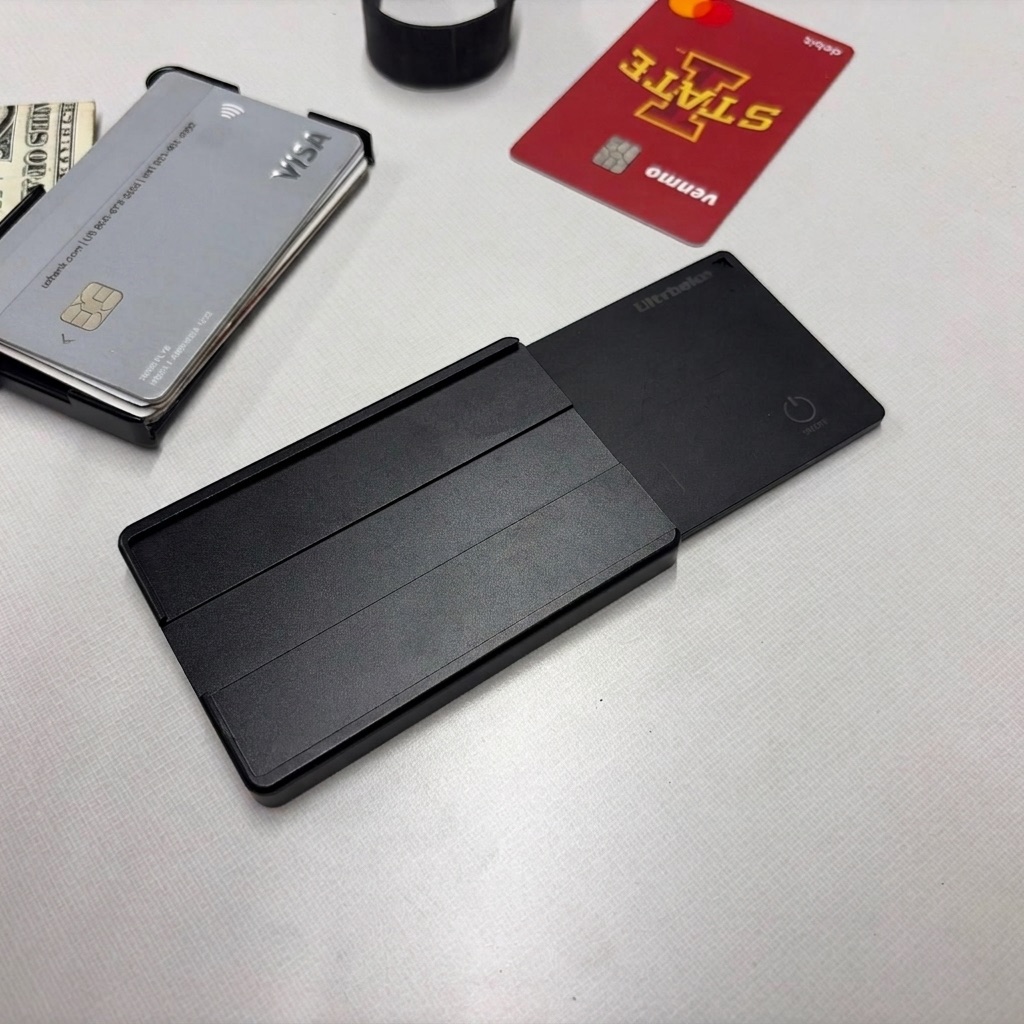
The best wallet for someone who loses everything is one that combines cards and keys into a single item and can be rung from a phone when it vanishes. Fewer objects means fewer chances to lose one, and tracking means the inevitable loss becomes a two-minute recovery instead of a two-day crisis.
This article is written for chronic losers of things, by which we mean roughly everyone at some point. The Brik itself exists because its founder, Asray Gopa, lost a dorm key at Iowa State that cost $160 to replace. The lesson was not 'be more careful.' The lesson was to build a system that assumes carelessness.
Why 'be more careful' never works
You do not lose things because you are careless in general. You lose things during transitions: standing up from a restaurant booth, climbing out of a rideshare, leaving the gym, switching bags. In those moments your attention is on the next thing, not the current inventory of your pockets.
Willpower-based fixes fail because they require you to be alert precisely when you are not. Any system that depends on you remembering to remember is not a system. Real loss-proofing works even on your worst, most distracted day, which is the day you lose things.
The three layers of loss-proofing
Loss-proofing works in layers. Each one catches what the previous layer missed.
- Layer 1: Consolidation. Combine wallet and keys into one object. Two items are harder to lose track of than four, and a bigger single item is harder to leave in a booth than a loose key fob.
- Layer 2: Habit anchors. One bowl by the door, one pocket, one bag compartment. The item is either in its spot or on your person, never a third place. Anchors do not require memory, only repetition.
- Layer 3: Tracking. For the day layers one and two fail, because they will. A tracker turns 'it could be anywhere' into a dot on a map or a ringtone coming from under the couch.
Tracker options, compared honestly
The common approach is a coin-shaped Bluetooth tracker dropped into a wallet pouch. It works, and if you already own one, use it. The downsides are physical: coin trackers need a wallet with a pouch to hold them, and they add a coin-sized lump to something you sit on all day.
The alternative is a card-shaped tracker that slides in flat like another card. This is the route a wallet with a built-in tracker takes: The Metal Brik includes a rechargeable tracking card, so you can see the wallet on a map or ring it from your phone, with no bulge. The battery lasts up to 6 months per charge and recharges on any wireless charger, and you pick Apple or Android compatibility at checkout. The honest tradeoff: it is one more thing to charge twice a year, and you have to actually put it back after charging. If you know yourself, set a calendar reminder.
Whichever you choose, the tracker only helps if it is always in the wallet. A dedicated tracker wallet wins mostly because there is nothing to remember to bring.
The first 10 minutes after losing a wallet
When the wallet is gone, speed beats panic. Do these in order: ring the tracker or check its last location on the map. Retrace your last two transitions only, not your whole day, because that is where losses happen. Call the venue while your table is still bussed. If it has not surfaced in ten minutes, open your banking apps and freeze your cards. Freezing is reversible, canceling is not, so freeze first.
If a day passes with no luck, cancel the cards, order a replacement ID, and change any locks whose keys were attached. Then take one photo of your new wallet's contents and save it, because future you will need that list.
Quick answers
What is the best wallet for people who lose things?
A wallet that combines your cards and keys into one item and can be rung from your phone. Consolidation means fewer things to lose, and a built-in tracker like the Metal Brik's rechargeable tracking card turns a lost wallet into a two-minute find on a map.
How long does the tracking card battery last?
The rechargeable tracking card included with The Metal Brik lasts up to 6 months per charge and recharges on any wireless charger, the same pad you may already use for your phone.
Should I freeze or cancel my cards first?
Freeze first. It takes seconds in most banking apps and is fully reversible if the wallet turns up under your car seat an hour later. Cancel only after you are confident it is truly gone.
Does consolidating everything into one wallet make losing it worse?
The single loss is bigger, but it happens far less often, and with tracking it is usually recoverable in minutes. Four untracked items lost occasionally cost more than one tracked item almost never lost.