
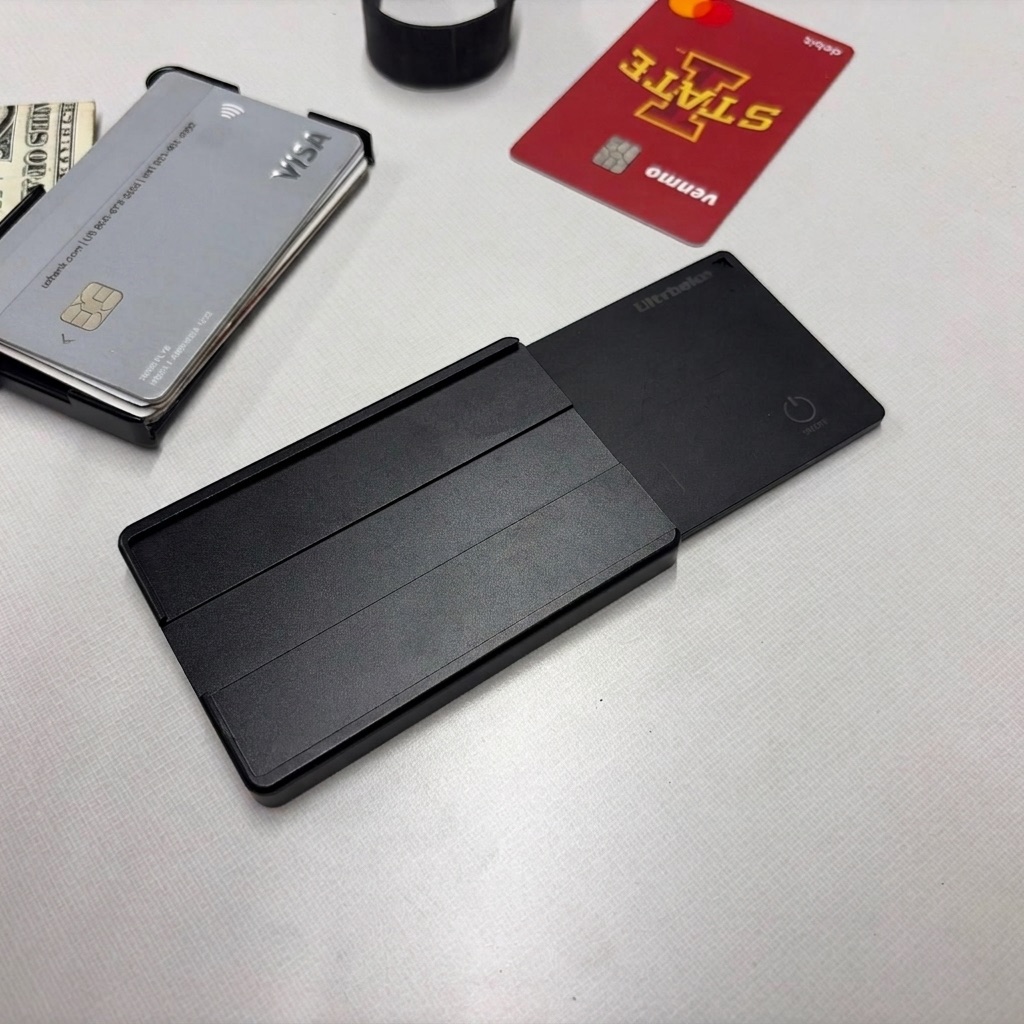
An AirTag wallet is a wallet with a pocket for Apple's coin-shaped tracker. It's a solid solution with two structural tradeoffs: the coin shape adds thickness, and it's Apple-only. The alternative is a wallet with a card-shaped tracker built in, which stays flat and can ship for either ecosystem. Here's how to choose.
Either way, the goal is the same: a wallet your phone can find.
What AirTags do well
Credit where due: AirTags ride on Apple's Find My network, which crowdsources location from an enormous fleet of nearby Apple devices. Coverage is excellent nearly everywhere people exist. The battery is a user-replaceable CR2032 coin cell that lasts around a year, swapped in seconds, no charging routine required.
If you're deep in the Apple ecosystem and already own AirTags, putting one in a wallet designed for it is a perfectly good setup.
The tradeoffs nobody mentions at checkout
- The coin shape. An AirTag is round and thick relative to a card. Wallets that hold one need a molded pocket, which adds a visible bump. You will feel it when you sit on it, which loops back to the back-pocket problem.
- Apple-only. No iPhone, no Find My, no tracking. Android users are out entirely, and mixed households can't share the setup.
- The wallet must be designed around it. Dropping an AirTag loose into a normal wallet means it migrates, rattles, and eventually stays behind in a pocket. You're shopping for a wallet-plus-slot, which narrows the field.
- Two purchases. The wallet and the tracker are separate line items. Not a dealbreaker, just math worth doing at comparison time.
The card-shaped alternative
The other approach builds the tracker into the wallet as a card: it slides into a card slot, adds no bump, and comes included. That's the Metal Brik's design: a rechargeable card-shaped tracking card, integrated but removable, that you ring or locate from your phone, with the ecosystem chosen at checkout (Apple or Android) so the right card ships in the box. The battery runs up to 6 months per charge and refills on any wireless charging pad.
The honest tradeoff in this direction: you recharge twice a year instead of swapping a coin cell annually, and the tracker is tied to the wallet it came with. The wallet with built-in tracker page covers the full mechanics.
How to choose
Decide on two axes. Ecosystem: iPhone-only households can go either way; Android or mixed households need the card-shaped route. Thickness tolerance: if you carry front-pocket slim, the coin bump matters; if the wallet lives in a bag, it doesn't.
And whichever you pick, a tracker only helps if it's actually in the wallet. Built-in wins mostly on that boring axis: there's nothing to move, forget, or leave charging in a drawer. For the day it pays off, keep the lost wallet checklist bookmarked, and see the broader case in the tracker wallet rundown.
Quick answers
Do AirTag wallets work with Android?
No. AirTags require Apple's Find My network. Android users need a wallet with an Android-compatible tracker, like a built-in tracking card shipped for Android.
Does an AirTag make a wallet noticeably thicker?
Yes, somewhat. It's a coin-shaped device, so wallets hold it in a molded pocket that adds a bump. Card-shaped trackers avoid this by sliding into a normal card slot.
Is a built-in tracking card better than an AirTag?
Different tradeoffs. Built-in cards stay flat, come included, and support Apple or Android, but recharge twice a year. AirTags have a swappable year-long battery and Apple's network, but add bulk and are Apple-only.